
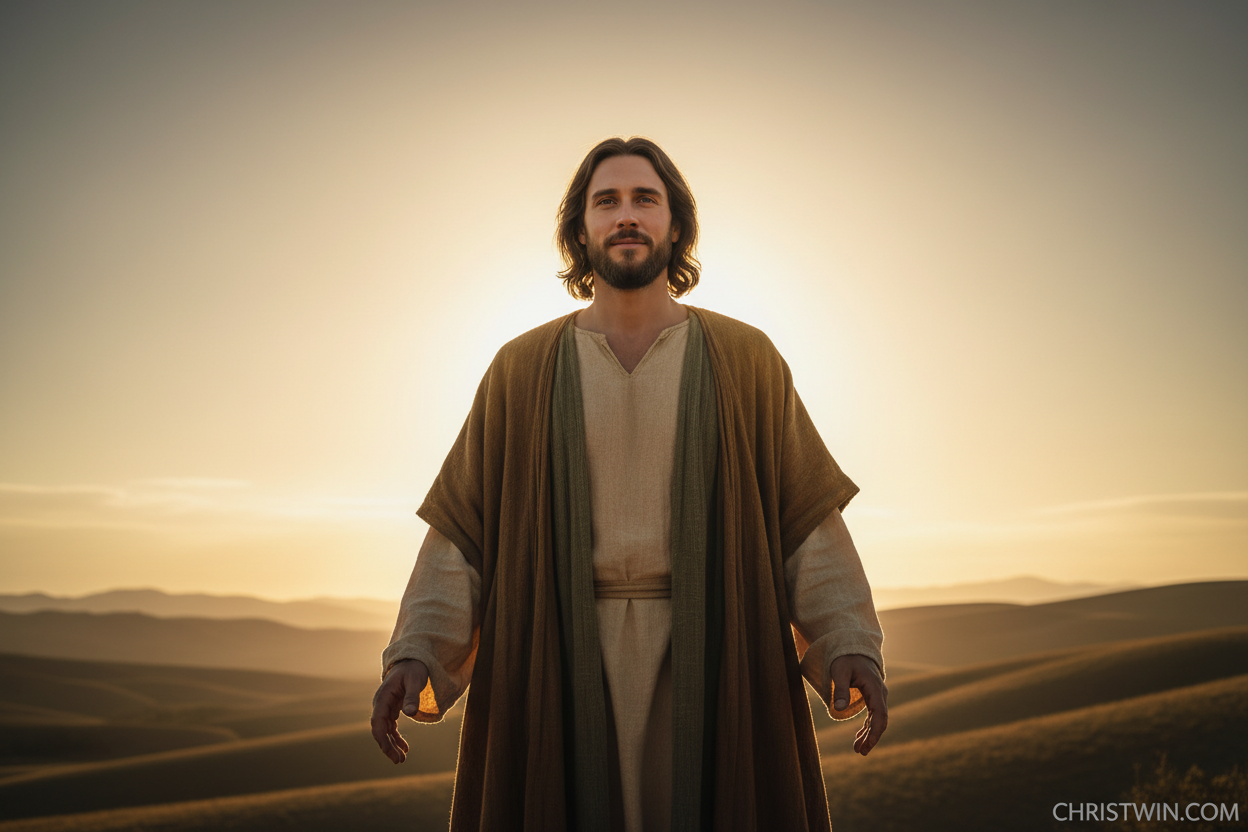
Have you ever thought about why Jesus called himself the “Son of Man”? This title is full of biblical significance. It was Jesus’ favorite way to say who he was. But what does it really mean?
Let’s dive into the history and theological implications of this title. You’ll learn more about Jesus’ identity and mission. Jesus called himself the “Son of Man” 82 times in the New Testament. This makes it a key part of who he was.
By looking at the Bible and history, we can understand why Jesus chose this title. It’s a deep and important question.
The Historical Context of “Son of Man” in Ancient Near East
To understand “Son of Man,” we must explore the Ancient Near East. This area includes parts of Iraq, Syria, Lebanon, Jordan, Israel, and Turkey, and Egypt. The term “Son of Man” comes from Aramaic and Hebrew, languages spoken there.
Aramaic and Hebrew Origins of the Term
“Son of Man” means “human being” in Semitic languages. In Aramaic, Jesus’ language, it’s called bar nasha. In Hebrew, it’s ben adam and used in the Old Testament to talk about people.
Usage in Ancient Near Eastern Literature
The phrase “son of man” shows up in old texts. It talks about being human or a special person in a group. In the Old Testament, it highlights our weakness and short life. You can find it in Psalms and Ezekiel.
Cultural Understanding in First Century Palestine
In first-century Palestine, people knew “Son of Man” from Jewish texts. They saw its meaning in their scriptures. Jesus using this title meant something special to them, about being human and maybe more.
Looking at “Son of Man” in the Ancient Near East helps us understand Jesus. It shows his link to humanity and his place in his time’s culture and faith.
Old Testament References to “Son of Man”
To understand “Son of Man,” we need to look at the Old Testament. This phrase is used in many ways. Jesus later used these meanings in his teachings.
The Book of Ezekiel and the Prophet’s Identity
In Ezekiel, the prophet is called “son of man” 93 times. This shows he is human, unlike God. It makes his messages from God clear.
This shows a special bond between God and Ezekiel. It’s a personal and prophetic dialogue.
Daniel 7 and the Apocalyptic Vision
Daniel 7 shows a different side of “son of man.” This figure gets power and glory from the Ancient of Days. It’s a vision of a messianic figure with both human and divine power.
This “son of man” in Daniel is key. It links to the end times and God’s kingdom victory.
Psalms and Wisdom Literature References
The Psalms and Wisdom Literature also talk about “Son of Man.” They don’t mention it as much as Ezekiel or Daniel. But they explore human nature and our connection to God.
For example, Psalm 8 talks about the “son of man” in creation. It wonders about humanity’s place in God’s world.
Prophetic Anticipation of the Coming Son of Man
Old Testament mentions of “Son of Man” build up to a big idea. They hint at a figure with both human and divine qualities. This idea prepares us for Jesus, the “Son of Man,” in the New Testament.
The Old Testament lays the groundwork for Jesus’ identity. It shows the deep meaning of this title.
The Meaning of “The Son of Man” and Why Jesus Called Himself That
The phrase “Son of Man” is deeply rooted in biblical tradition. Jesus’ use of it was both familiar and revolutionary. Exploring Jesus’ self-identification reveals the profound meaning behind this title.
Jesus’ Deliberate Choice of Self-Identification
Jesus chose to call Himself “The Son of Man” on purpose. This choice showed His humanity and divinity. It made Him seem humble yet hinted at His divine nature.
This choice helped Jesus connect with His audience. It was a title that fit with Jewish messianic expectations. Yet, it also appealed to everyone.
Balancing Humanity and Divinity
The title “Son of Man” shows Jesus’ dual nature. It emphasizes His connection to humanity. It shows He can understand and relate to us.
At the same time, “Son of Man” points to Jesus’ divine mission. It reminds us He is not just a man. He is the Messiah sent by God.
Strategic Ambiguity of the Title
Jesus’ use of “Son of Man” is fascinating. This title was crucial in avoiding misinterpretation by religious leaders. It was strategic.
The title’s ambiguity allowed Jesus to reach many people. It was understood differently by everyone, from common people to religious leaders.
Reflecting on Jesus’ use of “The Son of Man” deepens our understanding of His mission and identity. This title remains a cornerstone of Christian faith. It offers insights into Jesus Christ and His significance for believers today.
Statistical Analysis: How Often Jesus Used This Title
Let’s look at how often Jesus called Himself the “Son of Man.” This title is used 82 times in the New Testament. It’s more than any other title He used, even “Son of God.”
Frequency Across the Four Gospels
The “Son of Man” title is used differently in each Gospel. This shows how each writer had their own focus. In Matthew, Mark, and Luke, Jesus uses this title a lot. But in John’s Gospel, it’s used less but is just as important.
Matthew’s Gospel has Jesus saying “Son of Man” 31 times. He links it to His power and fulfilling prophecy. Mark’s Gospel has it 14 times, often when talking about Jesus’ suffering. Luke’s Gospel uses it 26 times, showing Jesus’ kindness and role as judge. John’s Gospel uses it 13 times, focusing on Jesus’ divine side.
Comparison with Other Self-Designations
Looking at how often Jesus used “Son of Man” compared to other titles is interesting. “Son of God” is used less than “Son of Man.” This shows Jesus wanted to be seen as connected to humanity and His role in God’s plan.
Titles like “Messiah” or “Christ” are used less by Jesus. This is because they might be misunderstood or carry political meanings.
Contexts and Patterns of Usage
When Jesus used “Son of Man,” it was often to talk about His authority and coming return. He also used it when discussing His role as judge.
Using “Son of Man” when talking about His suffering and death shows His deep humanity. It also connects His earthly work to Daniel 7’s prophecies, showing His role in God’s plan.
Three Key Dimensions of Jesus’ Use of “Son of Man”
The ‘Son of Man’ title shows three key dimensions of Jesus’ roles. These dimensions help us understand Jesus’ identity and mission.
The Earthly Ministry Dimension
Jesus called Himself the “Son of Man” to show His humanity. He used this title to talk about serving others. For example, in Matthew 8:20, He says, “Foxes have dens and birds have nests, but the Son of Man has no place to lay his head.”
This shows Jesus’ identification with humanity. He faced human challenges and hardships. By using “Son of Man,” Jesus showed His authority and compassion.
The Suffering Servant Dimension
The “Son of Man” title also hinted at Jesus’ role as the suffering servant. In the Gospels, Jesus talked about His suffering and death. For example, in Mark 8:31, He says, “the Son of Man must suffer many things and be rejected by the elders, the chief priests and the teachers of the law.”
This part shows Jesus’ sacrificial mission. His suffering was key to redeeming humanity. It showed God’s deep love.
The Apocalyptic Judge Dimension
Lastly, Jesus’ “Son of Man” title points to His role as the apocalyptic judge. In Daniel 7:13-14, the “Son of Man” comes on clouds to receive glory. Jesus talked about this in Matthew 25:31-46, where He separates the righteous from the wicked.
This dimension shows Jesus’ power and authority. It connects His earthly work to His future judgment.
Theological Implications of the Title
Exploring Jesus’ identity, the title ‘Son of Man’ shows deep meaning. It’s not just a simple name. It helps us understand Jesus’ mission and message.

Christological Significance
The title ‘Son of Man’ is very important in Christology. It shows Jesus is both human and divine. This is key in Christian theology, as it solves the puzzle of Jesus being fully human and fully divine.
Connection to Messianic Expectations
The ‘Son of Man’ title links to messianic expectations in Jewish tradition. The Book of Daniel, like Daniel 7, is key. Jesus’ use of this title met his audience’s messianic hopes but also brought new meanings with his life, death, and resurrection.
Relationship to Other Titles of Jesus
The title ‘Son of Man’ is connected to other Jesus titles, like ‘Son of God’ and ‘Lord.’ Seeing how these titles work together helps us understand Jesus better. The ‘Son of Man’ title shows Jesus’ role as a servant and his bond with humanity, alongside titles that show his divinity and lordship.
The Paradox of Divinity in Human Form
The ‘Son of Man’ title brings up a big question: Jesus being divine in human form. This is at the core of Christian theology. It makes us think about God’s nature, the Incarnation’s purpose, and Jesus’ life, death, and resurrection. The ‘Son of Man’ title makes us ponder this mystery and its impact on our faith and lives.
The Son of Man in the Synoptic Gospels vs. John’s Gospel
Looking closely at Jesus’ use of “Son of Man” in the Synoptic Gospels and John’s Gospel helps us understand each Gospel’s unique message. The “Son of Man” title shows Jesus’ identity in all four Gospels. But, how it’s used and what it means changes between the Synoptic Gospels and John.
Distinctive Uses in Matthew, Mark, and Luke
In the Synoptic Gospels, Jesus calls himself the “Son of Man” to talk about his work on earth, his suffering, and his glory to come. For example, in Matthew 12:8, Jesus says, “The Son of Man is Lord of the Sabbath,” showing his power. In Mark 8:31, he talks about his suffering and rising again as the Son of Man, linking the title to his passion.
Luke’s Gospel uses the “Son of Man” title to show Jesus’ humanity and his mission to save. In Luke 19:10, Jesus says, “For the Son of Man came to seek and to save the lost,” showing his purpose.
Unique Aspects in John’s Gospel
John’s Gospel uses the “Son of Man” title in a special way. It often connects it to Jesus’ divinity and the heavenly world. For example, in John 1:51, Jesus talks about heaven opening and angels moving between heaven and earth on the Son of Man, linking it to Jacob’s vision.
John’s Gospel also shows the “Son of Man” title in Jesus’ glorification and the salvation he offers. In John 3:14-15, Jesus compares himself to the bronze serpent Moses lifted up, saying, “And as Moses lifted up the serpent in the wilderness, so must the Son of Man be lifted up, that whoever believes in him may have eternal life.”
Theological Emphases Across Gospel Accounts
The Synoptic Gospels focus on the “Son of Man” in Jesus’ earthly work and suffering. John’s Gospel, on the other hand, highlights the title’s link to Jesus’ divinity and heavenly origin. This shows the different views of each Gospel.
The Synoptic Gospels see Jesus as the Messiah who fulfills Old Testament prophecies. John’s Gospel sees Jesus as the divine Logos who is one with the Father. Knowing these differences helps us appreciate Jesus’ identity as the Son of Man in all its complexity.
Early Church Interpretations of “Son of Man”
The early Christian community saw ‘Son of Man’ as key to understanding Jesus. This title helped shape their views on Jesus’ identity and mission. It also influenced Christian thought for centuries.
Apostolic Understanding
The apostles knew ‘Son of Man’ from their time with Jesus. They saw it as a mix of Jesus’ human and divine sides. This is clear in the New Testament, where Jesus is seen as a judge and savior.
They also saw ‘Son of Man’ as a sign of Jesus’ future glory. This was important for their teaching, reaching out to both Jews and Gentiles.
Church Fathers’ Perspectives
The Church Fathers built on the apostles’ views of ‘Son of Man’. They saw it as a clue to the Incarnation’s mystery. They stressed Jesus’ humanity and his divine connection.
The Church Fathers used ‘Son of Man’ to talk about Jesus’ human side, like his suffering. They also saw him as the future judge.
Development in Early Christian Doctrine
‘Son of Man’ was key in early Christian doctrine, like Christology and soteriology. It helped the Church understand Jesus’ identity and salvation. This title was a rich source for theological thought.
The early Christians’ views on ‘Son of Man’ shaped the Incarnation doctrine. They highlighted Jesus’ humanity and divinity. This view also influenced their understanding of salvation, showing Jesus’ role as a mediator.
Modern Scholarly Debates and Interpretations
Exploring “Son of Man” today shows us many views and debates. This title is key in studying Jesus. Scholars look at how it fits with Jesus’ teachings and actions.
Critical Perspectives on Jesus’ Usage
Modern scholars study Jesus’ “Son of Man” title in many ways. They look at the time it was used and the language. They also think about the texts in Aramaic and Greek.
Critical analyses show the complex ways Jesus saw himself. The debate is about the earthly and apocalyptic sides of the title.
Contemporary Theological Interpretations
Today, theologians see the “Son of Man” title in different ways. Some focus on Jesus’ humanity. Others talk about his divinity.
The Christological significance of the title is a big topic. Theologians look at how it fits with Jesus’ identity and mission. They also think about the historical Jesus and the Christ of faith.
Relevance for Christian Identity Today
The “Son of Man” title is very important for Christians today. It shows the essence of Jesus’ teachings and actions. It gives us clues about his ministry and his connection with people.
For Christians, understanding this title can make their faith stronger. It makes them think about Jesus’ human and divine sides. It helps them see how this affects their lives.
Conclusion: The Enduring Significance of Jesus as the Son of Man
You’ve learned about Jesus calling himself the “Son of Man.” This name is key in Christian beliefs. It shows Jesus is both human and divine.
This title is very important in Christian faith. It helps us understand Jesus better. It shows why this title is so important.
The “Son of Man” title helps and guides Christians today. It’s not just old history. It speaks to our hearts and mission.
Jesus chose this title for a reason. It shows his work on earth and his role as judge.
Understanding “the Son of Man” can make your faith stronger. It connects you to the Christian story. This title reminds us of Jesus’ many roles and missions.
