
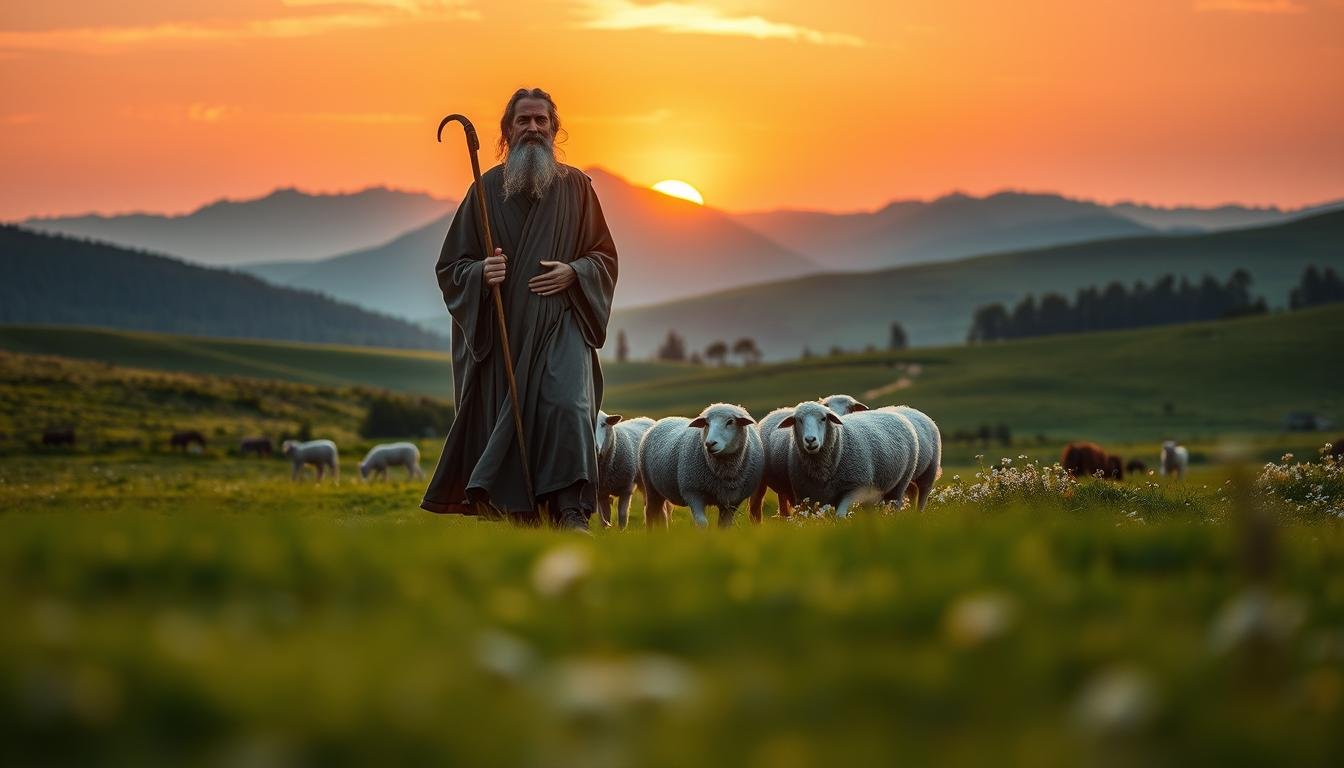
What does Psalm 23 mean in the Bible for real people today? Can a short pastoral poem still shape how a hurried person views life, danger, and rest?
David’s opening line, “The LORD is my shepherd,” frames the whole psalm as a personal confession of trust. This fact shows belonging and provision: one shepherd knows his sheep and guides a flock through pastures and waters.
The psalm maps a life under care — provision, restoration, protection, and honor. Read verse by verse and you will see verbs and pronouns that turn images into a road map for people facing real threats and hopes in a busy world.
We will trace David’s fields to Christ, the good shepherd, and offer practical steps to live beside still waters now. Expect honest pastoral realism: hardship remains, but shepherd presence transforms every step.
Why Psalm 23 Still Speaks Today in the United States
This brief pastoral text still meets modern anxieties with steady, practical care. Commentators note it has “charmed more griefs to rest”, often read beside hospital beds and at gravesides. That repeated comfort comes from the covenant LORD pictured as a shepherd who attends to real needs.
The shepherd image translates to today’s pressures: work instability, health fears, and scattered attention. The shepherd leads, feeds, protects, and gives rest in ways that mirror what many people long for but rarely find in daily life.
The good shepherd gathers a flock, countering isolation by forming belonging and care. He knows his sheep, adapts his way to each need, and offers presence across commutes, clinics, and classrooms. For Americans who prize independence, this lord shepherd reframes dependence as a path to resilient life and community.
- Active presence: not mere words, but steady guidance.
- Individual care: known and led, not left alone.
- Practical hope: comfort that fits everyday life.
How to Read Psalm 23 Like a Guide: A Step-by-Step Approach
Read the psalm as a practical roadmap: note each verb and follow the shepherd’s course step by step.
Observe: mark verbs—makes, leads, restores, walk, fear, prepare, anoint, overflows, follow, dwell—and watch the shift from third-person to second-person at the psalm’s center. These moves show present confidence and a sudden, intimate address.
Interpret: link the covenant name LORD to personal commitment. This lord shepherd binds himself to his sheep and leads us in paths of righteousness for his name. Note Book 1 setting (Pss. 15–24): kingship and care shape the way here.
Apply: pray each clause, pause on “for you are with me” when you face any valley in life. Read the text slowly—morning, midday, evening—and write down the fact that steadies you. Observation → interpretation → application helps order heart and step.
What does Psalm 23 mean in the Bible: A Verse-by-Verse Walkthrough
Each line of the psalm acts like a step on a guided trail from need to home. Read slowly and the flow appears: belonging, rest, renewal, courage, honor, and finally a settled home with God.
Verse 1 is a personal claim of belonging: the lord shepherd secures provision so desire is reset and trust grows.
Verse 2 shows rest. The shepherd makes sheep lie down in green pastures and leads to still waters. Keller’s insight helps here: true rest needs safety, freedom from friction, and enough food.
Verse 3 brings renewal. Restoration of the soul comes before walking paths of righteousness, guided for the shepherd’s name and purpose.
- Verse 4: The valley and shadow of death are real, but the shepherd’s presence removes panic. The rod and staff comfort and protect.
- Verse 5: A prepared table before enemies shows honor amid conflict; anointing with oil heals and the cup overflows.
- Verse 6: Goodness and mercy pursue the sheep, leading to dwelling in God’s house forever.
The ordered movement—belonging, rest, restoration, courage, honor, home—keeps the valley as a temporary road, not the last word.
Decoding the Images: Green Pastures, Still Waters, Rod and Staff, Table, Oil, and Cup
Each image in the psalm shows a distinct facet of the shepherd’s care. These are not abstract metaphors but actions a shepherd takes for a living flock. Read them as steps the shepherd uses to secure rest, safety, and honor.
Green pastures and still waters
Green pastures and still waters form a deliberate plan to remove fear, friction, flies, and famine. Keller’s point helps here: rest needs safety and enough food.
The shepherd leads sheep to soft grass and calm waters so anxiety fades and bodies restore.
Rod and staff
The rod represents strength and defense. The staff draws sheep close, guides, and rescues. Together as a rod staff, they comfort in the valley by blending protection with gentle correction.
Table in the presence of enemies
The table image evokes a prepared grazing mesa and covenant hospitality. A feast near enemies shows the shepherd’s calm control and signals safety and fellowship for the flock.
Oil and cup
Oil acts as pest relief and as anointing that honors and heals. The cup speaks of abundance that overflows, not mere survival.
- These images reflect real shepherd work that models how God offers care.
- Which image do you need now: calm waters, a steady staff, or an overflowing cup?
- All symbols converge on one message: comprehensive care for the flock.
From David’s Fields to Christ the Good Shepherd
David likely wrote as a mature king recalling shepherd life, and that memory shapes how YHWH is shown as a sovereign caretaker.
David’s lord shepherd image ties royal responsibility to daily tending: one who guides, feeds, and protects people and flock alike.
David’s memory and the covenant name
Scripture links shepherding to kingship (Genesis, Isaiah, and psalms). This way grounds royal rule in intimate care and righteous rule.
Jesus as the good shepherd
Jesus the good shepherd in John 10 lays down his life for his sheep, showing love that secures real life for his people.
From suffering to sovereign king
The trio of Psalms 22–24 moves from suffering through shepherding to kingship. It presents one coherent arc: pain, care, and final rule.
- Table and oil images find fulfillment in Christ’s hospitality and anointing.
- The shepherd faces enemies and shadow of death, then triumphs—bringing courage to believers.
- Early Christians celebrated this image, seeing the Shepherd-King rule the world while caring personally.
Walking Through the Valley of the Shadow of Death Without Fear
The valley can feel tight and real, yet the psalm insists the shadow is not the substance of death for those under care. Guzik highlights that believers pass through a valley; they face a shadow, not final doom. Spurgeon adds that a shadow cannot kill.

Define the valley as a constrained place where danger seems close. The shadow casts fear, but the shepherd’s presence keeps the final word from being death. This reframing helps turn panic into steady steps.
Practical trust: praying “You are with me” in hospitals, courtrooms, and grief
Say the phrase slowly when fear rises. Breathe, speak the verse, and picture the shepherd beside you. This simple practice moves theology into real courage in hospital rooms, verdict days, or when mourning.
- Walk, don’t run: the psalm calls the sheep to steady movement, not frantic escape.
- Rod and staff: the rod pushes back threats; the staff draws and guides—together the rod staff comforts and keeps course.
- Distinguish fear from finality: what is frightening need not be the end; the shepherd turns the shadow into a passing shape.
Countless saints have found this line a lifeline at bedside and graveside. Presence, not full explanation, is the shepherd’s primary gift in the deepest passages. Valleys are passages, not destinations, when the shepherd leads toward life.
Paths of Righteousness and the Name of the LORD
Restoration comes first, then the path unfolds. The lord shepherd revives the soul so a healed heart can follow a clear way. This order matters: renewal creates the ability to live rightly, not the reverse.
Righteous living as response to restoration
Righteousness flows from renewal. Sources like Guzik and Ephesians 2:10 show that good works are prepared by God after he restores life.
The shepherd leads sheep along practical paths, giving direction when choices confuse. Small acts—truth-telling, patient listening, generous giving—are the ordinary way of a renewed life.
For His name’s sake: guidance grounded in character
The phrase “for His name’s sake” means guidance rests on God’s character, not our merit. One steady motive—honoring that name—simplifies hard decisions.
- Clarify order: restoration → righteous paths.
- Purpose: the shepherd’s care forms and corrects.
- Practice: ask daily which path reflects his name.
Conclusion: A restored heart walks a righteous way under the shepherd’s faithful care. The shepherd is both moral guide and caregiver, shaping life one steady step at a time.
Surely Goodness and Mercy Shall Follow Me: The Pursuit That Changes Your Days
Goodness and mercy do more than trail behind us; they actively pursue each step we take. This phrase reframes follow as pursuit: covenant love chases us, not by chance but by promise.
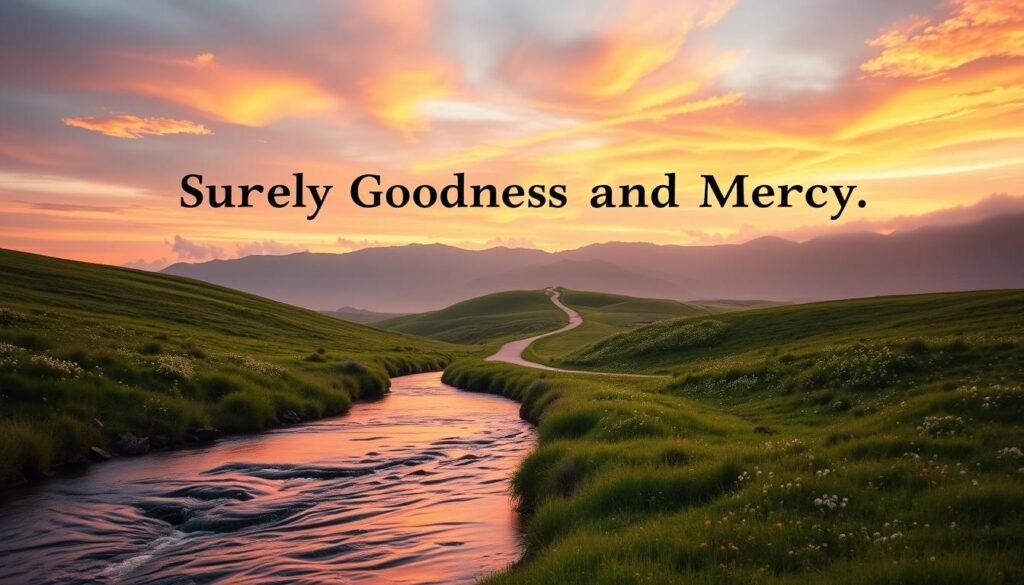
Spurgeon and Kidner stress covenant mercy as steady kindness. That means goodness and mercy act like a rear guard. They cover missteps and rescue what slips away.
This shifts daily life. In routine weekdays expect small kindnesses and timely help. In crisis, mercy shall follow as rescue and forgiveness. The good shepherd fills the cup and sends mercy to catch what spills.
- Reframe follow: goodness mercy shall signals an active pursuit, not passive luck.
- Rear guard: mercy covers errors; goodness brings care and wise aid.
- Practice: journal the ways mercy follows—unexpected help, mended relationships, or a timely word.
The promise spans all the days of life. Welcome this pursuit and learn to look back over your shoulder. Recognize who follows, and live awake to grace so hope grows steady.
How to Apply Psalm 23 Today: Beside Still Waters in a Busy World
Practical routines let people practice rest and mirror the shepherd’s care. Start small so habits stick. Use short pauses to breathe, read, and pray the phrase “You are with me” when stress rises.
Practices for rest: set brief Sabbath moments each day. Schedule device-free intervals and feed on a psalm or gospel paragraph so you can lie green pastures and let anxiety settle.
- Scripture feeding: morning on provision, midday on paths, evening on goodness.
- Guided prayer: pray the lines slowly—trust deepens when words steady breath.
- Sabbath moments: short rests that return life to dependence on the good shepherd.
Shepherding others: care requires presence, protection, and patience. Show up with practical help, set protective boundaries, and offer steady encouragement.
- Staff practices: gentle nudges and timely rescues for a struggling friend or coworker.
- Rod practices: defend the vulnerable and address harm when needed.
- Oil gestures: meals, kind words, and honor that dignify weary sheep at your table.
When facing enemies or pressure, picture the prepared table and respond with calm dignity. Ask, “What is the next faithful step?” and trust the shepherd to lead you along simple paths in daily life.
Conclusion
This closing promise gathers the psalm’s steps into a single homecoming of care and covenant.
Order runs through the whole road: belonging and rest, renewal and courage, honor amid enemies, and the pledge to dwell in the house of the LORD forever.
The central fact is clear: the lord shepherd presence redefines valley and shadow so that fear of death no longer rules the journey.
The table and cup remain signs of honor and abundance that steady daily steps in a busy world. Expect goodness and mercy to pursue your days life.
Practical next steps: memorize the lines, pray them each morning, and offer shepherd-like care to someone who needs a hand.
Blessing rests on the simple prayer: “Lord Shepherd, lead me on your paths today; your presence is enough.” Live in that assurance—valleys end and home awaits.
