

Have you ever wondered why those final sayings from the cross still move people centuries later?
This concise guide walks readers through Scripture so each saying appears in its Gospel voice. It ties musical settings by Haydn, Gounod, Franck, and MacMillan to a long tradition of Good Friday reflection.
Each short utterance shapes a theme: forgiveness, salvation, relationship, abandonment, distress, triumph, reunion. The number seven signals completion in biblical thought, so these final words form a complete portrait of the saving mission.
Expect clear context for every saying and practical prompts for prayer and daily life. This is not only theology; it is a call to forgive, to trust, and to love people in need.
Slow down, listen to these sayings, and let them point from cross to empty tomb. They offer hope for present suffering and a path to renewed life and service in time ahead.
An inspirational guide to Jesus on the cross: context, purpose, and how to read the final sayings
What are the seven last words? They are brief sayings spoken from the cross that, when read together, reveal a unified testimony of love stronger than death.
Read with a gospel harmony to hear each evangelist while letting the combined portrait deepen prayer. This approach keeps Matthew, Mark, Luke, and John distinct, yet invites readers into the final hours as a single, moving testimony.
Use this guide to prompt prayerful reading and to grasp why these sayings matter for faith and daily life. They mark key moments in his earthly work: forgiveness, compassion, lament, trust, and the finished act that brings life from death.
- Pause between sayings and read aloud.
- Notice which phrase touches your heart for the day.
- Hold questions and pain before God as you listen in humility.
“It is finished.”
All people are welcome here: bring hope, doubt, and longing. Let each saying serve as a living word Jesus still speaks in our time.
The 7 Last words of Jesus: a gospel harmony and why they matter today
Gathered across four Gospels, these brief sayings trace a clear arc from mercy to reunion.
Luke’s voice brings forgiveness and promise. John brings intimacy and fulfillment. Matthew and Mark keep the raw cry of a suffering man.
This harmony does not erase differences. Instead it lets us hear how jesus said distinct lines to a mother, a thief, and the Father in one saving hour.
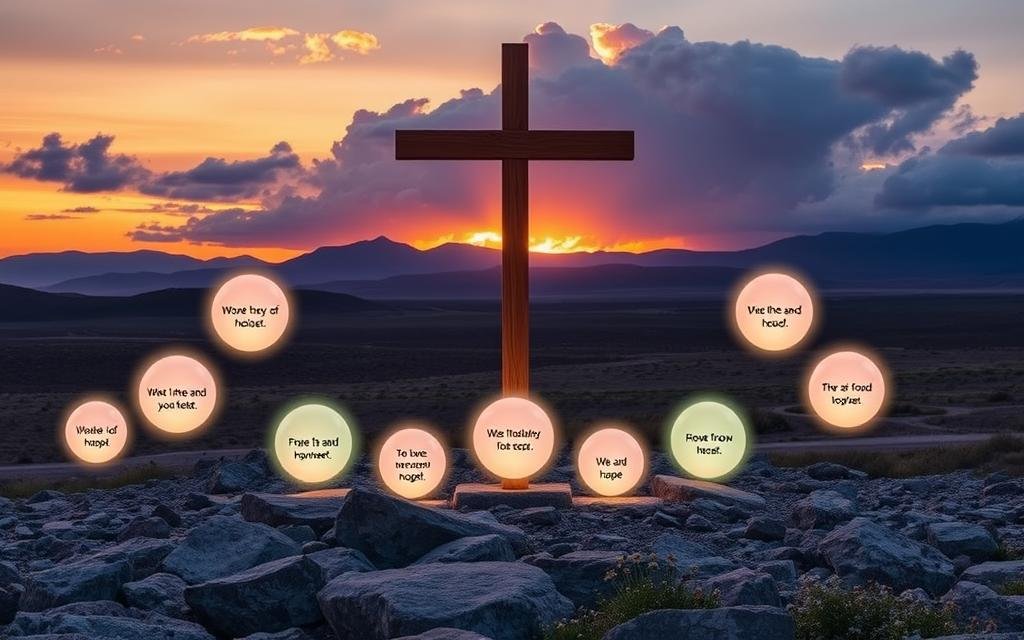
How the four Gospels form one story
Read together, the sayings move from pardon to reunion. That arc shows the heart of the announced kingdom.
Why seven matters: completion and new creation
Seven echoes creation’s days and signals that this cross work completes God’s plan. It links creation time, the hour of suffering, and new life for the world.
“It is finished.”
Practical note: mark each saying in your Bible and pray them slowly. Let one line become a personal invitation to mercy and hope.
Scripture and meaning of each saying from the cross: forgiveness, salvation, relationship, abandonment, distress, triumph, reunion
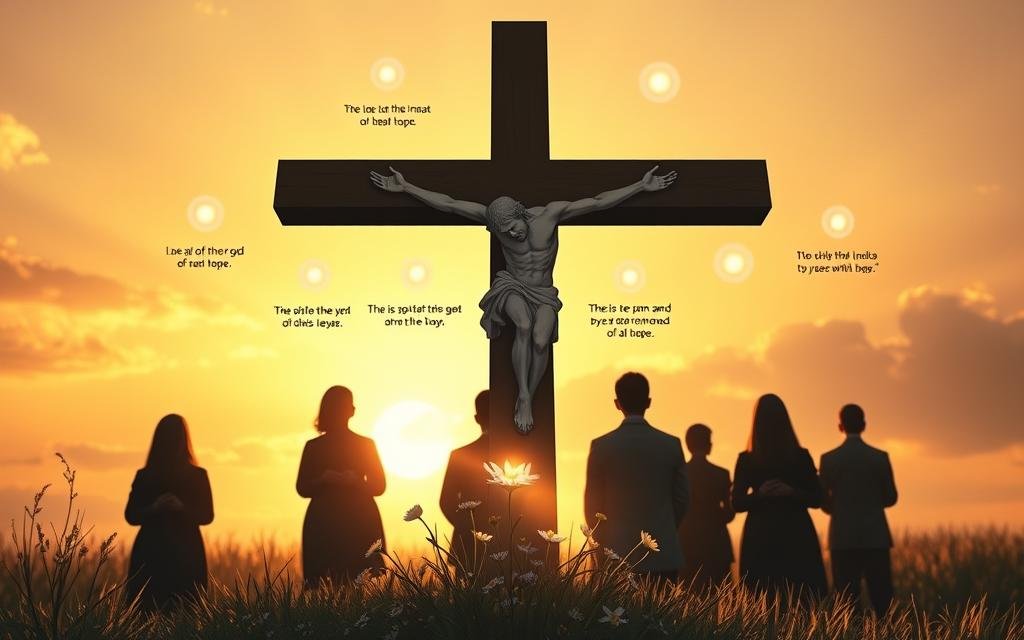
“Father, forgive them…” — Luke 23:34 (forgiveness at the cross)
Forgiveness pours from the cross as a bold word of mercy. Luke 23:34 records this plea, though some early manuscripts omit the line. Still, it models mercy where we expect rage.
“Today you will be with me in paradise” — Luke 23:43 (salvation and the good thief)
To a repentant thief Jesus offers paradise today. That short promise shows how faith and humility meet grace at the edge of death. Punctuation has long shaped how readers hear this instant promise.
“Woman, behold your son … Behold, your mother” — John 19:26-27 (relationship)
At the foot of the cross a new family forms: mother, son, and disciple. This caring word builds community out of suffering and models how love creates the Church.
“My God, my God, why have you forsaken me?” — Matthew 27:46 (abandonment at the ninth hour)
Uttered at the ninth hour in a loud voice, this cry echoes Psalm 22. It gives honest lament and points the listener toward a psalm that ends in trust despite darkness.
“I thirst” — John 19:28 (distress)
“I thirst” fulfills Scripture and reveals physical need and divine longing. John adds a hyssop detail that recalls purification rites and Passover blood.
“It is finished” — John 19:30 (triumph)
Tetelestai declares the work complete. This brief triumph flips apparent defeat into the saving work done by self-giving love.
“Father, into your hands I commend my spirit” — Luke 23:46 (reunion)
With hands lifted, Jesus entrusts his spirit to the Father. This final surrender shows how trust faces death and opens the door to new life.
“It is finished.”
Good Friday tradition: Seven Last Words services, Stations of the Cross, and the Three Hours’ Agony
For many churches, a midday service frames the day with Scripture, silence, and reflective music.
Since the 16th century, meditations on the last words rose in Europe and in Peru through a Jesuit practice that spread globally. In the United States, congregations across traditions still gather to mark this devotion.

From early modern devotion to present congregations
Three Hours’ Agony is a classic format. From noon to 3 p.m., worshipers move through Scripture, short reflections, and long silence. This schedule mirrors the hours Jesus hung on the cross and helps people enter prayerfully.
Meditation at the ninth hour
At the ninth hour, many hold a deep silence and prayer. People listen for the loud voice that breaks through suffering and points toward trust. Simple rituals—candles, a single reading, a period of stillness—open space for grief and hope.
Music as meditation
Composers such as Haydn, Gounod, Franck, and MacMillan set these sayings to music. Their works create a prayerful atmosphere that invites listeners to linger with each phrase, letting words shape how we live in the face of death and new life.
“It is finished.”
- Walk the Stations during Lent and weave these sayings into each step.
- Plan a personal practice: read a saying, pause, journal, then pray.
- Invite families or small groups to share simple liturgies that honor this tradition.
Seeing the Word: reflecting with art on the seven last sayings
Robert Wright’s canvas invites viewers to enter the hush where words meet mystery.

Robert Wright’s 2004 abstract painting acts as a visual meditation on the sayings. Seven interrelated shapes sit on the field, and a red‑black fulcrum holds a single moment between life and death.
Robert Wright’s “Seven Last Words”: shapes, space, color, and mystery
The central fulcrum reads as Christ bearing love’s weight. It balances tension and hope and makes the moment feel both fragile and sure.
Most shapes touch one another while two stand apart. That separation invites prayer about vulnerability, loss, and the call to deeper communion in the Body of Christ.
From Holy Saturday to Easter: entering the space between life and death
Wright’s forms point toward an in‑between time like Holy Saturday. In that silence we learn to wait, surrender, and trust even when we cannot see the outcome.
Try this practice: sit before sacred art, breathe slowly, repeat a saying aloud, and ask the mother to help you behold her son with steady love. Journal colors, feelings, or questions that rise. Let the experience turn contemplation into hope and prepare you to move from silence into new light.
“the space beyond the Cross”
Living the message now: practices to embody Jesus’s final words in daily life
Turn the cross’s words into simple actions that renew how you live and serve.

Forgive as you are forgiven: reconciliation, mercy, and love for others
Commit to concrete forgiveness. Ask God for grace to release resentment and to seek reconciliation with others. Use a short prayer or note to begin a repaired relationship.
Pray with Scripture: Rosary, Psalm 22, Examen, and trust in the Father
Build a steady rhythm each day. Pray the Rosary to stand with Mary, read Psalm 22 to move from lament to praise, and close with an Examen that notices where grace met you today.
From thirst to paradise: serving those who suffer and pointing to the kingdom
Answer “I thirst” by serving people who need water, company, or advocacy. Small acts meet real need and show love in practice.
- Use litanies (Humility, Trust, Christ the King) to shape interior life.
- Serve someone who is thirsty; give time, water, or a listening ear.
- Let “It is finished” spur faithful work with integrity at home or in ministry.
“Entrust your day to the Father and let love measure every small step.”
Conclusion
,In this close, the seven last words gather into a clear call: live mercy, trust father, serve others. These final sayings lead from cross suffering into renewed life.
Remember forgiveness in luke 23:34 and the promise in luke 23:43. Hear the ninth hour cry (matthew 27:46) and the triumph in john 19:30.
Let each word shape daily action. Tend thirst, shelter a hurting person, finish work in love. Stand with mother and disciple at the moment, entrust hands and spirit to father, and carry Good Friday into every day.
