

Can a vision of dry bones in a desolate valley be a powerful message of hope and restoration? The biblical account of Ezekiel 37:1-14 presents a vivid picture. It has captivated readers for centuries, showing a deep metaphor for spiritual renewal and revival.
You might wonder how lifeless bones could symbolize hope. The answer is in the historical context and spiritual meaning of this passage. It was meant for the Israelites in exile.
The vision is a testament to God’s power to restore and revive. As we dive into this passage, you’ll learn about its original meaning. You’ll see how it’s relevant today, inspiring personal growth and deepening your faith.
Overview of Ezekiel 37: 1-14 Valley Of Dry Bones Explanation And Meaning
Exploring Ezekiel 37:1-14 reveals a powerful vision. It shows God’s deep connection with His people. Ezekiel, a prophet, received visions from God for the Israelites in exile. He was taken to a valley full of bones (
This vision is key to understanding Ezekiel’s message. It’s not just a random event but a vital part of his prophecies.
The Vision’s Place in Ezekiel’s Prophecies
Ezekiel’s prophecies came during a hard time for the Israelites. They were in exile, away from their homeland because of disobeying God. Ezekiel’s visions, including the dry bones, brought hope and guidance.
This vision is placed carefully in the book of Ezekiel. It follows prophecies about Israel’s judgment and restoration. This context helps us understand the vision’s meaning and its importance to the Israelites.
Key Themes and Symbols
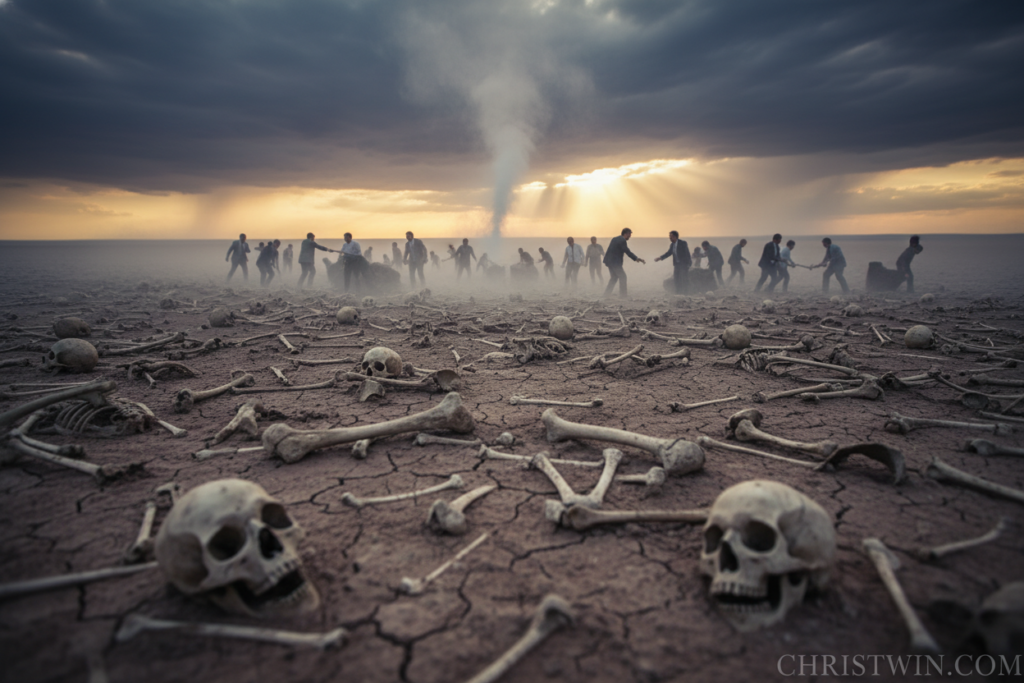
The vision of the dry bones is full of symbols. The bones represent the Israelites in exile, feeling hopeless and far from God. The bones’ dryness shows their deep despair. The main themes are:
- The sovereignty of God over all things, including life and death
- The promise of restoration and renewal for God’s people
- The role of the prophet as a messenger of God’s hope to His people
Grasping these themes and symbols is key to understanding Ezekiel 37:1-14. It’s not just a historical account but a living message for believers today.
Verse-by-Verse Analysis of Ezekiel 37:1-14
Ezekiel 37:1-14 shows a powerful vision of God’s plan to restore. It’s a key part of prophetic writings. It talks about God’s bond with His people and His power to make things new.
The Hand of the Lord and the Valley (verses 1-2)
Ezekiel was taken by the Spirit to a valley with dry bones (Ezekiel 37:1). Dry bones mean death and no hope. Ezekiel was told to speak to these bones, even though they were dead.
The Dialogue with God (verses 3-6)
In verse 3, God asks Ezekiel, “Can these bones live?” Ezekiel says, “O Lord GOD, You know” (verse 3). This shows Ezekiel’s humility and faith in God. God tells Ezekiel to speak to the bones, promising they will live (verses 4-6).
The talk between God and Ezekiel is key. It shows the importance of faith and following God’s word, even when things seem impossible.
The Prophesying and Restoration (verses 7-10)
Ezekiel starts to prophesy, and something amazing happens. The bones come together, get flesh and sinews, and then come to life with God’s breath (verses 7-10). This shows Israel’s restoration and God’s people being renewed.
Prophesying to the bones is more than a symbol. It shows God’s word can change and restore things.
The Interpretation Given (verses 11-14)
God explains the vision to Ezekiel. He says the bones are Israel, who feel hopeless (verse 11). God promises to bring them back, renew them, and give them His Spirit (verses 12-14).
This part of the vision talks about restoring a nation and renewing spirits. It shows God’s dedication to His people.
The Symbolism of Dry Bones in Biblical Context
The valley of dry bones in Ezekiel 37 is a powerful image. It shows hope in hard times. This vision is full of meaning, showing Israel’s spiritual state during their exile.
Death and Hopelessness Imagery
The dry bones in Ezekiel’s vision show a deep spiritual emptiness. They are dry, unburied, and scattered. This picture shows Israel’s spiritual death in captivity.
Dry bones symbolize death and hopelessness in the Bible. In Psalm 22:15, the writer says, “My strength is dried up like a potsherd.” This shows spiritual weakness and need for help.
Connections to Other Biblical Passages
The dry bones in Ezekiel 37 connect to other passages about new life. Isaiah 26:19 says, “But your dead will live, their bodies will rise.” This echoes Ezekiel’s message of hope and renewal.
The New Testament also talks about the dead rising, like in John 5:28-29. These links show Ezekiel’s vision is part of a bigger story. It’s about God’s power to bring life to the dead.
Thinking about dry bones invites you to look at your own spiritual state. Ezekiel 37 reminds us of God’s power to restore and renew, even when things seem darkest.
Theological Interpretations of the Valley of Dry Bones
Exploring Ezekiel 37 reveals deep insights into God’s plans for His people. The Valley of Dry Bones vision is key in theological talks. It teaches us about faith, restoration, and God’s Spirit power.
Jewish Interpretations Through History
Jewish views on Ezekiel 37 have changed over time. They show the growth of Jewish thought. Some believe it promises Israel’s return and Jewish rule.
- The prophecy was seen as comfort during hard times.
- It was a sign of the resurrection of the nation, in body and spirit.
- Some thought the dry bones were the lost tribes of Israel.
Christian Perspectives on the Passage
Christian views on Ezekiel 37 are also varied. Many see it as a sign of spiritual rebirth. It’s linked to Christ’s teachings on life after death.
- The vision is seen as a type of Christ’s resurrection.
- It’s a symbol of the church’s restoration and believers’ spiritual awakening.
- Some theologians connect it to the future resurrection of believers.
Ezekiel 37:1-14 is a powerful message of hope and renewal. It touches the heart of faith and human experience. Think about how its themes of spiritual renewal and national restoration might apply to your life and community.
The Promise of National Restoration
The promise of national restoration in Ezekiel 37 is a beacon of hope for Israel. It speaks to their return from exile and beyond. This powerful prophecy not only addressed the immediate concerns of Ezekiel’s contemporaries. It also provided a broader vision of God’s plan for His people.
Israel’s Return from Exile
Ezekiel 37:1-14 vividly describes God’s commitment to restoring Israel. The vision of the dry bones coming to life symbolizes the nation’s transition. It shows the nation moving from hopelessness to renewed vitality.
As God says, “Behold, O My people, I will open your graves and cause you to come up from your graves, and bring you into the land of Israel” (Ezekiel 37:12). This promise was significant during the time of exile. It offered a message of hope and renewal.
The return from exile was not just physical. It was also spiritual. It showed God’s faithfulness to His covenant with Israel. It demonstrated His power to revive and restore His people.
Historical Fulfillment Perspectives
Understanding the historical fulfillment of Ezekiel’s prophecy requires examining the context of Israel’s exile and return. The Babylonian exile, which began in 586 BCE, marked a significant period of displacement for the Israelites. The prophecy in Ezekiel 37:1-14 spoke directly to this context.
Key aspects of the historical fulfillment include:
- The return of the Israelites from Babylonian exile, facilitated by the decree of Cyrus the Great in 538 BCE.
- The restoration of Jerusalem and the Temple, symbolizing the renewal of religious and national life.
- The ongoing struggle to maintain faith and identity in the face of continued foreign domination and dispersion.
The prophecy in Ezekiel 37 continues to resonate with themes of restoration and renewal. It offers a powerful narrative of hope for God’s people across centuries.
Spiritual Resurrection and Renewal
Ezekiel 37 talks about spiritual resurrection. It shows how God’s power can bring life back to people and groups. This message is alive today, touching our hearts with hope and faith.
Individual Spiritual Rebirth
The vision of dry bones is a strong symbol for personal spiritual rebirth. It tells us that even when we feel empty, God can make us alive again. The Bible says, “I will put My Spirit in you, and you shall live” (Ezekiel 37:14).
This promise is at the core of Christianity. It gives hope and new life to those who feel lost or far from their faith.
The Bible uses images of new life and renewal to talk about spiritual rebirth. For example:
- New Birth: Jesus talks about being born again (John 3:3-7).
- Resurrection: Paul writes about being raised with Christ (Colossians 3:1-4).
- Renewal: The apostle Paul encourages believers to be transformed by the renewing of their minds (Romans 12:2).
These ideas show God’s power to change lives, just like Ezekiel 37 says.

Community Revival Applications
Ezekiel 37 also talks about reviving communities. The dry bones symbolize a group feeling hopeless and disconnected. Yet, God promises to bring them back to life. This message is as important today, urging communities to seek renewal together.
Key parts of community revival include:
- Unity: Coming together as one body, just like the bones in Ezekiel’s vision.
- Prayer: Seeking God’s guidance and intervention, as Ezekiel did with the dry bones.
- Renewed Purpose: Finding or rediscovering the community’s mission and purpose, like Israel’s return to their land.
By following these steps, communities can experience deep renewal. They can become lively examples of faith that uplift everyone.
The Role of the Spirit in Ezekiel 37
In Ezekiel 37, we learn about the Spirit’s role in bringing back to life. The prophecy shows the Spirit’s power to make the dead come alive. Knowing about the Hebrew word “Ruach” is key.
“Ruach” means wind, breath, and spirit in Hebrew. In Ezekiel 37, it’s God’s breath that makes the dry bones live. This shows God’s Spirit can give life.
The Hebrew Concept of “Ruach”
“Ruach” in Hebrew means Spirit, breath, and wind. It shows how these are connected. In Ezekiel 37, it means God’s breath is what makes things live.
This idea comes from the story of creation. God’s breath made Adam alive.
“Ruach” is used in many parts of the Hebrew Bible. It talks about God’s creative and saving work. It shows God’s power and presence, often as wind or breath.
Divine Breath as Life-Giver
Ezekiel 37 shows God’s breath as the source of life. The dry bones, symbolizing Israel in exile, come back to life with God’s breath. This shows that God’s Spirit can restore and renew.
The divine breath brings life to individuals and communities. It restores Israel as a whole. This is a complete renewal, both physically and spiritually.
Understanding the Spirit’s role in Ezekiel 37 can give you hope and renewal. Just like the dry bones, you can experience spiritual rebirth and restoration through God’s Spirit.
Prophetic Implications for the Future
The prophecy in Ezekiel 37:1-14 is very important for the future. It talks about the end times and future events. You will learn how it connects to the Bible’s big themes.

Eschatological Interpretations
Ezekiel 37 is about the end times. The vision of the dry bones shows Israel’s future. It links to the return of Christ and the final judgment.
This old prophecy is full of hope and renewal. The dry bones, symbolizing hopelessness, come to life by God’s power. It shows God’s power to restore and renew.
End Times Perspectives
From an end times view, Ezekiel 37 talks about Israel’s future. Many think it predicts Israel’s return and spiritual renewal.
- The regathering of Israel from various nations
- The spiritual renewal of the people
- The establishment of a new covenant with God
These points are key in many end times views. They show God’s plan unfolding.
Messianic Connections
The prophecy also hints at Jesus Christ’s role in the future. The New Testament ties Ezekiel’s prophecies to Jesus. This shows God’s plan through Christ.
Ezekiel 37:1-14 connects the Old and New Testaments. It foreshadows Christ’s redemptive work. This highlights the Bible’s unity and coherence.
In summary, Ezekiel 37:1-14 is very deep. It offers insights into the end times, future, and Jesus’ role. Reflecting on this passage can deepen your understanding of God’s plans and Ezekiel’s vision in the Bible.
The Valley of Dry Bones in Art and Culture
The Valley of Dry Bones is a big deal in art and culture. It comes from Ezekiel 37 and has inspired many works. This story has touched literature, music, art, and pop culture in big ways.
Literary References
Writers have been drawn to the Valley of Dry Bones for ages. It has sparked many interpretations. For example, in Paradise Lost, John Milton uses it to talk about spiritual awakening.
Today, many authors use Ezekiel 37’s symbols in their work. Margaret Atwood’s The Handmaid’s Tale uses the dry bones to show hope against oppression. These examples show how Ezekiel’s vision keeps inspiring and challenging readers.
Musical and Artistic Depictions
The Valley of Dry Bones has also inspired music and art. Musicians have used it in many genres, like gospel and rock. For example, “Dem Dry Bones” is a famous gospel song.
In art, the dry bones are often shown in paintings and sculptures. They highlight the contrast between death and life. Artists use different mediums to show Ezekiel’s vision, creating works that are both haunting and hopeful.
Popular Culture References
The Valley of Dry Bones has also appeared in pop culture. It’s in films, TV shows, and video games. These uses often symbolize transformation or renewal, just like in Ezekiel’s story.
In science fiction, the dry bones often mean a world after a big disaster. The goal is to bring life back to a barren place. These references show how Ezekiel 37 keeps inspiring stories today, giving hope in tough times.
Modern Applications of Ezekiel’s Vision
Ezekiel 37 has a message for us today. It offers hope and guidance for believers. It talks about situations that seem hopeless and gives spiritual lessons for now and then.
Hope in Seemingly Hopeless Situations
The vision of the valley of dry bones shows us God’s power. You might face big challenges, but Ezekiel 37 says God can restore and renew anything.
This message is key in hard times. It’s for when you feel spiritually dry, emotionally down, or when your community is struggling. Ezekiel 37 gives a hopeful view that God can revive and restore.
Spiritual Lessons for Today’s Believers
Ezekiel 37 teaches us to have faith when things are unsure. Just like Ezekiel, we are called to trust God’s promises, even when things look bad.
It also shows the Spirit’s role in bringing life and renewal. It tells us that through God’s Spirit, we can be spiritually reborn and communities can come back to life, as seen in Ezekiel 37:1-14.
Preaching and Teaching from Ezekiel 37
For those in ministry or teaching, Ezekiel 37 is full of material. It shows the power of God’s Word in bringing spiritual life and renewal. It’s great for talking about spiritual resurrection and its meaning for us and the church.
When teaching Ezekiel 37, highlight the need to trust God’s promises and the role of faith in spiritual restoration. It’s also a chance to encourage people to pray for revival and renewal, for themselves and their communities.
Conclusion: The Enduring Message of Ezekiel 37:1-14
The vision of the Valley of Dry Bones shows God’s power to bring life back. You’ve learned how Ezekiel 37:1-14 talks about God’s love for His people. It gives us hope and calls us to renew our spirits.
This passage reminds us that God can make life from nothing. It tells us to trust in God’s power to change things. This is true for each of us and for our communities too.
Think about how Ezekiel 37:1-14’s message can help you today. Let it inspire you to seek God’s help. And may you help bring spiritual renewal to those around you.
