EMMANUEL KELLY
Have you ever wondered why some believers seem so peaceful and clear? Could it be because they meditate on the Word of God? Psalm 1 tells us that thinking deeply about God’s words is key to being blessed. “Blessed is the man … who meditates on his law day and night” (Psalm 1:1-2).
Meditation is about thinking deeply about something. For believers, it’s about thinking about the Bible to understand God’s will. By using bible meditation techniques every day, you can grow spiritually and live better.
Looking to deepen your faith during Lent? Try prayers for Lent to make your meditation better. By slowing down and focusing on God, you can get closer to your faith.
Understanding Biblical Meditation
Biblical meditation has deep roots in the Bible. It’s a special way to connect with God through Scripture. This practice helps you feel closer to Him.

What Scripture Says About Meditation
The Bible talks a lot about meditation. Joshua 1:8 says to “meditate on it [the Book of the Law] day and night.” It’s not just reading. It’s about thinking deeply and letting God’s Word guide you.
Psalm 1:2 says the blessed person meditates on God’s law all day. This meditation is about connecting with God’s Word. It’s not just thinking about yourself.
How Biblical Meditation Differs from Eastern Practices
Biblical meditation is special because it focuses on Scripture. It’s different from Eastern meditation, which tries to empty the mind. Biblical meditation fills your mind with God’s Word.
By using scripture reflection methods, you learn more about God’s love. This makes your spiritual life richer. It also helps you deal with life’s challenges.
The Spiritual Benefits of Meditating on God’s Word
Meditating on God’s Word brings many spiritual benefits. It helps you get closer to God and grow spiritually. It also guides your decisions.
Using biblical meditation tips can improve your prayer life. It helps you apply biblical teachings to your daily life. Meditation becomes a powerful tool for growth and spiritual development.
Preparing Your Heart and Mind for Meditation
Starting to meditate on God’s Word is exciting. It’s key to get your heart and mind ready for a deep connection with God. This step is vital for devotional meditation strategies to help you grow spiritually.
Getting ready involves a few important steps. First, make a space for meditation. This is where spiritual contemplation exercises start, helping you connect with God deeply.
Creating Sacred Space and Time
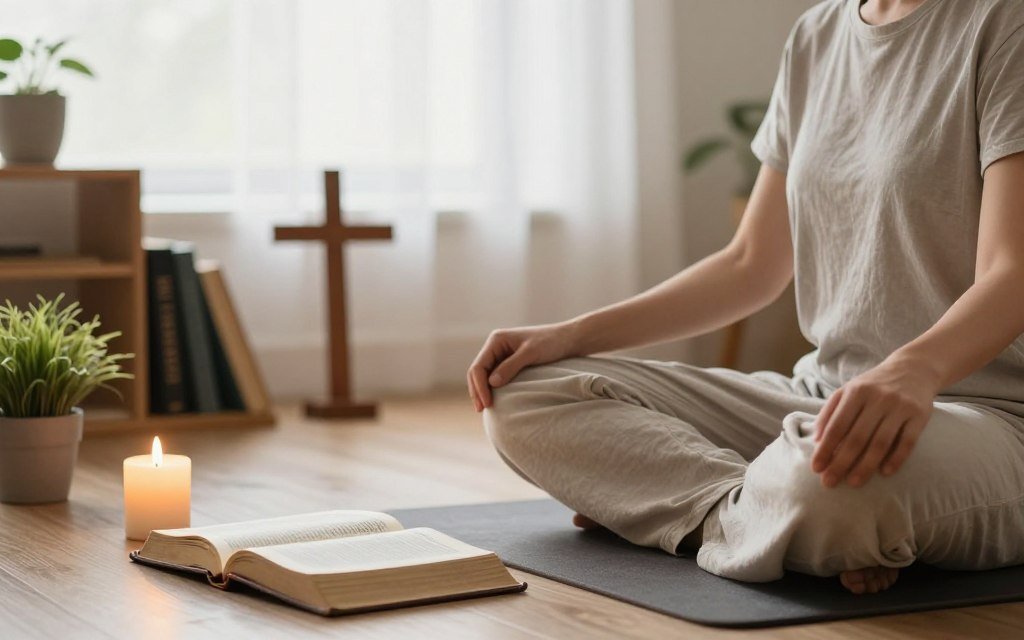
To meditate well, you need a special place. It could be a quiet spot at home, a calm outdoor area, or anywhere you feel at peace. Think about what makes this place special to you. Is it the Bible or a peaceful setting? Use it to make a space for spiritual contemplation exercises.
Removing Distractions
Getting rid of distractions is key for meditation. Today, we’re surrounded by noise and interruptions. To meditate well, cut down on these distractions. Turn off your phone, find a quiet spot, and use tools like headphones or a white noise machine if needed.
The Role of Prayer Before Meditation
Prayer before meditation is very important. It helps you start with the right mindset. Kristen Wetherell suggests using the TASTE acronym to guide your meditation.
By doing these things—making a sacred space, removing distractions, and praying before you start—you can improve your devotional meditation. This will help you connect more deeply with God.
6 Effective Ways to Meditate on the Word of God
To get closer to God, try different biblical meditation techniques. Meditating on the Bible can change your life. It helps you understand God’s Word better.
Overview of Biblical Meditation Approaches
There are many ways to meditate on the Bible. You can use reading and repetition, visualization, journaling, or join communal practices. Each method lets you connect with God’s Word in your own way.
Choosing the Right Method for Your Spiritual Season
Think about your spiritual season when trying spiritual reflection methods. Some methods might feel right at certain times. It’s important to keep trying until you find what feeds your soul.
Combining Methods for Deeper Understanding
Using one method is good, but mixing bible meditation techniques can be even better. For instance, start with lectio divina. This involves reading, meditating, praying, and thinking about the Bible. Then, write down your thoughts to reflect on later.
Method 1: Scripture Reading and Repetition
Starting to meditate on God’s Word is easy. Just read and repeat scripture. This helps you connect deeply with God’s message.

The Practice of Lectio Divina
Lectio Divina is a slow, deep reading of scripture. It helps you understand God’s Word in many ways.
Choose a scripture passage. Read it slowly, noticing special words. Think about why these words matter to you. Then, think about how it applies to your life.
Memorization Techniques
Memorizing scripture is key. It lets you carry God’s Word with you always. This way, you can use it in your daily life.
Good ways to remember scripture include repeating it, using flashcards, and putting it in your daily routine. For example, say a verse while doing chores or write it on sticky notes.
Benefits of Repetitive Reading
Reading scripture often has many benefits. It deepens your understanding of God’s Word. You learn its details and how to use it in your life.
It also makes scripture feel familiar and comforting. This makes it easier to remember and use in your daily life. It helps you think deeply and connect closer to God.
Method 2: Verse Visualization and Contemplation
Verse visualization and contemplation are special ways to connect with the Bible. They let you dive into its stories and truths. You use your imagination to see and feel the scenes and messages in scripture.
Imaginative Engagement with Scripture
Imaginative engagement with scripture is more than just seeing pictures. It’s about feeling the Bible in a special way. As you read, try to see, hear, and feel what’s happening.
For example, when you read about Jesus and the Samaritan woman, imagine the sounds and feelings. This makes the Bible feel real and important to you.

Placing Yourself in Biblical Narratives
Verse visualization lets you be part of the Bible’s stories. Imagine yourself in the scenes, meeting the characters. You could be the prodigal son or one of Jesus’ disciples.
This helps you see your life and spiritual journey in a new light. You find connections between the Bible and your own experiences.
To enhance this practice, try the following steps:
- Choose a specific biblical narrative to focus on.
- Read the passage multiple times, visualizing the details.
- Imagine yourself within the scene, interacting with the characters.
- Reflect on what the experience reveals about God’s character and your relationship with Him.
Using Visual Aids in Meditation
Visual aids can make your meditation better. They give you a real picture of the scripture. This could be icons, paintings, or videos of biblical scenes.
Look closely at the images, colors, and expressions. Let them help your prayers and reflections. This deepens your understanding of the scripture.
For example, meditating on Psalm 23 with a picture of a shepherd can inspire your thoughts on God’s guidance. Visual aids make your meditation richer and more meaningful. They help you connect more deeply with God’s word.
Method 3: Journaling and Written Reflection
Journaling and written reflection help you find new insights in the Bible. You write out Bible passages and think about their meaning. Then, you apply what you learn to your everyday life.

Scripture Writing Practices
Start by writing out Bible passages. This is called scripture writing. Pick a passage that speaks to you. Write it out slowly, focusing on each word.
Think about the passage’s context and how it fits into your life.
Tips for Scripture Writing:
- Choose a quiet, comfortable space to write.
- Use a journal or notebook dedicated to your spiritual reflections.
- Experiment with different writing tools, such as pens or colored pencils, to enhance your experience.
Guided Journal Prompts
Guided journal prompts help you reflect deeply. They ask questions about a passage or how it relates to your life. For example, “What does this passage reveal about God’s character?” or “How can I apply this verse to a current challenge I’m facing?”
These prompts keep you focused and make your journaling time meaningful.
Creating Personal Applications
Think about how to use what you’ve learned in your daily life. This might mean setting goals, changing habits, or being more aware of God’s presence.
Steps to Create Personal Applications:
- Identify key insights or takeaways from your journaling.
- Consider how these insights can be applied to your current circumstances.
- Develop a plan to integrate these applications into your daily life, such as setting reminders or creating a prayer related to your insights.
By adding journaling and written reflection to your devotions, you can grow spiritually. You’ll understand God’s Word better and live a richer spiritual life.
Method 4: Audio Meditation and Spoken Word
Using sound to connect with Scripture can change your life. It opens new ways to think and feel God’s presence. Audio meditation is more than just listening. It’s about actively engaging with God’s Word through sound.
Listening to Scripture Readings
Listening to Scripture is a simple yet powerful way to meditate. It’s great when you’re busy or want a break from reading. You can find many audio Bibles and devotionals online, in different voices and styles.
As you listen, notice the parts that catch your attention. Stop the recording to think about them. This helps if you learn better by hearing or have trouble reading quietly.
Speaking God’s Word Aloud
Reading Scripture out loud is another good way to meditate. It uses more senses, helping you understand and remember better. It also lets you feel the sound and rhythm of the words.
Read slowly, focusing on different words or phrases. Try recording yourself and then listen back. This can help you notice your tone and how the words affect you.
Musical Meditation Approaches
Music is a powerful way to express faith. Using music in meditation can deepen your connection with Scripture. Listen to worship songs or hymns based on the Bible.
You can also make your own music meditation. Set Scripture to music or use instrumental pieces. Let the music help you focus and connect with God.
Remember, the goal of these practices is to truly connect with God’s Word. Let the sounds and words touch your heart. Be open to how God might speak to you through these practices.
Method 5: Topical Study and Cross-Reference Meditation
Exploring topical study and cross-reference meditation can deepen your faith. It helps you connect with God’s Word more deeply. You look at specific themes or topics across the Bible.
Following Themes Throughout Scripture
To start, choose a theme or topic that interests you. It could be “faith and doubt” or “God’s love and mercy.” Use tools like a concordance or Bible study software to find related scriptures.
For example, studying “forgiveness” might include Ephesians 4:32 and Matthew 6:14-15. Then, categorize these references by context. This helps you see how the theme changes across different parts of the Bible.
Using Study Tools Effectively
Good topical study needs the right tools. Bible study software is great for cross-referencing. It shows all instances of a word or phrase in different translations.
Commentaries and Bible dictionaries are also key. They give insights into the historical context and original language of passages. For example, a commentary on Psalm 23 might explain the shepherd imagery and its meaning.
Creating Thematic Meditation Sessions
After studying, plan your meditation. Choose a few key verses that fit your theme. Use these verses as the base for your meditation.
For example, meditating on “trust in God’s sovereignty” could start with Proverbs 3:5-6. Reflect on what it means to trust in the Lord with all your heart.
By using topical study and cross-reference meditation, you’ll understand Scripture better. You’ll also grow spiritually with devotional meditation strategies and spiritual contemplation exercises.
Method 6: Communal Meditation Practices
Meditating with others can change your life. Communal meditation practices help you grow closer to God with friends. It makes you feel part of a group on a spiritual journey.
Meditating with friends gives you new views on the Bible. You also get support and encouragement. This makes your meditation time even better, as everyone shares their wisdom.
Group Bible Study Approaches
Joining a group Bible study is a great way to meditate together. Discussing Scripture together helps you see God’s Word in new ways. Use a guided study to dive deep into the Bible.
Accountability Partners
Having a meditation buddy adds extra support. Regular check-ins keep you on track. You can share your thoughts, challenges, and progress, and pray together.
Family Meditation Practices
Meditation is great for your family’s spiritual growth. Family devotions can be simple or complex. It’s a way to bond with God and each other.
Communal meditation brings people together in faith. It’s through group studies, buddies, or family time. This strengthens your bond with God and others, making your faith stronger.
Conclusion
As you finish this journey, keep exploring these ways to meditate on God’s Word. Use these bible meditation techniques every day. They help you understand scripture better and get closer to God.
Think about the methods that feel right to you. Maybe it’s reading scripture, visualizing verses, journaling, or meditating with others. Meditating on God’s Word lets you receive His guidance and wisdom.
For more spiritual growth, check out prayers for Lent. They can guide you on your faith path. May these practices bring you peace, clarity, and a stronger faith connection.
FAQ
What is biblical meditation, and how does it differ from other forms of meditation?
How do I prepare myself for biblical meditation?
What is Lectio Divina, and how can I practice it?
How can I use journaling as a means of biblical meditation?
What is the benefit of memorizing Scripture, and how can I do it effectively?
How can I meditate on Scripture with others, and what are the benefits of communal meditation?
What are some effective ways to minimize distractions during biblical meditation?
How can I incorporate music into my biblical meditation practice?
What is the role of prayer in biblical meditation, and how can I pray effectively?
How can I apply biblical meditation to my daily life, and what are the benefits of doing so?

 Benedict Harper