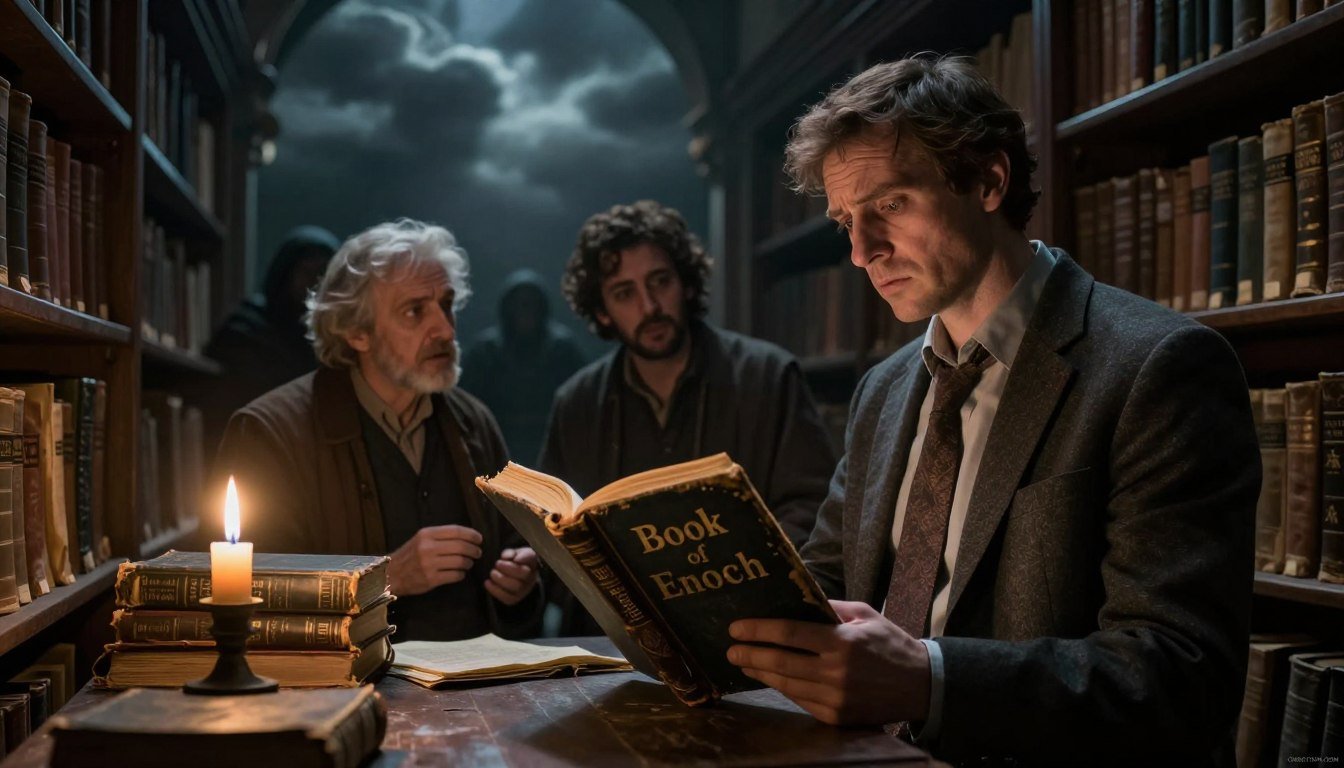
When you explore your Christian faith, you might find many texts. One is the Book of Enoch. It’s from Enoch, Noah’s great-grandfather.
But, is this text true? Or does it confuse you from your faith’s teachings? The Book of Enoch is a topic of debate among Christians. Some doubt its trustworthiness.
As you walk your spiritual path, it’s key to check if texts are true. Make sure they match your Christian beliefs.
The Origins and Discovery of the Book of Enoch
Exploring the Book of Enoch takes us back in time. We look at ancient texts and historical events. This journey shows how this important text has been seen and understood in different ways.

Ancient Ethiopian Manuscripts and Modern Rediscovery
The Book of Enoch is mostly found in the Ethiopic language. These ancient texts from Ethiopia are very old. They help us understand the text’s history and how it was passed down.
In the 18th century, James Bruce brought these manuscripts to Europe. This event started a new chapter in studying the Book of Enoch. It sparked a lot of interest and debate among scholars.
The discovery of Enochic texts among the Dead Sea Scrolls added to the mystery. These fragments showed that ancient Jewish communities knew and valued the Book of Enoch. This raised many questions about its creation and spread.
Multiple Versions and Textual Variations
Studying the Book of Enoch is tricky because of many versions and changes. Different texts have different parts, showing a complex history. Scholars have found several groups of manuscripts, each with its own story.
These changes make us think about when and where the text was written. They also show how important it is to study the text carefully.
Composition Timeline and Historical Setting
Figuring out when the Book of Enoch was written is a big job. Scholars think it was written between the 3rd century BCE and the 1st century CE. Knowing when it was written helps us understand its messages better.
Looking into the text’s history helps us see its importance. It shows why it’s so interesting to scholars and religious people alike.
Historical Context and Authorship Claims
To understand the Book of Enoch, we need to look at its history and who wrote it. The Book of Enoch says it was written by Enoch, a man from Adam’s family. But, it’s actually a pseudepigraphic work, meaning it’s not really written by Enoch.
Dating Discrepancies and Pseudepigraphical Nature
People think the Book of Enoch was written between 300 BCE and 100 CE. This makes it hard to know exactly when it was written. The fact that it’s pseudepigraphic makes us question who really wrote it.
It’s believed that the real writers of the Book of Enoch are unknown. They might have chosen to say it was written by Enoch to make it seem more important. This was a common thing to do in ancient times.
Evidence Against Enochian Authorship
There are many reasons to doubt that Enoch wrote the Book of Enoch. The way it’s written and the ideas in it are more complex than early Bible texts. It also talks about things that happened after Enoch’s time.
This means the Book of Enoch was likely written later, during the Second Temple Period. This was a time of big changes in Jewish religion and culture.
Second Temple Period Literary Context
It’s important to see the Book of Enoch in the context of the Second Temple Period. This was a time when stories about the end of the world and heaven were popular. These stories often talked about good vs. evil.
The Book of Enoch fits into this type of story. It gives us a peek into what some Jewish people believed about the end of the world. But, it also has unique ideas about angels and the universe.
Why the Book of Enoch Was Excluded from Biblical Canon
Exploring why the Book of Enoch was left out helps us see the debates and careful thought in making the Bible. The making of the Bible was not easy. Many religious leaders and groups were involved.
Jewish Rejection from the Tanakh
The Book of Enoch was not in the Tanakh, the Hebrew Bible. This shows it was not accepted by Jewish leaders. The reasons were about its content and who wrote it.
Early Church Debates and Final Exclusion
In the early Christian church, there were talks about the Book of Enoch’s place in the Bible. Some writers thought it was important. But, as the church decided on its Bible, the Book of Enoch was left out.
Council Decisions on Canonical Texts
Early church councils made big decisions on what texts were in the Bible. They looked at if texts came from apostles, matched other accepted texts, and were liked by early Christians. The Book of Enoch didn’t pass these tests with most leaders.
Ethiopian Orthodox Exception and Its Implications
The Ethiopian Orthodox Church included the Book of Enoch in their Bible. This shows different views on the Bible in early Christianity. This exception is important because it shows how different Christian groups saw the Bible.
The Book of Enoch not being in most Christian Bibles today shows the hard work and debate in early Christianity. Learning about this helps us value the Bible more and understand why certain texts were chosen.
Theological Inconsistencies with Accepted Scripture
The Book of Enoch has some big problems. It doesn’t match up with what the Bible says. You’ll see big differences in important areas.
Problematic Angelology and Demonology
The Book of Enoch talks a lot about angels and demons. But it doesn’t match the Bible. It gives names and jobs to angels that the Bible doesn’t mention. This makes us wonder if we can trust what the Book of Enoch says about angels.
Conflicting Cosmology and Creation Accounts
The Book of Enoch tells a different story about the world and how it was made. It talks about the sky and stars in a way that’s not in the Bible. This shows why we should stick to what the Bible says about creation.
Salvation Narrative Discrepancies
The Book of Enoch has a different view of how we are saved. It focuses on people and events that the Bible doesn’t talk about. We need to look closely at these differences to keep our faith strong.
Divine Nature Misrepresentations
The Book of Enoch also has different ideas about God. It says things about God that don’t match the Bible. By comparing the two, we learn why we should trust the Bible more.
Looking at these problems helps us understand why the Book of Enoch isn’t trusted. It teaches us to value the Bible more for our faith.
Textual Analysis: Contradictions Within the Book Itself
The Book of Enoch is full of different styles and possible mistakes. When you read it, you’ll see parts that don’t match up. This makes us wonder about its truth and who wrote it.
Internal Inconsistencies Between Sections
The Book of Enoch has many parts that don’t agree with each other. For example, it tells different stories about fallen angels and people. This can be hard for readers who want a clear story. It seems like different people wrote different parts, each with their own views.
The book has many sections, like the Book of the Watchers and the Astronomical Book. These parts share some ideas but are very different. This makes it hard to find one main message.
Chronological Problems and Timeline Issues
The Book of Enoch also has problems with time and order. It has different family trees and timelines that don’t match up. This is a big problem for those who want to know when things happened. You have to figure out how to make sense of it all.
Literary Style Variations Suggesting Multiple Authors
The Book of Enoch uses many writing styles, like apocalyptic visions and stories. These styles don’t always fit together well. This suggests it was made from many sources, written by different people at different times. This mixing might be why we see so many differences.
As you keep reading the Book of Enoch, think about these complex points. Looking at the differences, time problems, and writing styles helps us understand it better. This way, we can see the book’s true meaning and importance.
Why Stay Away from the Book of Enoch: Spiritual Discernment
When you read spiritual books, it’s key to think carefully about the Book of Enoch. The Bible tells us to check teachings against what it says. This is very important when looking at books like the Book of Enoch.
Testing Against Established Biblical Truth
When you look at the Book of Enoch, compare it to the Bible. This is important because the Book of Enoch has ideas that might not match the Bible. For example, it talks about angels and the universe in ways that are different from the Bible.
To stay true to your faith, you must check the Book of Enoch against the Bible. Know the main teachings of Christianity. Then, see if the Book of Enoch agrees with them.
Potential for Spiritual Confusion and Deception
The Book of Enoch can lead to spiritual confusion. It has ideas not found in the Bible. This can make people lose their way.
Teachings that don’t follow the Bible can be misleading. So, be careful when reading the Book of Enoch. Make sure your beliefs stay true to the Bible.
Applying Scriptural Tests for Authenticity
The Bible gives us ways to check if teachings are true. For example, 1 John 4:1-3 tells us to test spirits to see if they come from God. Using these tests on the Book of Enoch can help you understand its value.
By using these tests and sticking to the Bible, you can explore spiritual books wisely. This way, you can be sure of your beliefs.
Supernatural Claims and Fantastical Elements
The Book of Enoch is full of supernatural claims and big ideas about the universe. It talks about angel groups, the Nephilim, and the universe in ways that are both interesting and debated.
Elaborate Angel Hierarchies and Names
The Book of Enoch tells us about different angel groups and their names. It’s important to check these stories against the Bible to make sure they fit with what we believe.
Key aspects of these angel hierarchies include:
- Detailed naming of angels and their roles
- Complex hierarchies suggesting a structured celestial order
- Interactions between angels and humans, including the Nephilim
Questionable Astronomical and Cosmological Assertions
The Book of Enoch has ideas about the universe that some people disagree with. It talks about stars and planets in ways that don’t always match what we know today.
It’s important to look at these ideas with today’s knowledge and what the Bible says.
Giants, Nephilim, and Mythological Parallels
The text also talks about the Nephilim, beings that are half angel and half human. This reminds us of stories from other old cultures. It’s important to know the difference between these stories and what the Bible says.
When looking at the Book of Enoch, it’s key to keep our beliefs based on the Bible. This helps us see what’s useful and what’s not in this old text.
Historical and Archaeological Inaccuracies
The Book of Enoch has many historical and archaeological mistakes. These mistakes make us question its truth.
Conflicts with Established Historical Records
The Book of Enoch tells stories that don’t match known history. For example, it describes ancient civilizations differently than archaeology does.
Historical discrepancies are big in the Book of Enoch. It talks about Adam’s family in ways that don’t match other history. This makes it hard to trust its stories.
Lack of Archaeological Support
The Book of Enoch has no archaeological evidence to back it up. Many of its stories and places have not been found.
Archaeology helps us learn about old cultures. But the Book of Enoch’s stories don’t have the proof we need. This makes us doubt its history.
Anachronistic Elements in the Text
The Book of Enoch also has anachronistic elements. These are things that didn’t exist when it was written.
These anachronisms show the text might have been changed later. This makes understanding it even harder.
The Jude Reference: Examining the Supposed Biblical Endorsement
It’s important to know the context of Jude’s mention of Enoch. You might wonder what it means when the book of Jude quotes the Book of Enoch. Let’s dive into it.
Context of Jude’s Quote and Its Meaning
The book of Jude is a short letter in the New Testament. It quotes Enoch, saying “Behold, the Lord cometh with ten thousands of his saints, to execute judgment upon all, and to convince all the ungodly…” (Jude 1:14-15). This shows a link between Jude and Enoch. But what does this really mean?
To grasp the meaning, we must look at when Jude wrote. The early Christian church was varied, with many texts around. Jude’s use of Enoch shows it was known and maybe respected.
Quoting vs. Endorsing: Understanding Ancient Citation Practices
In ancient times, writers often quoted other texts. But quoting didn’t mean they thought those texts were authoritative. For example, Paul quoted Greek poets (Acts 17:28, Titus 1:12). Yet, he didn’t say their works were scripture.
Jude’s quote from Enoch should be seen in this light. It’s key to tell the difference between quoting a text and endorsing its authority. Just because Jude quotes Enoch doesn’t mean the whole Book of Enoch is scripture.
Other Non-Biblical Sources Quoted in Scripture
The Bible mentions non-canonical sources too. Like the Book of Jasher in Joshua 10:13 and 2 Samuel 1:18. These show biblical authors used existing texts. But these texts weren’t always seen as authoritative.
Knowing this helps us see Jude’s mention of Enoch in context. It’s not alone in being quoted. We must look at all biblical citation practices to understand Jude’s quote.
Modern Misuse and Sensationalism
You might have seen the Book of Enoch in modern talks. It’s often used for bad ideas. This part talks about how it’s used wrong today and what it means.
Conspiracy Theories and Fringe Interpretations
The Book of Enoch is linked to conspiracy theories. These ideas twist biblical prophecy or talk about supernatural stuff. They can make people see scripture wrong and take their eyes off true Christianity.
It’s key to be careful with these ideas. Check them against real biblical truth. This way, you won’t get fooled by false or exciting claims.
Pop Culture Exploitation and Misrepresentation
The Book of Enoch is also used in popular culture. It shows up in books, movies, and TV, but often gets things wrong. This makes people think it’s not important or accurate.
It’s important to know the real Book of Enoch from its fake versions. Knowing the difference helps you understand the world of religion and culture better.
Impact on Sound Doctrine and Biblical Literacy
The wrong use of the Book of Enoch affects sound doctrine and knowing the Bible. When people focus on exciting but wrong ideas, they get lost in Christian teachings.
It’s important to stick to true teachings of the Bible. Don’t let false or exciting ideas confuse you.
Biblical References to Enoch vs. the Book of Enoch
To understand Enoch, we need to look at the Bible and the Book of Enoch. The Bible talks about Enoch in Genesis 5:18-24 and Jude 1:14-15. It gives us a clear picture of who he was and why he’s important.
What Scripture Actually Says About Enoch
The Bible tells us a lot about Enoch in just a few words. Genesis 5:24 says he didn’t die. Instead, God took him, showing a special bond between them. This shows Enoch’s strong faith and good deeds.
In the New Testament, Jude 1:14-15 talks about Enoch’s prophecy. He said the Lord would come with many holy ones to judge. This shows Enoch was a prophet and a good person.
Misattributed Quotes and False Connections
It’s important to know the difference between Enoch in the Bible and the Book of Enoch. The Book of Enoch has stories and quotes not in the Bible. For example, it talks about angels and the universe in ways the Bible doesn’t.
Thinking the Book of Enoch is as important as the Bible can cause spiritual confusion. We should check these texts against the Bible to avoid wrong ideas.
Distinguishing the Historical Figure from the Pseudepigraphical Text
The Enoch in the Bible was a man of faith and obedience. The Book of Enoch, on the other hand, is not written by Enoch. It’s called pseudepigraphical.
Knowing this helps us see the real Enoch from the Bible. By sticking to the Bible, we can understand Enoch’s true role in the story of faith.
Conclusion: Prioritizing Reliable Sources of Spiritual Truth
When you explore faith and spirituality, it’s key to choose reliable sources of guidance. The Book of Enoch is interesting but not a good source of spiritual truth. It has historical and theological issues.
To understand biblical wisdom better, look at the books that are known to be accurate and spiritually important. This way, you can build a stronger, more informed faith.
Using reliable sources of spiritual truth helps you avoid confusion. You can grow in your faith with confidence, based on the wisdom of Scripture.
Keep checking the sources you use, making sure they match biblical wisdom. This helps you make smart choices and connect deeper with your faith community.
