
Ever thought about what “generation” means in the Bible? Is it a set number of years or a certain time in history? Knowing about biblical generation time can help you understand the scriptures better.
Looking into the Bible’s view of a generation, you’ll see its link to God’s plan and your faith. The bible generation length is more than just a historical fact. It’s a way to get closer to understanding God’s word.
Keep reading to learn more about biblical generational timelines. You’ll see how they can guide you in your everyday life. You’ll get the tools to use biblical wisdom to face life’s challenges, with a deeper grasp of God’s word.
The Concept of Generations in Biblical Context
Exploring the biblical concept of generations reveals a rich history and culture. It’s key to understanding the timeline of events in the Bible.
Definition of “Generation” in Hebrew and Greek Texts
The Hebrew word “dor” and the Greek word “genea” mean generation in the Bible. They talk about a time and the people living then. This shows the community aspect of a generation.
Looking at the biblical generation time, we see it varied. The Hebrew Bible uses family lines to show important figures’ timelines. This helps us understand the biblical generation time.
Cultural Understanding of Generations in Ancient Near East
In ancient times, generations were tied to family and culture. How people saw a generation was shaped by their society and family.
Looking at the generations in the bible timeline, we see a story of God and his people. It’s not just a list of times. It’s a story of God’s relationship with his people over time.
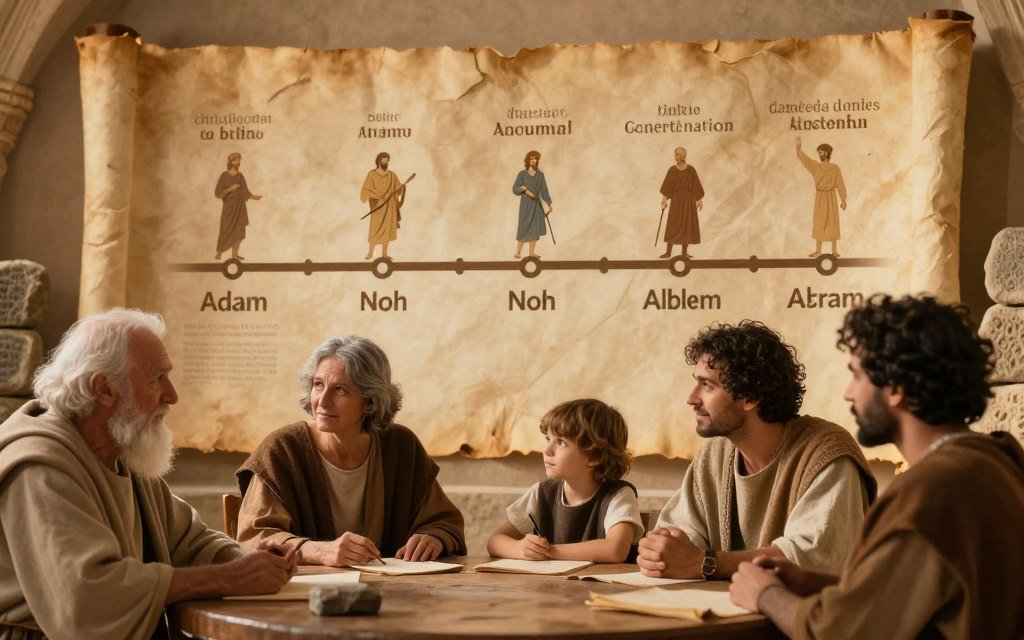
The bible genealogy timeline lists ancestors and their kids. It’s a big help in understanding the history of biblical events.
Biblical References to Generation Length
To understand a generation in the Bible, we need to look at important passages. The Bible talks about generations in many ways. It shows us how people saw time back then.
Key Passages Mentioning Generations
Many Bible passages talk about how long a generation lasts. For example, in Genesis 15:13-16, God tells Abraham about his descendants. They will be slaves for 400 years, but return in the fourth generation. This shows us how to count generations in the Bible.
In Psalm 95:10, we learn about a generation that wandered for 40 years. This is often talked about in studies about generation length.
Variations in Timeframes Across Scripture
Some passages say a generation is a certain length, but others are different. For example, 1 Chronicles and Matthew 1:1-17 have different timelines. These can help us guess how long a generation is.
These differences make it hard to say a generation is always the same length. They remind us to think about the time and culture when reading the Bible.
By looking at these key passages and understanding the differences, we can learn more about generations in the Bible. We see how these references help tell God’s story.
The Traditional 40-Year Generation View
You might have heard that a Bible generation lasts about 40 years. This idea has shaped how we see the Bible and its lessons for us. The 40-year view comes from many Bible stories and is studied by scholars.
Origins of the 40-Year Interpretation
The 40-year idea started with the Israelites’ time in the wilderness. This 40-year wait was a test and prep before they got to the Promised Land. The number 40 is seen as a generational cycle, marking big changes or prep times.
Biblical Support for the 40-Year Timeframe
Many Bible stories back the 40-year view. For example, the time from leaving Egypt to entering Canaan is often pointed out. This time is both a history lesson and a teaching on God’s patience and the results of not listening.
The Wilderness Generation Example
The wilderness generation is a key example of the 40-year idea. This story in Numbers shows the Israelites’ fight against God and their wandering. The generational span in the bible is shown here, showing how a generation is shaped by its experiences and choices.
Learning about the 40-year generation view can make you appreciate Bible stories more. It can also help you think about your faith and how to live every day.
Alternative Biblical Timeframes for Generations
The Bible doesn’t give a single answer to how long a generation lasts. As you read the scriptures, you find different ideas about generations. This shows that understanding generation length is complex.
The 70-100 Year Generation Perspective
Some experts think a generation could last from 70 to 100 years. They look at the long lives of people back then. Moses and Joshua, for example, were active well into their 80s and 90s.
The Psalmist in Psalm 90:10 talks about living up to 80 years. This supports the idea of longer generations. It suggests that a generation might be based on a person’s life span, not a fixed number of years.
Shorter Generation Spans in Biblical Records
But, some parts of the Bible show shorter generations. For example, the line from Adam to Abraham in Genesis 5 and 11 is short. Also, the quick changes in leaders and events in some parts of the Bible suggest brief generations.
This mix of long and short generations shows how hard it is to find a standard length. Different books in the Bible have different views on generations.
Contextual Factors Affecting Generation Length
When looking at generation length in the Bible, we must think about the context. Things like culture, society, and history affect how we see generations. For example, early marriage and childbearing in ancient times might have led to shorter generations.
Big events like the Exodus or the Babylonian exile also change how we see generations in the Bible. Knowing these factors helps us understand the different views on generations in the scriptures.
How Long Is a Generation in the Bible? Scholarly Perspectives
Exploring the Bible’s generations shows scholars have many views. The idea of a generation’s length is complex. It has been seen differently over time.
Ancient Jewish Interpretations
Ancient Jewish scholars and rabbis helped understand generations in the Bible. Their views were shaped by culture and religion. For example, the Talmud talks about generations in biblical history.
Some texts say a generation was about 100 years. This is based on long lifespans in Genesis. It means a generation was a big part of a person’s life.
Modern Biblical Scholarship
Today, scholars look at generations in the Bible in a more detailed way. They consider history, culture, and language. Many think a generation’s length changes based on the context.
Some studies say a generation was about 25-30 years. This is based on comparisons with ancient cultures. It’s supported by looking at biblical genealogies.
Archaeological Evidence
Archaeology has given us new insights into ancient cultures’ views on generations. Excavations and texts have shown how different cultures saw time and generations.
For example, texts from Mesopotamia and Egypt have helped scholars. They show similarities and differences with the Bible. This helps us understand the Bible’s unique views on generations.
Reconciling Different Viewpoints
To understand generations in the Bible, we need to look at all views. Ancient Jewish ideas, modern scholarship, and archaeology help us. Together, they give us a deeper understanding.
It’s important to remember that different parts of the Bible have different views on generations. This approach helps us understand the Bible better. It makes the scripture richer.
Genealogical Records and Generation Calculation
Looking into biblical generations is both fun and hard. The Bible gives us lots of family history. This helps us see how generations are important in stories.
Analysis of Biblical Genealogies
Biblical genealogies are more than just names. They are detailed records with deep meaning. When we study them, we must think about the time they were written.
The genealogies in the Bible, like those in Genesis and Chronicles, tell us about important people’s families.
Case Study: Abraham to David
The line from Abraham to David is key. It shows the path to the messiah and keeps promises. By following this line, we learn about counting generations and its role in salvation history.
Challenges in Interpreting Biblical Family Records
Understanding biblical genealogies is tricky. The records might leave out details or only show what’s important. Cultural practices of the time also play a part.
By looking closely at the context and purpose, we can get a better grasp of biblical generations.
Generational Patterns in Key Biblical Narratives
Looking at the Bible’s generations helps us understand its stories better. Each generation has its own tale and importance.
The Patriarchal Narratives
The stories of Abraham to Joseph cover many generations. These tales show how generational transitions are key in the Bible.
These stories are not just history. They show God’s bond with His people over multiple generations. They teach us about faith and following God’s will.
From Exodus to Monarchy
The time from Exodus to the monarchy is full of big changes. The Exodus generation was freed from Egypt. The next generation entered the Promised Land.
Leaders like Moses, Joshua, and the judges show the value of generational leadership. They faced big challenges in keeping faith alive. This time shows how Israel’s faith and leaders shaped their history.
Post-Exilic Generational Records
After the Babylonian exile, Israel had to rebuild and restore. This was a time to keep generational continuity and faith alive.
The stories of Ezra and Nehemiah highlight the need to know our place in the Bible. They show how to keep faith going from one generation to the next.
Thinking about these generations deepens our grasp of the Bible. It reveals themes of faith, covenant, and God’s plan through history.
Theological Significance of Generation Length
Exploring the Bible’s view on generation length reveals deep meanings. It’s not just about time. It shows God’s ongoing relationship with His people through ages.
Prophetic Implications
The length of a generation holds prophetic implications in the Bible. Prophets used it to talk about the future. They showed God’s faithfulness and continuity.
For example, Joel 2:28 talks about a future where God’s Spirit will be given to all. This shows how God’s plans span generations, stressing the need for faith and obedience.
Covenant Promises Across Generations
The Bible is full of covenant promises that last through generations. From Abraham to David, God’s promises were kept. Deuteronomy 7:9 says God’s loyalty goes to a thousand generations for those who love Him.
Seeing these covenants helps us understand God’s commitment. It shows the importance of living faithfully to these promises.
Jesus’s References to Generations
Jesus often talked about generations in His teachings. In Matthew 23:36, He warns of judgment for this generation. He stressed the need to follow God’s ways.
By looking at Jesus’s words, we learn about the importance of faithfulness. It teaches us to live right in our own time.
In summary, the Bible’s view on generation length is rich. It includes prophetic messages, covenant promises, and Jesus’s teachings. Reflecting on these ideas helps us understand God’s work across generations. It shows how these themes are relevant to our lives today.
Conclusion
You now understand more about generation length in the Bible. You’ve seen different views on how long a generation lasts. Some say it’s 40 years, while others think it’s longer or shorter.
Figuring out a generation’s length in the Bible is complex. It involves looking at important passages, the culture, and what scholars say. The Bible doesn’t give a single answer, showing how different times and beliefs are.
Thinking about generation length in the Bible helps you live your faith better. It guides you through life’s changes with a biblical view. As you keep learning from the Bible, you can grow closer to your faith and beliefs.
