
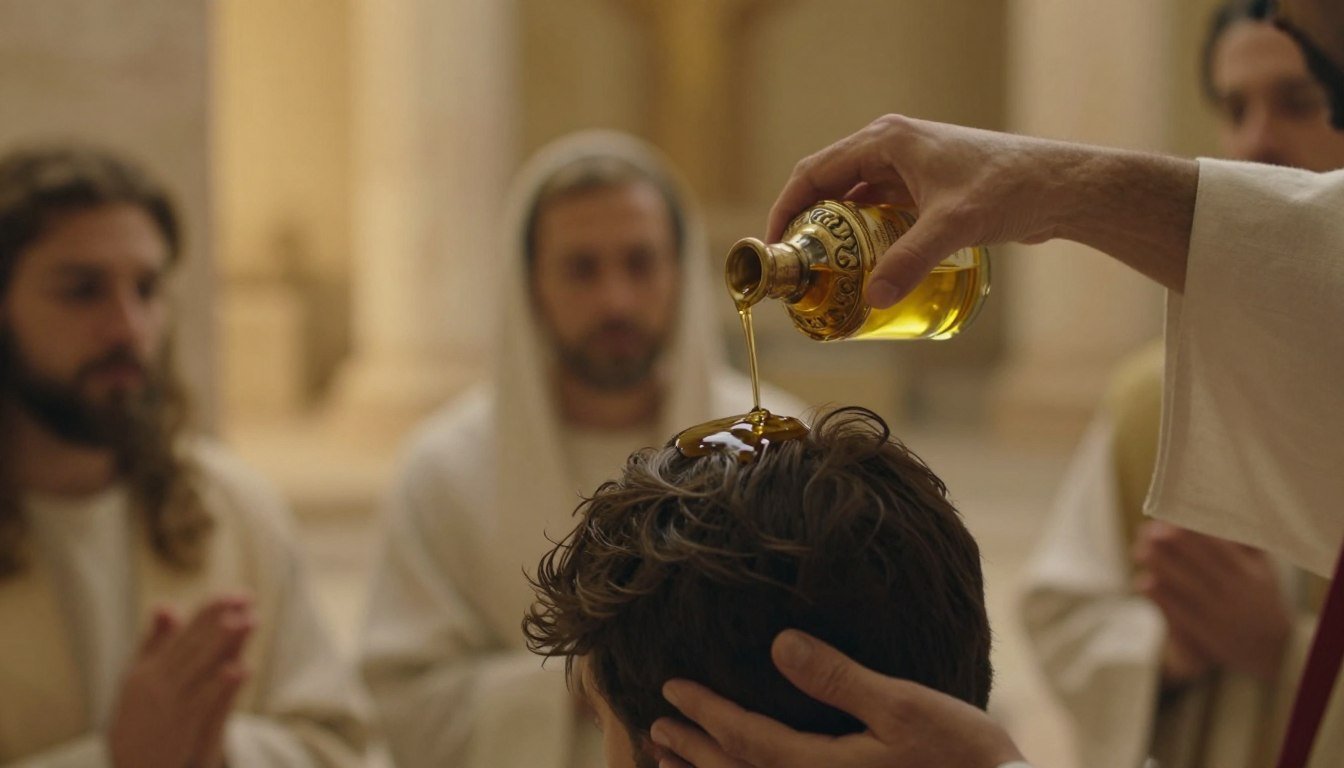
You might have heard “anointing” in church talks. But what does it really mean in the Bible? The idea of anointing is big in the Bible. It shows up in many stories and has different meanings.
The Bible talks about anointing with oil in many ways. It’s used in special ceremonies, for getting ready, to feel fresh, for healing, and even at funerals. This act was more than just a physical thing. It meant being set apart, healed, and honored.
Looking into the Bible’s view on anointing, you’ll see it’s very important. It shows how it can help you grow in faith. Knowing about the anointing in the Bible can make your spiritual life stronger. It also helps you see how to use it in your everyday life.
The Biblical Definition of Anointing
To understand anointing in the Bible, we must look at its roots. It’s found throughout the scripture, carrying deep spiritual and symbolic meanings for believers.
Etymology and Original Language Context
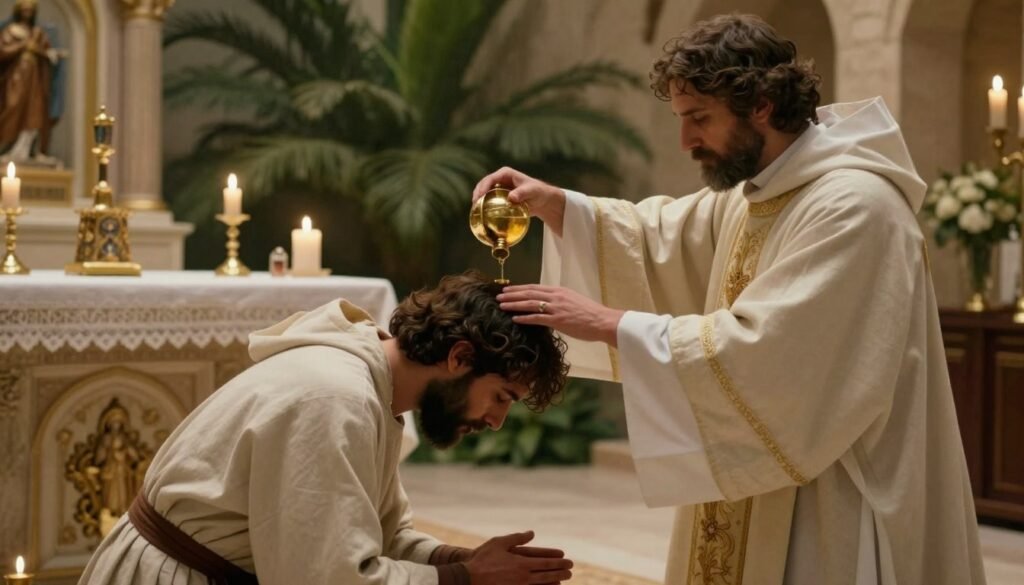
The Hebrew word “mashach” means “to anoint or smear with oil.” This word is key to understanding anointing in the Bible. The oil used was special, made with fine spices as the Lord directed in Exodus 30:23-25.
This sacred oil was for setting apart people and things for God’s work. It showed they were chosen for a special purpose.
The word “anointing” is deeply tied to ancient religious and cultural practices. Knowing its origins helps us see its importance in the Bible and today’s Christian practices.
Physical vs. Spiritual Anointing
Anointing in the Bible has both physical and spiritual sides. Physically, it meant applying oil to people or things. This showed they were set apart, healed, or chosen for a role.
Spiritually, anointing meant God’s Spirit was on someone or a group. This gave them the power to do God’s work.
It’s important to know the difference between physical and spiritual anointing. Physical anointing was a real act, but it often pointed to a spiritual truth. For example, anointing kings and priests was not just a physical act. It was a spiritual sign of their divine calling and power.
Looking into the biblical meaning of anointing shows how it connects the physical and spiritual worlds. It gives us a deep understanding of God’s relationship with us. The biblical view of anointing is a strong base for understanding its role in Christianity and our faith journey.
What is the Anointing According to the Bible?
The anointing in the Bible is very important. It shows God’s favor and power. This tradition is found in both the Old and New Testaments.
Old Testament Understanding
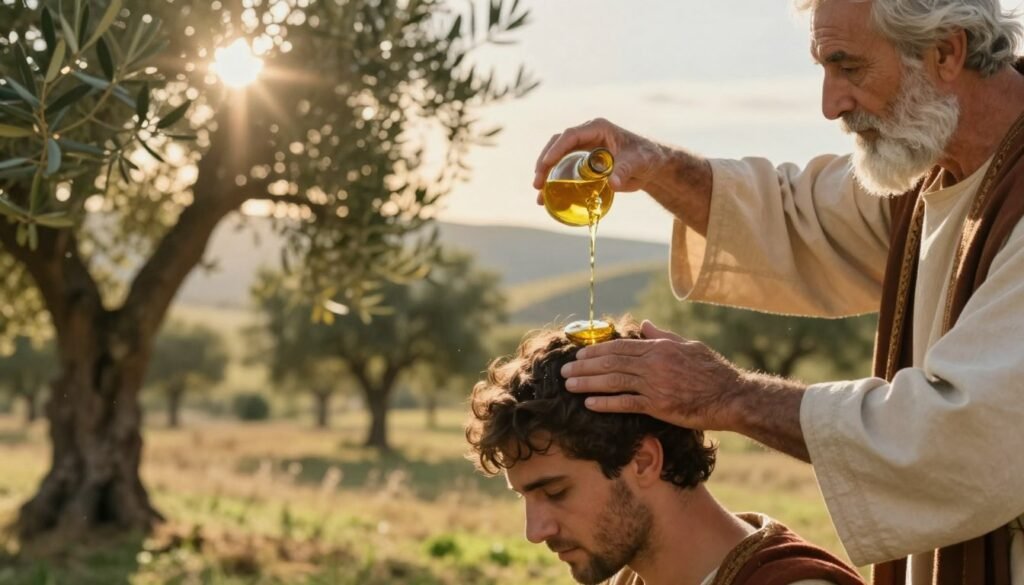
In the Old Testament, anointing made things and people special. Oil was used to show they were dedicated to God. The anointing oil was made from special ingredients, as in Exodus 30:23-25.
People like priests and kings were anointed. This made them stand out for their roles. For example, King Saul and David were anointed by Samuel (1 Samuel 10:1; 16:13). This showed God’s choice and power for them.
New Testament Perspective
In the New Testament, anointing means something more. Jesus is called the “Anointed One” (Messiah or Christ). This shows His special role and power (Acts 10:38).
At His baptism, Jesus was anointed by the Holy Spirit. This started His work. For believers, the New Testament says they get an anointing too. This lets them know the truth and stay close to God (1 John 2:20, 27).
The teachings on anointing show its deep meaning. It’s about God’s choice, dedication, and power. The anointing connects God and His people, showing His grace and love.
Historical Context of Anointing in Biblical Times
To understand anointing in the Bible, we must look at its history. It was a big deal in ancient times. People used it to make things and people special for God.
Ancient Near Eastern Practices
In ancient times, anointing was common. It was used for many things like religious rituals and coronations. Oil was a sign of God’s favor and power.
Kings were anointed to show they had God’s approval to rule. This was a big deal. The oil used was very important.
Jewish Traditions of Anointing
In Jewish tradition, anointing was key. It was used to make priests, kings, and prophets special. The oil was very sacred.
The biblical perspective on anointing shows it was for God’s work. It was not just for people but also for things used in worship.
Learning about anointing’s history helps us see its importance in the Bible. It shows how it was a big part of ancient life. It points to God’s special bond with His people.
The Purpose and Significance of Anointing in Scripture
Anointing in scripture is more than a ritual. It has deep spiritual meaning. For centuries, it has been a key part of faith.
It makes people and things special for God. It shows they are chosen and have God’s power.
Consecration and Setting Apart
Anointing makes people and things special for God. It means they are dedicated to God. The anointing oil shows God’s presence and power.
Being anointed is not just a blessing. It means they are ready for a special mission from God.
This tradition is very important in the Bible. It shows a person or thing is dedicated to the sacred. It’s not just for people; places and things can be anointed too.
Symbol of Divine Selection and Authority
Anointing shows God’s choice and power. When someone is anointed, it means God has picked them for a task. They get the power to do it.
It’s a sign of God’s grace and authority. The anointed person is seen as God’s representative. They carry out God’s will.
Types of Anointing in the Bible
Anointing is a big deal in the Bible. It means God chooses and empowers people for important jobs. This special ritual was for many, not just a few.
Anointing of Kings and Rulers
Kings and rulers got anointed by God. This showed they were chosen to lead God’s people. For example, King David was anointed by Samuel (1 Samuel 16:13).
This act was more than a ceremony. It meant God was with them, guiding their rule.
Anointing of Priests
Priests were anointed to work in the temple. They used special oil to show they were set apart for holy work (Exodus 29:7).
This oil made them ready to connect God and the people. It showed their commitment to their duties.
Anointing of Prophets
Prophets were also anointed, but not always with oil. They were chosen by God to speak His words. This anointing was spiritual, not just physical.
It gave them the courage to share God’s message, even when it was hard.
Learning about these anointings helps us see how God works through different leaders. The biblical teachings on anointing show us God’s deep involvement in our lives.
The Anointing Oil: Composition and Symbolism
The anointing oil in the Bible is very important. It shows God’s choice and power. This oil was more than just a liquid; it was a sign of being chosen by God.
Biblical Recipes for Anointing Oil
Exodus 30:23-24 tells us how to make the anointing oil. God told Moses to mix myrrh, cinnamon, and cassia with olive oil. This special oil was for the tabernacle, its things, and the priests.
Myrrh means purification and healing. Cinnamon is about God’s smell and joy. Cassia adds to the oil’s nice smell.
Spiritual Significance of the Ingredients
Myrrh stands for death and new life. It means letting go of the old self. Cinnamon and cassia smell nice and show Christ’s fragrance in us.
Olive oil is the base and means the Holy Spirit. It shows God’s light and power in us.
Knowing about the anointing oil helps us understand God’s power today. Thinking about its parts reminds us of God’s deep love and power in our lives.
Jesus as “The Anointed One” (Messiah/Christ)
Jesus is called the Messiah or ‘the Anointed One’. He is the end of old prophecies and the start of a new one. This name shows His divine mission and how He fulfills old prophecies.
The idea of Jesus as ‘the Anointed One’ comes from the Old Testament. It talks about a savior chosen by God for us. The anointing means God picked and empowered Him for a big task.
Messianic Prophecies and Fulfillment
The Old Testament has many prophecies about a Messiah. For example, Psalm 2:2 talks about the Lord’s anointed. Isaiah 61:1 says the Spirit of the Lord is on the anointed one, bringing good news to the poor. Jesus’ life and teachings matched these prophecies, as the Gospels tell us.
Jesus’ baptism was a key moment. When the Holy Spirit came as a dove, as Matthew 3:16-17 says, it showed He was anointed. This was the start of His work.
Jesus’ Anointing at Baptism
Jesus’ baptism was very important. When He came out of the water, the heavens opened, and the Spirit came down. This was not just a symbol but a sign of His true mission. It was the start of His work, giving Him the power to do what He needed to do.
Being ‘the Anointed One’ means more than just Jesus’ life. It’s at the heart of Christian belief. It shows Jesus’ mission was truly from God and fulfilled old prophecies. Knowing this makes us understand God’s love and plan for us better.
The Holy Spirit and Anointing in the New Testament
In the New Testament, the Holy Spirit’s anointing is key for Christians. It helps them live their faith well. The New Testament shows how important this divine power is for believers.
The Baptism of the Holy Spirit
The baptism of the Holy Spirit is a big deal in the New Testament. It happened on the day of Pentecost, as Acts 2 tells us. The disciples got the Holy Spirit, letting them share the Gospel boldly.
This event was Jesus’ promise to send the Holy Spirit (Acts 1:8). It’s not just a past event but a present experience for believers. It prepares them for ministry and mission.
The baptism of the Holy Spirit gives believers the power to witness and serve. It gives them the courage and wisdom to share their faith. This is seen in the early Christian community.
Gifts and Manifestations of the Spirit’s Anointing
The New Testament says the Holy Spirit’s anointing brings gifts and manifestations. These include wisdom, knowledge, faith, healing, and more (1 Corinthians 12:4-11). The Spirit’s anointing empowers believers to serve others and strengthen the church.
The variety of spiritual gifts shows the Holy Spirit’s role in helping believers fulfill their callings. Whether it’s teaching, serving, or leading, the Spirit’s anointing gives the grace and ability to do these ministries well.
The anointing of the Holy Spirit is a rich and complex theme in the New Testament. It highlights the Spirit’s vital role in believers’ lives. Reflecting on the baptism of the Holy Spirit and the gifts it brings can deepen your faith and empower your walk with God.
Key Biblical Figures and Their Anointings
The Bible tells us about people anointed for special tasks. These anointings were very important. They made some people special for God’s work. We will look at David, Aaron, and Elisha’s anointings.
David’s Anointing by Samuel
David was anointed by Samuel, a big moment in his life. This happened in 1 Samuel 16:13. Samuel chose David to be the next king, not Saul. This was a special gift from God.
God chose David, not because of his looks or strength. But because of His own plan. David became a great leader in Israel because of this anointing.
Aaron and the Priestly Anointing
Aaron was the first high priest in the Levitical order. He was anointed with special oil in Exodus 29:7 and Leviticus 8:12. This made him ready for his priestly duties.
Aaron’s anointing showed the need for purity in religious roles. It’s like a special cleaning to serve God. For more on growing in your anointing, check out secrets to growing in the anointing.
Elisha’s Double Portion Anointing
Elisha got a double portion of Elijah’s spirit in 2 Kings 2:9-14. He asked for this, and God gave it to him. This meant Elisha was ready to carry on Elijah’s work.
Elisha’s anointing shows how spiritual gifts can be passed down. It’s about keeping God’s work going from one generation to the next. It’s a call to pass on our spiritual gifts to others.
In conclusion, David, Aaron, and Elisha’s stories teach us about God’s anointing. They show us the importance of being chosen for service. And the big responsibilities that come with it.
The Believer’s Anointing: What It Means for Christians Today
You have been anointed by God. This anointing is the foundation of your identity and purpose in Christ. Understanding your anointing is key to living a fulfilling Christian life.
The anointing is not just a historical concept. It’s a living, breathing reality that empowers you to live out your faith effectively.
The Indwelling of the Holy Spirit
The believer’s anointing is closely tied to the indwelling of the Holy Spirit. In 1 John 2:20, 27, we’re told that believers have an anointing from the Holy One. This anointing teaches us about everything.
The Holy Spirit’s presence in your life is what makes your anointing effective. It guides you, teaches you, and empowers you to live a life that honors God.
The indwelling of the Holy Spirit is a key aspect of the believer’s anointing. It’s the Spirit’s role to illuminate Scripture, convict of sin, and empower for service. As you yield to the Spirit, you’ll experience the fullness of your anointing.
Walking in Your Anointing
Walking in your anointing means living a life that is consistent with the Spirit’s leading. It involves being sensitive to the Spirit’s guidance, obeying God’s Word, and stepping out in faith.
As you do so, your anointing becomes more pronounced. You’ll be able to minister to others effectively.
To walk in your anointing, you must:
- Stay connected to God through prayer and Bible reading.
- Obey God’s Word, allowing Scripture to be your guide.
- Yield to the Holy Spirit, letting Him direct your steps.
By following these steps, you’ll experience the fullness of your anointing. You’ll be able to live a life that brings glory to God. Your anointing is not just for personal benefit. It’s also for the benefit of others, as you use it to serve and minister to those around you.
Practical Applications of Understanding Biblical Anointing
Exploring biblical anointing shows its importance in your spiritual path and everyday life. It’s not just an old idea; it shapes how you live your faith.
Prayer and Anointing with Oil for Healing
Healing is a key area where biblical anointing shines. The Bible tells us to pray for the sick and use oil (James 5:14-15). Oil was a symbol of healing and setting apart in the Old Testament.
When you use oil for anointing, you’re doing more than just a physical act. You’re calling on God’s healing power.
To use this biblical practice, follow these steps:
- Find someone who needs healing, whether it’s physical, emotional, or spiritual.
- Pray together, laying hands on the person and using oil.
- Ask God to heal them.
- Trust that God can heal in many ways.
This practice shows your faith in God’s healing power and follows a biblical command.
Recognizing and Respecting Spiritual Authority
Biblical anointing also ties to spiritual leadership. In the Bible, leaders like kings and priests were anointed. This showed they were chosen by God for their roles.
To apply this, consider these points:
- See the spiritual leaders in your life, like church leaders or mentors.
- Respect their role and God’s gift to them.
- Know your calling and anointing fit into a bigger picture of believers.
- Pray for leaders to be guided and empowered by God.
Respecting spiritual authority helps your spiritual community work better together.
In summary, grasping biblical anointing offers real-life benefits. By using prayer and oil for healing, and honoring spiritual leaders, you grow your faith and spiritual journey.
Conclusion
We’ve looked into what the Bible says about the anointing. It’s a big deal in the Bible. It has a rich history and deep spiritual meaning.
Anointing is more than a ritual. It shows God’s choice, power, and setting apart. It’s seen in the stories of kings and Jesus, the Messiah.
The Bible teaches us about the Holy Spirit’s role. As believers, we’re filled with the Holy Spirit. This gives us power for service, healing, and growing closer to God.
Let the Bible’s teachings on anointing guide you. Live a life dedicated to God, empowered by the Holy Spirit. This can deepen your faith and help you share God’s love with others.
