
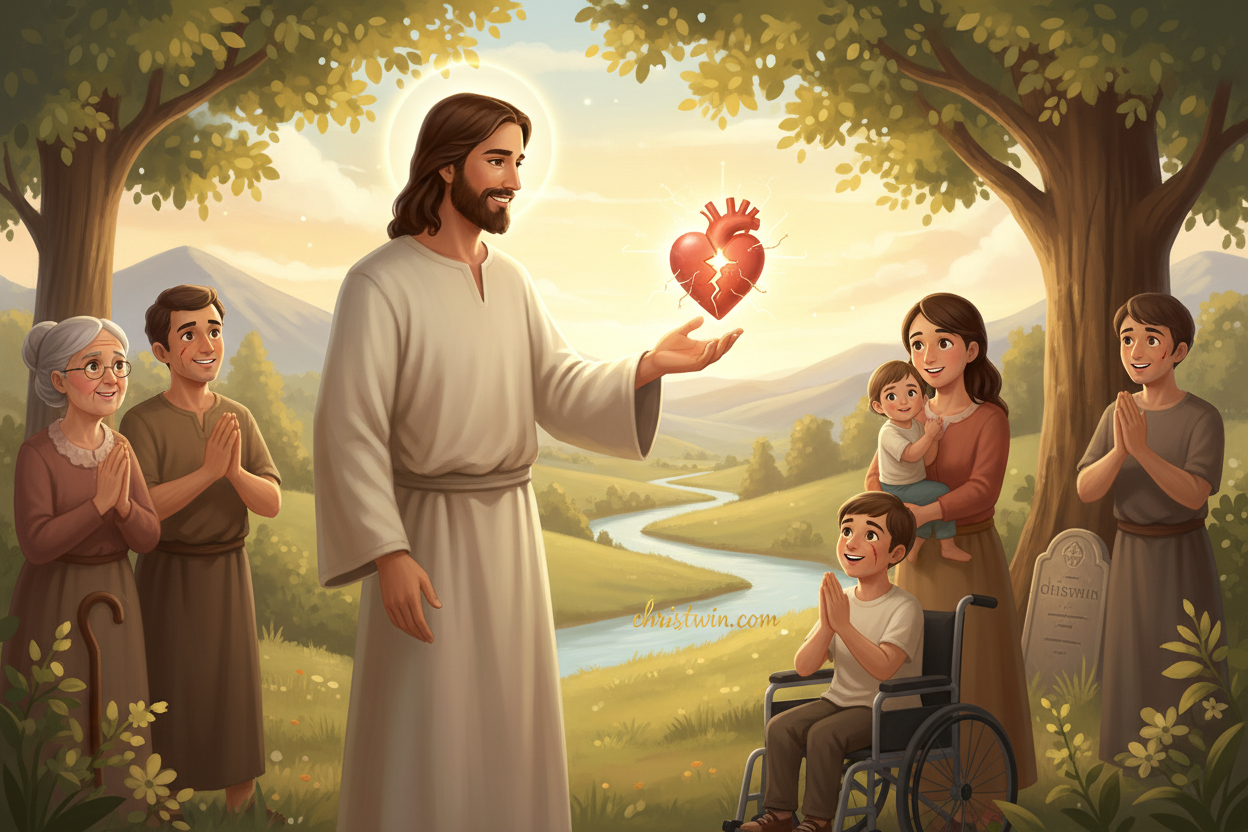
Are you carrying a pain today that feels too heavy to name?
Many people feel a shattered heart after loss, a trust that was tested, or a dream that fell apart. This is not a sign of spiritual failure. It is a human moment that faith meets with compassion.
This page focuses on the real hope behind the phrase Jesus Restores Broken Hearts Meaning and Explanation. We will treat restoration as a practical path, not a slogan.
Expect scripture-based steps that touch feeling and faith: honest prayer, comfort, learning to forgive, clearing what keeps you stuck, and stepping into new hope. You will find small, doable practices that help your heart heal.
At one point this process redeems your story rather than erasing it. It brings clarity and wholeness for today and the world ahead.
Where do you need that healing most—your emotions, your relationships, your identity, or your future?
What a “Broken Heart” Means in Real Life and in the Bible
Most people meet a broken heart in ordinary life—when loss, betrayal, or sudden change shakes the ground beneath them.
Real-life causes include the death of a loved one, divorce, losing a job or health, betrayal, or even the loss of childhood safety. These events can redirect your life and leave you feeling shattered.
Why the pain feels physical
Emotional wounds often show up as tightness in the chest, fatigue, sleepless nights, or loss of appetite. The body reacts to grief like a deep cut—healing takes gentle care and time, not quick fixes.
Hidden layers and mixed reasons
Sometimes the reason is obvious; at other times shame, abandonment, or unnamed hurt lies beneath the surface. Part of healing is naming whether the pain came from what someone did, what you did, or both.
- The wrong words from a friend can sting like rubbing wine on an open wound.
- Wise support, like salve, helps you recover without pressure.
- Remember: you are not alone; many people carry this sorrow across different seasons of life.
Next: the Bible treats this suffering as real and offers comfort and a practical way forward.
Jesus Restores Broken Hearts Meaning and Explanation Through Scripture-Based Promises
Scripture gives concrete promises that meet pain with steady care and clear hope.
Psalm 147:3 — tender repair
“He heals the brokenhearted and binds up their wounds.” This line from the book of Psalms uses hands-on language. It pictures careful bandaging, not a quick cover-up.
That phrase shows God’s character: close, patient, and practical for the one who hurts.
Psalm 34:18 — God’s nearness
The LORD is near to the brokenhearted and saves the crushed in spirit. This promise means God is present in the place where you feel defeated.
It refuses distance. In hard times, you are not ignored or judged; you are held.
Isaiah 61:1–3 — a mission of exchange
Isaiah speaks of good news for the oppressed and healing for the broken heart. The text promises comfort for mourners and a divine exchange of sorrow for flowers and joy.
This is Jesus’ declared mission: to heal broken lives so people can trust, love, and live again.
“Scripture gives patience and encouragement so you can have hope.”
Practical note: These verses are not mere history. They form a living story for present times. They anchor your healing and become part of the next steps toward peace and lasting joy.
How to Let Jesus Heal a Broken Heart Step by Step
Begin by taking small, honest steps toward God with the real weight in your chest.
Truthful vulnerability
Tell the truth to God
Cast your cares in prayer and name what you feel. 1 Peter 5:6–7 invites you to give each worry to God because God cares.
Honest prayer brings freedom (John 8:32) and clears the way for healing to begin.

Release the offense
Forgiving does not excuse harm. It lets you trust God with justice (Romans 12:19).
Include forgiving yourself as part of the process (Ephesians 4:32). This act frees energy for new life.
“Pray for the next step, not the whole map.”
Practical steps to practice today
- Speak your pain to God in one honest sentence.
- Say a short forgiveness prayer for others and yourself.
- Note one small grace each day and thank God.
- Sit in stillness, breathe a Psalm, and ask for hope.
Trust that God’s love is steady when people fail (Numbers 23:19). Ask for joy and peace to fill your heart (Romans 15:13) as you take each humble step forward.
Healing That Lasts: Clearing the “Toxins” That Keep Broken Hearts Stuck
True recovery means unclogging the hurts that quietly shape how you relate to others.

The toxins metaphor: Just as arteries can clog, your heart can collect shame, guilt, anger, unforgiveness, and perfectionism. These spiritual toxins deepen brokenness and make old wounds flare.
Signs a heart is stuck
Look for patterns: overreacting, withdrawing, controlling, numbing, or repeating the same conflict at home or church. These tell you healing is not finished.
Breaking the cycle
“Hurt people hurt people.” Left unchecked, pain spills onto spouses, kids, coworkers, and others. The good news is this: rebuilt people build people. Your recovery can change what you pass on to your family and the world.
The divine exchange
God promises inner renewal (see Ezekiel 36:26). This is not a quick fix. It trades defense patterns for a new heart and new ways that form over time.
Getting support
- Find a trusted mentor or pastor for wise counsel and accountability.
- Choose safe support that is confidential, Scripture-aligned, patient, and truthful.
- Practice consistent prayer, confession, boundaries, and community as part of discipleship.
Next step: If you need guided prayer resources, consider these prayers for peace to help steady your heart in hard times.
Finding Purpose After Brokenness: Turning Pain Into Peace and Help for Others
What once wounded you can, over time, shape a pathway of service and peace.
God can turn pain into purpose without pretending the hurt was small. Your brokenness can be redeemed to bring hope to people still in the dark.
How God uses your story to bring comfort, guidance, and hope
Your testimony matters. When you share what God carried you through—with wisdom and boundaries—it gives others words for their own pain.
Tell one trusted person, mentor, or group. A single clear story can point others the way forward.
Rebuilt people build people: healthier love, boundaries, and relationships
Rebuilt people build people. Healed hearts create safer homes, stronger friendships, and kinder churches.
- Mentor one person in a season of life.
- Join a support group or serve in prayer ministry.
- Show up consistently for a neighbor, coworker, or mother who is grieving.
“God is able to work good even from what was meant to harm you.”
Remember: purpose is not pressure. Sometimes your first work is to let God heal your wounds. As your heart heals, you will find a gentle way to serve others and bring peace to many lives.
Conclusion
In short, the path forward combines gentle truth, steady presence, and time. Heals broken does not mean pain is ignored; it means care meets the wound and offers steady repair.
Your healing includes honest prayer, forgiveness, daily gratitude, and resting in God’s nearness. This way helps a broken heart learn new patterns and find lasting peace and joy.
Scripture holds you: Psalm 147:3, Psalm 34:18, Isaiah 61:1–3, and Romans 15:13 anchor this work. Pray one simple sentence for hope and name the one place you need healing.
If a friend carries pain, share this page and offer presence, not quick fixes. Every story—mother, spouse, child, or neighbor—matters to God. Trust the healer who stays with you; your restored life can bless the world.
