
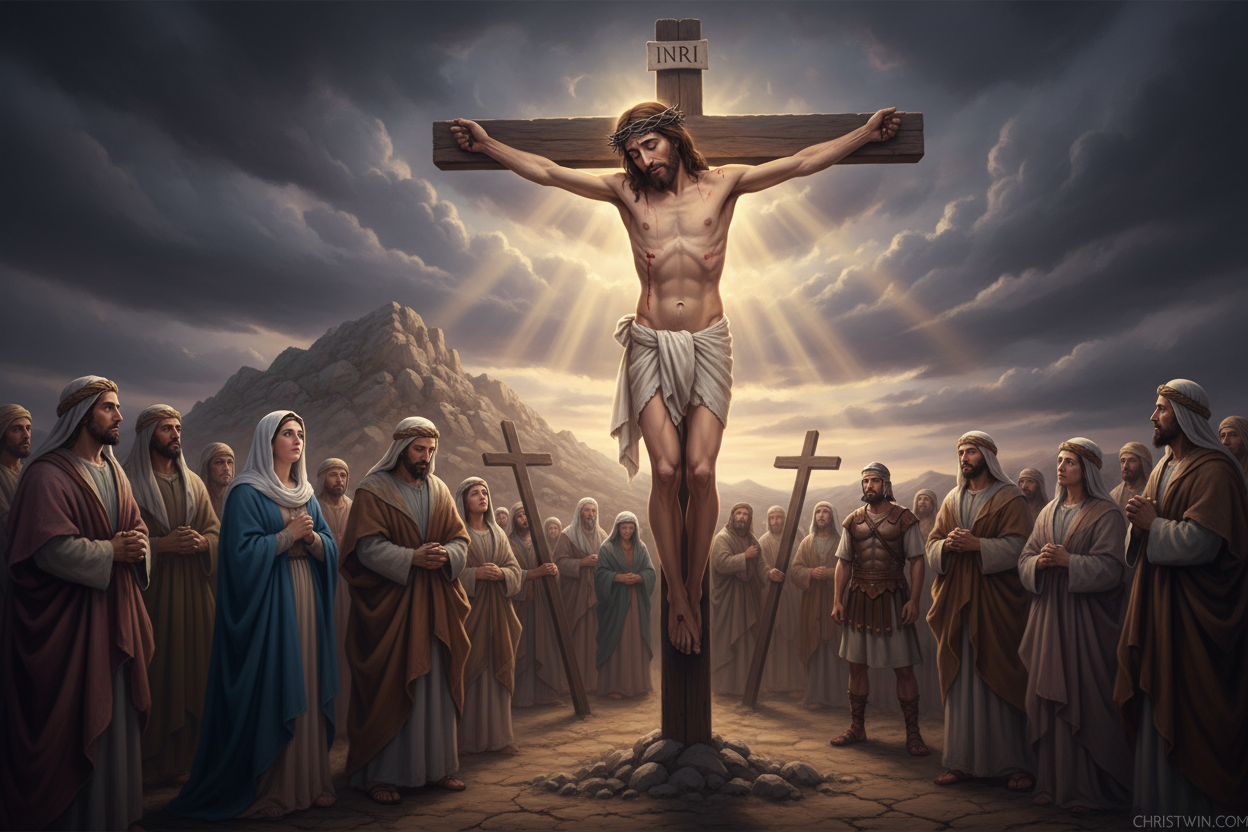
This statement is very important for Christians today. The Greek word “it is finished” is tetelestai. It means a debt is fully paid.
Exploring Jesus’ last words can change your faith. You’ll learn about the meaning and expression of “it is finished“. This phrase shows the sacrifice Jesus made on the cross.
Looking into Jesus’ final words helps us understand a big prophecy. It shows how Jesus paid for our sins.
The Historical Context of Jesus’ Crucifixion
To understand Jesus’ final words, we must look at the history of His crucifixion. You are about to learn about the events and practices that led to this key moment in Christian history.
The Roman Empire’s ways in the first century played a big role in Jesus’ crucifixion. Crucifixion was a harsh way to punish people. It was a show of power, leaving victims nailed to a cross, often in shame.
Roman Crucifixion Practices in First Century Judea
Crucifixion was not a Jewish tradition but a Roman one. The Romans used it to keep control over places like Judea. They chose it for slaves, rebels, and those seen as enemies.
This method was meant to scare people. Victims were left on the cross for a long time. They suffered from thirst, cold, and the weight of their bodies.
The Events Leading to Jesus’ Crucifixion
The events before Jesus’ crucifixion were complex. Jewish leaders arrested Him and gave Him to the Romans. The Romans then sentenced Him to death by crucifixion. This was seen as fulfilling Old Testament prophecies, showing Jesus was the Messiah.
Knowing these events makes Jesus’ last words on the cross more meaningful. His crucifixion was a deliberate act of sacrifice. It fulfilled the scriptures. As you think about these historical contexts, you’ll appreciate Jesus’ sacrifice more. You’ll see the depth of His message about God’s love for us.
The Seven Last Words of Jesus on the Cross
In the four Gospels, we find Jesus’ seven last words. Each word has biblical significance. They show His final moments and the message to those around Him.
Overview of All Seven Statements
The seven last words of Jesus are found in Matthew, Mark, Luke, and John. They are:
1. “Father, forgive them, for they do not know what they are doing.” (Luke 23:34)
2. “Today you will be with me in Paradise.” (Luke 23:43)
3. “Woman, behold your son! … Behold your mother!” (John 19:26-27)
4. “My God, My God, why have You forsaken Me?” (Matthew 27:46; Mark 15:34)
5. “I thirst.” (John 19:28)
6. “It is finished.” (John 19:30)
7. “Father, into Your hands I commend My spirit.” (Luke 23:46)
Each word gives a glimpse into Jesus’ thoughts and feelings. They show His compassion, authority, and commitment to Scripture.
The Significance of “It is finished” Among the Seven
“It is finished” is a key statement. It’s found in John 19:30. The Greek word “Tetelestai” means a debt is paid in full. Jesus says His work of salvation is done through His sacrifice.
This phrase is very important. It shows Jesus fulfilled Old Testament prophecies. It proves His sacrifice saved humanity.
“It is finished” – Meaning and Expression of Jesus’ Last Words on the Cross
Jesus’ words “It is finished” on the cross mean a lot. They come from the Greek word tetelestai. This phrase shows Jesus finished His work on earth and kept Old Testament promises.
The Original Greek Word “Tetelestai”
The Greek word tetelestai means a debt is paid. When Jesus said this, He meant He finished His mission. Tetelestai was used in business to show a job was done.
In ancient Greek, tetelestai means something is finished. Jesus said “It is finished” to show He did what God asked. This is key to understanding His last words.
Various Translations and Their Nuances
Translating tetelestai as “It is finished” can be tricky. Some say it as “It is accomplished” or “It is completed.” Each shows a different side of the Greek word.
These different ways of saying it show how deep Jesus’ words are. “It is finished” means Jesus’ work on earth is done. It shows God’s plan for us is complete. Knowing this helps us understand Jesus’ final words better.
Looking into the Greek word tetelestai and its translations helps us get Jesus’ message. It makes us appreciate His mission more. This study makes the Bible’s words more meaningful to us.
Theological Significance of “It is finished”
Jesus’ last words on the cross, “It is finished,” hold deep meaning. This phrase is not just the end of His work on earth. It’s a key part of Christian faith.

Completion of Jesus’ Earthly Mission
Jesus said “It is finished” to show His mission was done. He taught, healed, and died on the cross. This was all part of His plan from God.
His mission’s end is linked to saving people. Jesus died for our sins, giving us a way to be forgiven. Saying “It is finished” meant His work was done, and we don’t need more.
Fulfillment of Old Testament Prophecies
“It is finished” also shows Jesus kept Old Testament promises. His life, death, and rise were predicted in the Old Testament. This connects the Old and New Testaments, showing God’s plan of salvation.
Jesus’ life and death prove God’s word is true. It shows He is the Messiah, making His sacrifice valid.
The Finality of Christ’s Sacrifice
Lastly, “It is finished” means Jesus’ sacrifice was the last one needed. His death on the cross was the ultimate payment for our sins. This means we don’t need anything else to be forgiven.
This sacrifice shows God’s grace is enough. It tells us we are forgiven and loved by God through Jesus. This is the heart of Christian faith.
Interpretations Across Christian Traditions
Christian traditions have long thought about Jesus’ last words, “It is finished.” This phrase is key for thinking deeply about faith. It has helped grow and change how Christians understand their beliefs.
Catholic Understanding
In Catholic teaching, “It is finished” means Jesus’ mission is done. The Church says this shows Jesus kept Old Testament promises and started the New Covenant. Think about how this idea shapes Catholic beliefs and actions.
The Catechism of the Catholic Church says Jesus’ death on the cross saved all people. This idea comes from seeing “It is finished” as a sign of Jesus’ work being complete.
Protestant Perspectives
Protestants also see “It is finished” as very important. But they stress different points. Some focus on Jesus’ work as a payment for sins. Think about how different Protestant churches see this phrase in their beliefs.
For many Protestants, “It is finished” shows Jesus’ sacrifice is enough for salvation. This idea is tied to the idea of the seven last words of Jesus, showing His sacrifice covers everything.
Orthodox Interpretations
The Orthodox view of “It is finished” is deep and mystical. Orthodox thinkers see Jesus’ words as changing the world. Explore how this view adds to understanding Jesus’ final words.
Page
Modern Theological Discussions
Today, “It is finished” is a topic of lively debate. Modern scholars look at Jesus’ words in today’s world. Engaging with these talks can offer new views on Jesus’ final words.
Some modern views see Jesus’ words as a call to change and hope. Reflecting on these ideas can reveal new insights into “It is finished” for today’s faith.
The Connection to Salvation and Redemption
“It is finished” is more than words. It’s the heart of Christian salvation and redemption. Let’s explore Jesus’ final words on the cross and their deep meaning for us.
The Atonement Theory and “It is finished”
The atonement theory is key in Christian belief. It shows how Jesus’ death on the cross made us right with God. When Jesus said, “It is finished,” He meant His work was done.
This moment is key because it shows God’s plan to save us from sin. Jesus’ sacrifice was a payment for our sins, giving us a way to be saved.
Understanding the atonement theory helps us see why “It is finished” is so important. It’s not just a historical event. It’s a key part of Christian belief about salvation.
Redemption Through Christ’s Completed Work
Redemption means being saved from sin and its effects. Jesus’ statement, “It is finished,” shows His work is done. Through His death and resurrection, Jesus gave us a way to be saved, forgiving our sins and making us right with God.

The idea of redemption comes from the Old Testament. It means being bought back or rescued. In the New Testament, Jesus is the ultimate Redeemer, freeing us from sin’s hold. Knowing Jesus’ work is finished gives us peace and assurance of our redemption.
Victory Over Sin and Death
Jesus’ saying, “It is finished,” also means He won over sin and death. Through His sacrifice and resurrection, He defeated darkness, giving eternal life to believers. This victory is a key part of Christian faith, giving us hope and the promise of eternal life.
This victory is not just for the future but is real now for believers. When you believe in Jesus, you join in this victory, feeling His resurrection in your life. “It is finished” is a message of hope and salvation, reminding us of Christ’s work for us.
Historical Impact of Jesus’ Final Words
When Jesus spoke his last words on the cross, big changes started. The phrase “It is finished” became key in Christian beliefs. It has shaped church history and culture a lot.
Influence on Early Church Development
The early Christian church was deeply influenced by Jesus’ last words. The apostles and followers saw “It is finished” as Jesus’ mission complete. This idea guided their teachings and the church’s path.
The apostle Paul was very important in this. He talked about Jesus’ work on the cross in his letters. Paul showed how Jesus’ words connected to salvation and new life in Christ.
Representation in Christian Art and Literature
“It is finished” has shown up a lot in Christian art and books. Artists often included “Tetelestai” in their work. This highlighted the deep meaning of Jesus’ final words.
In books, “It is finished” helps explore themes like sacrifice and redemption. Authors use it to add depth to their stories.
Theological Debates Throughout Church History
Many debates have centered on “It is finished” in church history. Different views on salvation and Jesus’ sacrifice have sparked discussions. These debates have made Christian theology richer and more diverse.
These talks show how important “It is finished” is in Christian thought. They reflect the ongoing significance of Jesus’ words on the cross.
Personal Application for Christian Believers Today
You can find peace and purpose in your faith. Jesus’ final words on the cross are key. “It is finished” is more than history; it’s a living truth for your walk.
Finding Peace in Christ’s Completed Work
Knowing Jesus’ work on the cross was complete brings peace. Your salvation is based on Christ’s work, not your actions.
This truth calms fears and anxieties. You know you’re secure with God because of Jesus.
Living in Light of “It is finished”
Living with “It is finished” means freedom and victory. It’s about living a life that shows Christ’s completion and perfection.
This changes how you live. You face challenges with confidence, knowing you’re rooted in Christ’s work.
Sharing the Message of Completion with Others
As you understand “It is finished,” you’ll want to share it. This message of hope and salvation brings peace to those who struggle.
By sharing Jesus’ final words, you spread God’s love and grace. You guide others to the peace and freedom in Christ’s work.
Conclusion
You’ve learned about Jesus’ last words on the cross, “It is finished.” This phrase shows Jesus finished His mission. It also means He paid for our sins.
Thinking about Jesus’ last words helps you understand His sacrifice. It shows how His death affects your life as a Christian. The history, meaning, and how it applies to you all matter a lot.
May you find peace knowing Christ’s work is done. Live knowing His mission is complete. Share this message to help others connect with Jesus.
As you finish this journey, use Jesus’ words to guide you every day. Let them help you grow spiritually and strengthen your faith.
