
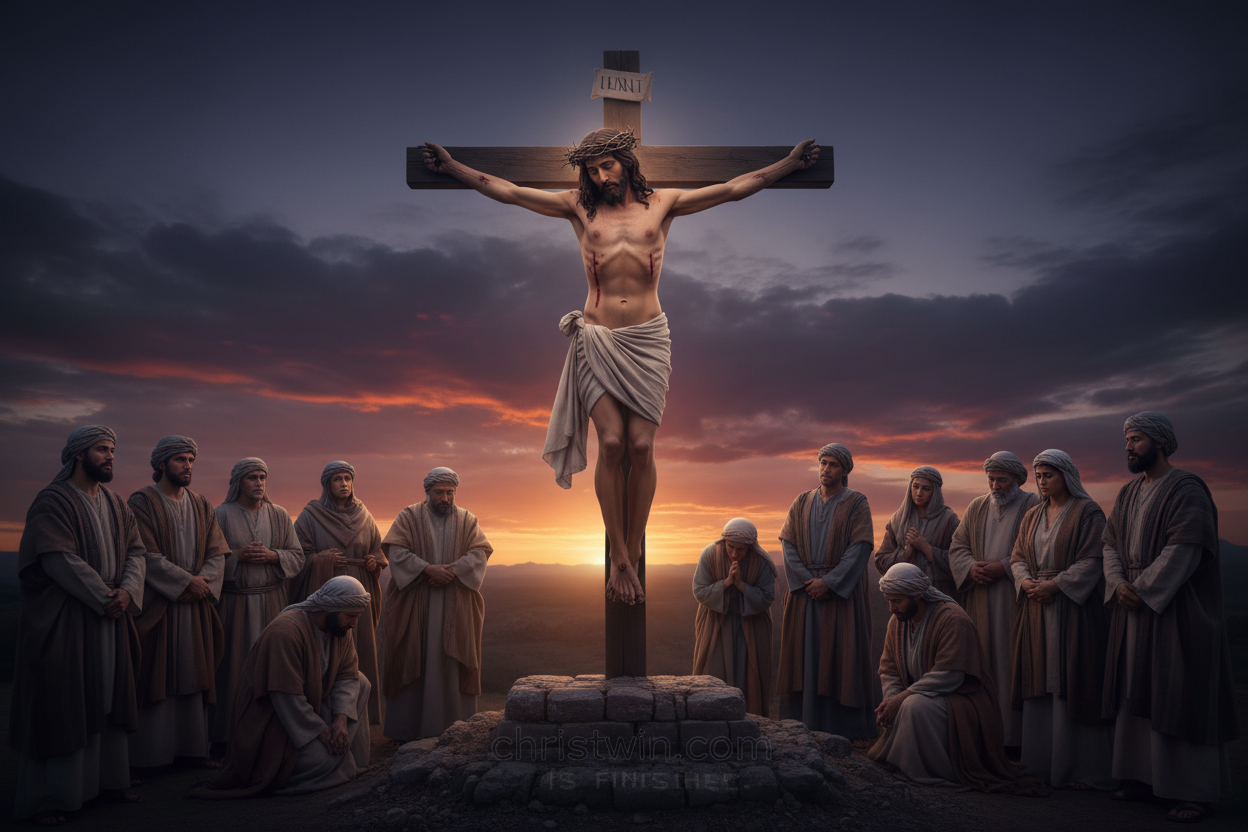
Have you ever thought about what “It is finished” really means? Jesus said this on the cross. It’s a key moment in Christian faith, found only in the Gospel of John.
The Greek word tetelestai means “It is finished“. It’s like saying a debt is and expression of Jesus’ last words. It shows His mission on the cross is done.
Learning about these words can deepen your understanding of Christian faith. It also shows how it affects our daily lives.
The Historical Context of Jesus’ Crucifixion
The crucifixion of Jesus happened in a special time and place. It was in first-century Jerusalem, filled with history, culture, and religion. To grasp the meaning of his last words, we need to look at this complex setting.
Roman Crucifixion Practices in the First Century
Crucifixion was a harsh way to punish people in the Roman Empire. It was meant to stop rebellions and keep order. People were nailed to crosses, often after being beaten, and left to die.
This method was not just to ki+ll but also to scare and shame people. The cross showed the power of the Romans and what happened to those who opposed them.
Jewish Passover and Its Significance
Jesus was crucified during the Jewish Passover. This was a time to remember when the Israelites were freed from slavery in Egypt. Families would come together for a special meal, the Seder, with unleavened bread and stories of the Exodus.
The Passover was more than just a celebration of freedom. It was also a time of hope for future salvation. Jesus’ death at this time made his sacrifice even more meaningful, linking it to themes of redemption and freedom.
Political and Religious Tensions in Jerusalem
Jerusalem in the first century was a city full of tension. It was ruled by the Romans, causing anger among the Jews. There were different groups, like the Pharisees and Sadducees, each with their own views on Jewish law and Roman rule.
This mix of politics and religion made the city very unstable. The Jewish leaders were afraid of Roman punishment. The Romans, on the other hand, were always on the lookout for signs of rebellion, like during the Passover.
The Seven Last Words of Jesus on the Cross
Jesus’ final words on the cross are very meaningful. They show His mission and thoughts during His crucifixion. These seven statements are found in the Gospels.
Overview of All Seven Statements
The seven last words of Jesus are important to Christians everywhere. They are:
- “Father, forgive them, for they do not know what they are doing.” (Luke 23:34)
- “Truly I tell you, today you will be with me in Paradise.” (Luke 23:43)
- “Woman, here is your son… Here is your mother.” (John 19:26-27)
- “My God, my God, why have you forsaken me?” (Matthew 27:46, Mark 15:34)
- “I thirst.” (John 19:28)
- “It is finished.” (John 19:30)
- “Father, into your hands I commend my spirit.” (Luke 23:46)
Each word gives a special view of Jesus’ time on the cross. It shows His bond with God, people, and prophecy.
The Chronological Order of Jesus’ Final Words
When did Jesus say these words? Scholars disagree. But most agree on this order:
- “Father, forgive them, for they do not know what they are doing.”
- “Truly I tell you, today you will be with me in Paradise.”
- “Woman, here is your son… Here is your mother.”
- “My God, my God, why have you forsaken me?”
- “I thirst.”
- “It is finished.”
- “Father, into your hands I commend my spirit.”
This order helps us see Jesus’ thoughts and feelings during His crucifixion.
The Significance of “It is finished” as the Sixth Statement
The sixth word, “It is finished,” is very important. It means Jesus finished His mission on earth. He fulfilled Old Testament prophecies and paid for our sins.
“It is finished” is more than just a statement. It’s a victory cry. Jesus did what He was sent to do and saved us.
Thinking about Jesus’ last words, like “It is finished,” reminds us of His sacrifice. It brings peace and assurance to our faith.
The Original Language: “Tetelestai” in Greek
Exploring Jesus’ final words on the cross is fascinating. The Greek term “tetelestai” is key. The New Testament was written in Greek, adding depth to its meaning.
“Tetelestai” (τετέλεσται in Greek) means “completed” or “fulfilled.” It’s from the verb “teleo,” which means “to complete” or “to finish.” This perfect tense shows an action finished in the past but is important now.
When Jesus said “tetelestai” on the cross, He meant His mission was done. Linguistic analysis shows this term was used in ancient Greece. It meant something was fully paid or done.
Different Bible translations show the complexity of “tetelestai.” Some say “It is finished,” others “The work is completed” or “It is accomplished.” These variations show the richness of the original language.
The perfect tense in “tetelestai” means Jesus’ work on the cross was not just a moment. It had lasting effects. It shows Jesus’ death was a completed work for all people through time.
Understanding “tetelestai” in Greek makes Jesus’ last words more meaningful. It shows His sacrifice as a completed act that impacts believers today.
It is finished – Meaning and expression of Jesus last words on the cross
Jesus’ last words on the cross, “It is finished,” are very important. They show that His work was done. This phrase is in the Gospel of John and tells us about Jesus’ mission and sacrifice.
The Immediate Context in John’s Gospel
In John’s Gospel, Jesus’ words “It is finished” have a special meaning. The story shows Jesus in control until His death. This shows He was fulfilling His mission.
Before saying “It is finished,” Jesus was thirsty and vinegar was given to Him. These moments show He was following scripture and finishing His work on earth.
- The fulfillment of Old Testament prophecies related to the Messiah
- The completion of Jesus’ redemptive work on the cross
- The demonstration of Jesus’ authority and control over the crucifixion events
What Was Actually “Finished”?
Jesus meant His redemptive work was done when He said “It is finished.” This includes:
- The fulfillment of Old Testament prophecies about the Messiah’s sacrifice
- The start of a new covenant between God and people through Jesus’ blood
- The end of Jesus’ mission to save humanity
By saying “It is finished,” Jesus showed His work on the cross was complete. He said there was nothing more to do for humanity’s redemption.
The Declarative Nature of the Statement
Jesus’ words “It is finished” are very important. The Greek word “Tetelestai” means everything is done. This is not just a fact but a strong statement that Jesus’ mission was accomplished.
This statement shows Jesus’ work is finished and complete. It tells believers that Jesus’ sacrifice is enough for their salvation.
In conclusion, Jesus’ words “It is finished” are key to Christian faith. They show His redemptive work is done and scripture is fulfilled. As believers, we should think deeply about these words and live by the finished work of Christ.
Theological Significance of “It is finished”
“It is finished” is very important in Christian beliefs. It shows Jesus’ death on the cross was the end of old ways. It’s a key part of what Christians believe.
Completion of Messianic Prophecies
Jesus said “It is finished” to show he had done what was promised. The Old Testament talked about a Messiah who would suffer and die. Jesus did all this, proving he was the Messiah.
- The prophecy of Isaiah 53 regarding the suffering servant
- Psalm 22’s detailed account of crucifixion
- The foretelling of Jesus’ betrayal and death in the Psalms
Fulfillment of the Old Testament Sacrificial System
“It is finished” also ended the old way of making sacrifices. Jesus’ death on the cross was enough to forgive sins. This ended the need for animal sacrifices.
“For if the blood of bulls and goats, and the ashes of a heifer sprinkling the unclean, sanctifies for the purifying of the flesh, how much more shall the blood of Christ, who through the eternal Spirit offered Himself without spot to God, purge your conscience from dead works to serve the living God?” (Hebrews 9:13-14)
The Atonement and Redemption Theology
Jesus’ death is seen as a sacrifice for all sins. This is key to understanding “It is finished.” It shows Jesus’ death was enough to make us right with God.
Key aspects of atonement and redemption theology include:
- The substitutionary nature of Jesus’ sacrifice
- The concept of propitiation, where Jesus’ death satisfies God’s justice
- The redemption of believers from the bondage of sin
Looking at these points helps us see how important “It is finished” is. It changes how we see Jesus and our faith.
The Connection to Old Testament Prophecies
Jesus’ final words on the cross connect deeply to Old Testament prophecies. These prophecies were not random. They were part of Israel’s prophetic tradition. This connection helps us understand Jesus’ mission and His last words, “It is finished.”
Psalm 22 and Its Prophetic Elements
Psalm 22 is a key prophecy about Jesus’ crucifixion. Written by David long before Jesus, it describes the crucifixion scene. For example, “They have pierced my hands and my feet” (Psalm 22:16) shows Jesus’ crucifixion. Jesus’ cry, “My God, my God, why have you forsaken me?” (Matthew 27:46), quotes Psalm 22:1, showing it was fulfilled.
Isaiah’s Suffering Servant Passages
Isaiah’s “Suffering Servant” passages (Isaiah 52:13-53:12) are also key. They talk about a figure who suffers for others, is wounded, and dies like a lamb. Early Christians and the New Testament saw these as pointing to Jesus. The apostle Philip, in Acts 8:26-35, explained Isaiah 53 to an Ethiopian eunuch, showing Jesus’ fulfillment of this prophecy.
“He was pierced for our transgressions, he was crushed for our iniquities; the punishment that brought us peace was on him, and by his wounds we are healed.” – Isaiah 53:5
Other Messianic Prophecies Fulfilled at the Cross
Many Old Testament prophecies were fulfilled at Jesus’ crucifixion. For example, Psalm 34:20 says “He protects all his bones, not one of them will be fractured”. Jesus’ legs were not broken, as the Gospels say (John 19:31-33). Also, Jesus’ garments were divided by lot, as Psalm 22:18 predicted. These fulfillments show Jesus’ death was part of a divine plan.
Exploring these connections, we see Jesus’ final words, “It is finished,” mark the end of these prophecies. This deepens our understanding of biblical prophecy and fulfillment. It strengthens the message of salvation through Jesus Christ.
The Sacrificial System and Its Fulfillment
The Old Testament’s sacrificial system was full of rituals and symbols. It was at the heart of Jewish worship. It showed the work Jesus would do on the cross.
The Day of Atonement (Yom Kippur) Connection
The Day of Atonement, or Yom Kippur, was very important. It was a day of fasting and saying sorry. The High Priest would go into the Holy of Holies to make things right for the people.
This ritual involved animal sacrifices and blood. It made the place and people clean. Jesus’ death on the cross did the same thing for all of us.
The book of Hebrews talks about this. It says Jesus went into heaven, not with animal blood, but His own. This shows God’s deep love for us.
The Passover Lamb Typology
The Passover Lamb was key in the Old Testament. The Israelites used a lamb’s blood to avoid a plague. This started the Passover celebration, remembering their freedom from Egypt.
Jesus is called the “Lamb of God.” His death during Passover was not a coincidence. It was the true meaning of the Passover, bringing salvation to all who believe in Him.
End of the Temple Sacrifices’ Necessity
Jesus’ death ended the need for Temple sacrifices. The book of Hebrews says Jesus’ sacrifice was enough. No more sacrifices were needed.
The tearing of the Temple veil showed this change. It meant we could go straight to God through Jesus, not through rituals.
This change is important for us today. We don’t need rituals to reach God. We can do it through faith in Jesus. As Paul said, “We have confidence to enter the Most Holy Place by the blood of Jesus” (Hebrews 10:19).
Different Denominational Interpretations
Christian groups have many views on “It is finished.” These views show the deep and varied teachings of Christianity.
Catholic Perspectives on “It is finished”
In Catholic teachings, “It is finished” means Jesus’ mission is done. The Catechism says Jesus’ death on the cross was what the Father wanted. This death is key to Catholic beliefs, showing the importance of the Eucharist.
Catholic scholars connect “It is finished” to old prophecies and the New Covenant. This is part of a bigger story of redemption, as explained in Jesus’ last words.
Protestant Understandings
Protestants see “It is finished” as Jesus’ work on the cross being complete. They believe in sola fide (faith alone). This shows that salvation comes through Jesus’ sacrifice alone.
- The finished work of Christ provides the basis for salvation.
- Believers are justified through faith in Christ’s completed work.
- The statement “It is finished” is a cornerstone of Protestant soteriology.
Orthodox and Other Christian Traditions
In Orthodox Christianity, “It is finished” means Christ’s work on the cross helps us become like God. This tradition sees Christ’s statement as a victory over e+vil.
“The Cross is the victory over death, the victory over the devil, and the beginning of the Resurrection.” –
Evangelical and Pentecostal churches also value “It is finished.” They see it as important for personal salvation and being in Christ.
Each Christian group has its own view of “It is finished.” Yet, they all respect Jesus’ last words on the cross. This shows the unique teachings of each tradition.
The Victory Aspect of “It is finished”
Jesus’ last words on the cross, “It is finished,” tell a story of victory, redemption, and e+vil’s defeat. This statement is more than just the end of His ministry. It’s a declaration of triumph that impacts Christians today.
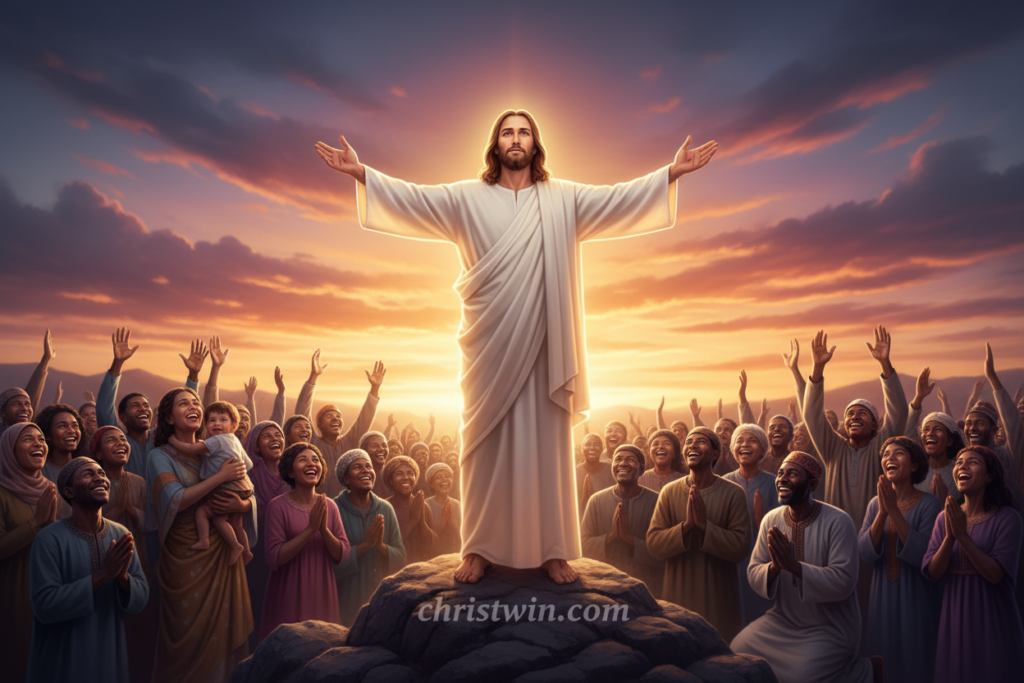
Triumph Over Sin and Death
The victory in “It is finished” comes from Jesus’ win over sin and death. By finishing His work on the cross, Jesus won a big victory. The Apostle Paul says in Colossians 2:15, “And having disarmed the powers and authorities, he made a public spectacle of them, triumphing over them by the cross.”
This victory is real now, not just in the future. It changes how believers live. It means you are:
- Free from sin’s penalty
- Rescued from darkness
- Part of God’s kingdom through Jesus (Colossians 1:13)
Defeat of Satan and E+vil Powers
Jesus’ words “It is finished” also mean Satan and e+vil powers are defeated. The cross was where Jesus faced and beat e+vil. Hebrews 2:14 says, “He shared in our humanity to defeat death’s power—that is, the devil.”
“The cross is not a symbol of defeat, but of victory; not a sign of weakness, but of power.”
The Paradox of Victory Through Surrender
Jesus’ victory is strange—it came through giving up His life. On the cross, He gave His life, yet won the biggest victory over sin, death, and the devil. This paradox is at the heart of Christianity. It shows true strength is in weakness.
Thinking about “It is finished” reminds you of your identity in Christ. You are:
- A victor in Christ
- Empowered to live for God
- Called to share this victory with others
In conclusion, “It is finished” is key to Christian faith. It shows Jesus’ victory over sin, death, and e+vil. This victory is not just history but a living truth for believers today.
Personal Applications for Christians Today
Christians today find comfort in “It is finished.” This phrase reminds us of Jesus’ work on the cross. It shows us how it affects our lives every day.
Finding Rest in the Completed Work of Christ
“It is finished” is more than history for us. It tells us our salvation is done. We can rest knowing Christ’s work covers our sins.
Hebrews 4:9-10 says, “There remains, then, a Sabbath-rest for the people of God.” It’s a time to rest from our work, just like God did.
To rest in Christ’s work, try these:
- Begin each day thinking about “It is finished” and how it changes your life.
- Remember Christ’s work is done when you face problems. He is in charge.
- Be thankful for Christ’s finished work every day.
Living in Light of “It is finished”
Living with “It is finished” means we’re free and victorious. We trust in Christ’s sacrifice for all parts of our lives. This brings us peace and confidence with God.
To live this way, do these:
- Learn and think about Scriptures like John 19:30 and Colossians 2:13-15.
- Tell others about Christ’s finished work. Share the hope and redemption it brings.
- Face daily challenges knowing Christ’s work is done and works for us.
Applying the Finished Work to Daily Struggles
Life has daily struggles, but “It is finished” helps us see them differently. Christ’s work gives us strength, comfort, and guidance. It changes how we handle personal, relational, or work issues.
To use Christ’s work in daily battles, try:
- Ask for wisdom and strength, knowing God’s grace is always there.
- See your struggles through the lens of Christ’s finished work.
- Be with people who support and encourage you in your faith.
By using “It is finished” in our lives, we deepen our faith. We find rest in Christ’s work and face challenges with hope and confidence.
Artistic and Cultural Depictions
For centuries, Jesus’ last words have inspired many. Artists, musicians, and writers have created a rich world of culture. The phrase “It is finished” has been a big focus, leading to many different works.
Famous Paintings and Sculptures
Many famous artists have shown Jesus on the cross. They often include his last words in their art. For example, Grünewald and Rubens have made powerful works.
Some famous examples are:
- The Isenheim Altarpiece by Matthias Grünewald, which shows Jesus on the cross.
- Christ on the Cross by Diego Velázquez, showing Jesus’ calm acceptance.
- Sculptures by Michelangelo add depth to the story.
Musical Compositions Inspired by the Last Words
Musicians have also been inspired by Jesus’ last words. They have made oratorios, cantatas, and more. These pieces reflect on the importance of his words.
Some examples are:
- The Seven Last Words of Christ by Joseph Haydn, a moving oratorio.
- Charles Ives’ The Seven Last Words offers a fresh view.
- Church hymns and Christian songs often mention “It is finished.”
Literary References Throughout History
Writers have also used Jesus’ last words in their work. They use these words to explore deeper meanings.
Examples include:
- John Donne’s sermons and poems explore the words’ meaning.
- Graham Greene’s The Power and the Glory talks about redemption.
- Modern Christian books keep thinking about Jesus’ final words.
These works show the lasting impact of Jesus’ last words. They continue to inspire and challenge us today.
Scholarly Perspectives and Recent Research
Studying Jesus’ last words on the cross has grown a lot. New talks and digs have helped us understand more. We learn about Jesus’ crucifixion from different views.
Historical-Critical Scholarship
Historical-critical study is key to understanding Jesus’ last words. Scholars look at the words, culture, and history of the New Testament. They help us see the depth of Jesus’ words.
Key findings from historical-critical scholarship include:
- Jesus’ last words were not just personal but had deep meaning.
- The Gospels were written in certain times and places, shaping their stories.
- Jesus’ words also connect to the Old Testament, showing his role as the Messiah.

Archaeological Insights Related to Crucifixion
Archaeology has given us new views on crucifixion in the Roman times. Finds have helped us understand Jesus’ crucifixion better. For example, a discovery in Jerusalem showed how the Romans crucified people.
Some significant archaeological insights include:
- Archaeology confirms the New Testament’s account of Roman crucifixion.
- It has found inscriptions and artifacts that back up the crucifixion story.
- It shows how crucifixion was seen as a punishment in society.
Contemporary Theological Discussions
Today, theologians keep exploring Jesus’ last words. They use old studies and think about how they apply today. They talk about many things, like what Jesus’ words mean for us now.
Current debates and reflections include:
- How Jesus’ last words connect to Old Testament prophecies.
- The meaning of “It is finished” for Jesus’ work.
- How we can apply Jesus’ words to our faith and life.
Conclusion
Jesus’ last words, “It is finished,” are very important for Christians. We’ve looked at why these words are so significant. They show the deep meaning behind Jesus’ sacrifice.
“It is finished” means more than just the end. It shows Jesus’ work is done, and sin and death are defeated. This gives us peace and hope.
Today, “It is finished” tells us we are saved. It means our faith is strong because of Jesus. When we face hard times, remember Jesus’ work is complete.
In short, “It is finished” is key to Christian faith. It helps us understand Jesus’ sacrifice and its effect on us. May these words guide and comfort you on your spiritual path.
