
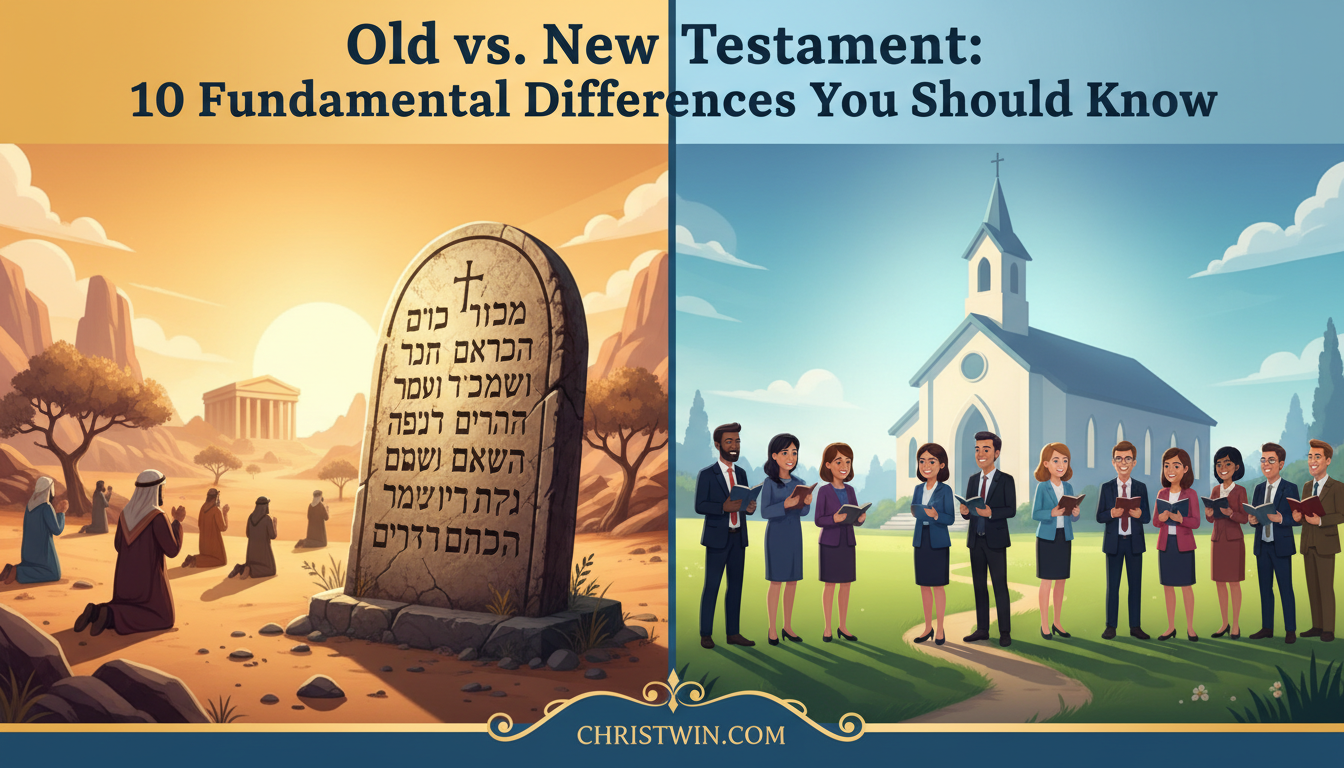
The Bible is one book, with the Old Testament starting the story. The New Testament then adds to it.
Did you know that almost 80% of the Bible is talked about in the New Testament? This shows how closely the two are connected.
Knowing the distinctions between the Old and New Testaments helps us understand God’s plan for us. As you read the Bible, you’ll see how each part fits together.
This article will show you the 10 fundamental differences between these two parts. It will help you get a better grasp of the Bible’s story.
The Biblical Testaments: An Overview
Learning about the Bible starts with knowing its two main parts: the Old and New Testaments. These parts tell a story of faith together. Each part adds special things to our understanding of Christianity.
The Bible has two big parts: the Old Testament with 39 books and the New Testament with 27 books. The Old Testament tells us about life’s start until Jesus was born. It has history, laws, and prophecies that show us why Jesus was important.
What Defines the Old Testament
The Old Testament focuses on the Israelites’ history, the Law, and prophetic voices. It has stories, poems, wisdom, and prophetic books. These writings helped people get ready for Jesus.
What Constitutes the New Testament
The New Testament has 27 books. It tells about Jesus’ life, death, and resurrection, and the early church. It includes the Gospels, Acts, letters, and Revelation. The New Testament shows how Jesus fulfilled the Old Testament’s promises.
The Historical Bridge Between Them
The time between the Old and New Testaments is key. It’s called the Intertestamental Period. This time saw big changes in culture, religion, and politics. These changes helped shape Jewish and early Christian beliefs.
Understanding both testaments helps us see the rich story of Christianity. The Old and New Testaments show God’s ongoing story with us. This story ends with Jesus’ message of salvation.
The Fundamental Differences Between the Old and New Testament
Exploring the Old and New Testaments shows key contrasts that are key to Christian beliefs. These differences help us understand the Bible better and how it guides our lives.
Why Understanding These Distinctions Matters
Knowing the core variances between the Old and New Testaments is important. The Old Testament tells Israel’s history and God’s laws. The New Testament is about Jesus Christ and God’s plan through Him.
Seeing these differences helps us understand how the Bible’s messages connect. It makes us see God’s plan more clearly.
Historical Context of the Scriptural Division
The Old and New Testaments were divided based on history. The Old Testament was written in Hebrew, ending around 400 BCE. The New Testament, in Greek, came in the 1st century CE, showing Jesus’ new covenant.
This history is key to seeing the theological differences. It shows how the old covenant moved to the new through Jesus.
How These Differences Shape Christian Theology
The theological contrasts between the Old and New Testaments shape Christian beliefs. The change from law to grace and from Israel to all people are big differences. They shape how Christians believe and live.
By understanding these differences, we can grow in our faith. It makes our faith more meaningful and informed.
Difference #1: Covenant – From Law to Grace
The Old and New Testaments show a big change in God’s deal with people. It’s not just about new rules. It’s a deep change in how God talks to His people.
The Mosaic Covenant and Its Requirements
The Old Testament has the Mosaic Covenant, given to the Israelites by Moses. This deal was based on laws the people had to follow. They had to obey the Law to stay close to God.
The New Covenant Through Christ’s Blood
The New Testament brings the New Covenant, made possible by Jesus’ blood. This deal is based on God’s grace and mercy, not on following laws. It offers a closer, more personal bond with God, thanks to the Holy Spirit.
How This Shift Affects Christian Practice
The move from the Mosaic Covenant to the New Covenant changes how Christians live. It moves from following rules to living in grace and faith. Christians are to live by faith, not just by following laws. The Holy Spirit helps them show Christ’s love every day.
It’s key for Christians to understand this change. It shows the big differences between the Old and New Testaments. By choosing the New Covenant, believers can have a more alive and free faith, not stuck in rules.
Difference #2: God’s Revelation – From Partial to Complete
As you read the Bible, you’ll see a big change. God reveals Himself more fully in Jesus Christ. This change helps us understand the Old and New Testaments better.
Progressive Revelation in the Old Testament
The Old Testament shows God’s gradual reveal. He shares His nature and plans in stages. This includes visions, dreams, and messages from prophets.
For example, God’s promises to Abraham and Moses are part of this reveal.
Christ as the Fullness Page of God’s Revelation
The New Testament says Jesus Christ is the end of God’s reveal. Hebrews 1:1-2 says God spoke through prophets and then through His Son. Jesus shows us God’s love and plan for us.
Through Jesus, we see God’s true nature. He makes God visible and close to us.
The Role of Apostolic Witness
After Jesus went up to heaven, the apostles shared His story. Their words in the New Testament tell us about Jesus. They help us see how Jesus is the key to understanding the Old Testament.
The apostles’ teachings, guided by the Holy Spirit, helped the early church. They showed us God’s plan in Jesus.
In short, the Bible shows a big change in how God reveals Himself. This journey ends in Jesus Christ, as seen by the apostles. It helps us know God better.
Differences #3 & #4: Salvation and Sacrifice
We explore the third and fourth differences between the Old and New Testaments. These reveal a lot about salvation and sacrifice. The story shows a move from temporary fixes to a lasting solution, showing God’s plan for us.
Old Testament: Temporary Atonement Through Animal Sacrifice
In the Old Testament, people looked forward to salvation through animal sacrifices. These sacrifices were real, showing the people’s faith in a God who would save them. The Day of Atonement rituals in Leviticus 16 show how blood sacrifices atoned for sins.
The sacrificial system was complex. It required the Israelites to offer different sacrifices. These sacrifices gave temporary forgiveness but also reminded them of their need for ongoing forgiveness.
New Testament: Permanent Redemption Through Christ
The New Testament says Jesus Christ’s sacrifice ended the need for temporary atonement. His death on the cross brought a new era of redemption. This change is huge.
Now, people are justified by faith in Jesus, not by following the law. This new covenant, as Jeremiah predicted, brings an internal transformation, not just external actions.
From Anticipation to Fulfillment of Salvation
The move from the Old Testament to the New Testament is from looking forward to looking back. Old Testament saints waited for a savior. New Testament believers celebrate the salvation Christ brought. This change shows a deeper understanding of God and His plan for us.
Thinking about these differences can change how you see salvation and your relationship with God. The Bible tells us to base our faith on the Old Testament events and the work of Jesus Christ.
Differences #5 & #6: Access to God and the Holy Spirit
Believers’ way to reach God and feel the Holy Spirit changed a lot. This change is not just about how we pray. It shows a big shift in how God talks to us.
Limited Access Through Priests
In the Old Testament, getting to God was limited and mediated. Priests were key in helping people reach God. Only the high priest could go into the Holy of Holies, and only on the Day of Atonement. This restricted access showed how holy God is and how sinful we are.
Direct Access Through Christ
The New Testament brings a radical shift. Thanks to Christ’s sacrifice, we now have direct access to God. The tearing of the temple veil at Jesus’ crucifixion showed this new way. Now, you can go to God’s throne with confidence, thanks to Jesus.
From Selective to Universal Indwelling of the Spirit
The Holy Spirit’s role changed a lot too. In the Old Testament, the Spirit was selective, choosing a few for special tasks. But the New Testament says the Holy Spirit lives in all believers, helping us serve and share our faith. This universal presence of the Spirit is a key part of the new covenant, making our faith more real and powerful.
These changes show a big move from a strict, ritual-based way to God to a personal, direct relationship with Christ and the Holy Spirit. Knowing these changes can make you appreciate God’s message more and the privileges of being a New Testament believer.
Differences #7 & #8: Scope and Mission
The story of God’s plan grows from focusing on Israel to the whole world. This change is key to understanding the Old and New Testaments.
From National Israel to Universal Church
In the Old Testament, God mainly worked with Israel. They were chosen to show God to the world. But the New Testament shows God’s plan grew, with the Church including people from everywhere.
This move from focusing on one nation to all people is a big difference. Paul says, “There is neither Jew nor Gentile, neither slave nor free, nor is there male and female, for you are all one in Christ Jesus” (Galatians 3:28). This unity in Christ is central to the New Testament’s message.
From Promised Land to Great Commission
The Old Testament talks about the Promised Land for Abraham’s family. But the New Testament focuses on the Great Commission. Jesus tells His followers to “go and make disciples of all nations” (Matthew 28:19).
This change shows God’s mission grew from a specific land to the whole world. For more on this, check out examples of prophecies in the Bible. God wants to reach everyone, no matter where they come from.
The Inclusion of Gentiles in God’s Plan
The New Testament clearly shows God wants to include everyone, not just Israel. In the Old Testament, we see hints of this. But the New Testament makes it a main point.
Paul’s work shows Gentiles are part of God’s plan. He says, “God’s mysterious plan was made known to me…the Gentiles are now joint heirs with Israel, members together of one body” (Ephesians 3:3-6). This unity of Jews and Gentiles in the Church is a key part of the New Testament.
Differences #9 & #10: Kingdom and Transformation
Looking at the Old and New Testaments shows us God’s kingdom and how we change. These insights help deepen your faith and apply it every day.
From Earthly Kingdom to Spiritual Kingdom
The Old Testament talks about a kingdom on earth. God was with His people, Israel, in places like the tabernacle and temple. But the New Testament says Jesus started a spiritual kingdom that’s not just in one place.
This kingdom is in our hearts, not just a place. It shows God’s love for everyone, not just some. You are part of this kingdom, feeling God’s rule in your life.
From External Observance to Heart Transformation
The Old Testament had many rules for Israel. These rules taught them about God’s holiness. But the New Testament says true faith is in the heart, not just following rules.
The New Testament talks about changing your heart through faith in Christ. This change lets you live your faith truly, not just by doing things. Your heart becomes renewed and follows God’s will.
From Temporal Blessings to Eternal Hope
The Old Testament promised blessings like wealth and long life for following God. But the New Testament offers eternal blessings. Your hope is in eternal life through Jesus Christ.
This hope changes how you see life’s problems. You can face the future with faith, knowing your future is secure in Christ.
Thinking about these differences helps you understand God’s word better. It encourages you to see the value in both the Old and New Testaments.
Conclusion: Unity in Diversity – How Both Testaments Form One Redemptive Story
You’ve learned about the big differences between the Old and New Testaments. These scriptures are key to Christian faith. Both testaments show the same God who hates sin but wants to save us through Jesus.
The Old Testament sets the stage, and the New Testament brings it all together. This shows a story of redemption that spans centuries. It’s a journey from start to finish, with Jesus at the center.
The Old and New Testaments are not opposite, but a story unfolding. They show us God’s character and plan. Understanding these differences helps us see the whole story of God’s love.
This story guides our faith and helps us connect with God. It makes us appreciate the scriptures more. It also helps us live our faith every day.
Seeing the unity in the Old and New Testaments helps us grow in faith. It makes our faith richer and more complex. As you keep growing, may these insights help you get closer to God.
