

Ever thought about the Bible’s events in order? Knowing the biblical books in order changes how you read. It shows God’s plan in history more clearly.
The Bible has 66 books written by the Holy Spirit. It’s full of wisdom and spiritual guidance. Reading them in chronological order makes your faith stronger.
Exploring the complete list of bible books is exciting. You’ll see how stories connect, making your bond with the Bible deeper.
Understanding Biblical Chronology
Exploring the Bible’s timeline changes how you read it. It shows God’s plan and the historical context. You might ask how the events and books fit together in time.
The Bible is usually divided into sections like the Law and the Gospels. This order is not just by time. It’s more about themes and how the books are connected.
Traditional vs. Chronological Arrangement
The Bible has sections like the Law and the Gospels. These sections are not in order of time. Instead, they are grouped by theme.
A chronological order puts books in the order of events. This creates a timeline of biblical events.

Benefits of Reading the Bible Chronologically
Reading the Bible in order has many benefits. It makes God’s plan clearer. You also understand the history behind events.
This way, you see how the Bible’s story unfolds. It helps you connect different parts of the scripture.
This method makes the Bible more interesting. It’s great for history buffs or anyone wanting a new way to read the Bible. It helps you see themes and messages more clearly.
The 66 Books of the Bible in Chronological Order
Reading the Bible in order shows a big story over thousands of years. It’s not just books; it’s one story from creation to the apostles. This story covers over 4,000 years.

Overview of Biblical Timeline
The Bible’s timeline has many parts. These include creation, the early leaders, judges, kings, exile, and after-exile times. Knowing these parts helps us understand the Bible’s story.
The Old Testament starts with creation. Then, it tells of the Israelites in Egypt, their travels, and settling in Canaan. The judges and kings like Saul, David, and Solomon are key. The kingdom splits, prophets speak, and the exile to Babylon happens.
The New Testament picks up with Jesus’ life, death, and rise. It then shows how Christianity grew through the apostles. The story ends with visions of the end times.
Dating Methods for Biblical Books
Figuring out when the Bible books were written uses several ways. These include looking at history, archaeology, and clues in the texts. Scholars use these to guess when each book was written.
Historical references match Bible events with known history. For example, the Babylonian exile is confirmed by Babylon’s records.
Archaeological findings give solid proof for the Bible’s stories. Discoveries of old texts help date events and set the scene for books.
Knowing the Bible’s order and how it’s dated helps us love the scriptures more. It shows us their rich history.
The Pentateuch: First Books of the Bible
The Bible starts with the Pentateuch. It has the first five books: Genesis, Exodus, Leviticus, Numbers, and Deuteronomy. These books tell us about creation, the Israelites’ early history, and God’s covenant with his people.
Genesis: The Book of Beginnings
Genesis is the first book. It introduces the biblical story. It talks about creation, Adam’s descendants, and the patriarchs Abraham, Isaac, and Jacob. Genesis explains God’s relationship with humans and sets up themes for the Bible.

Exodus: Israel’s Deliverance
Exodus follows Genesis, telling of the Israelites’ escape from Egypt. It introduces Moses, who leads them out and gets the Ten Commandments. Exodus shows God’s power and faithfulness.
Leviticus: Laws for Worship and Holy Living
Leviticus gives rules for priests and Israelites to please God. It talks about worship, sacrifice, and living right. It stresses the need for holiness and purity in God’s people.
Numbers: Wilderness Wanderings
Numbers tells of the Israelites’ journey from Mount Sinai to the Promised Land. It shares stories of their struggles and faith. Numbers shows God’s support even when people fail.
The Pentateuch lays a strong foundation for the Bible. It introduces themes like creation, covenant, and redemption. As you read more, you’ll see these ideas grow and come to life.
Historical Books of the Pre-Monarchic Period
Exploring the pre-monarchic period, you find the rich history and spiritual lessons of ancient Israel. This time had big events and figures that shaped the nation’s future. These books help us understand God’s bond with His people.
Job: Ancient Wisdom Literature
The book of Job is special for its wisdom on suffering, faith, and God’s rule. You might ask, what can we learn from Job’s story? Here are a few key points:
- The need to keep faith when things are tough.
- How limited our understanding is of God’s ways.
- The value of friends supporting us, even if they don’t get it.
Job’s tale teaches us to trust in God’s kindness, even when things are hard. For more on living a faithful life, check out the 10 commandments. They give basic rules for living a holy life.

Joshua: Conquest of Canaan
The book of Joshua tells of Israel’s victory in Canaan. It shows their faith in God and the miracles that happened. As you read Joshua, think about these questions:
- How did the Israelites’ faith in God’s promises guide them?
- What part did leadership play in their success or failure?
- How can Joshua’s lessons help you in your life, when facing challenges or doubts?
Judges: Cycles of Apostasy and Deliverance
The book of Judges shows a cycle of sin, judgment, and rescue for the Israelites. Despite their wrongdoings, God kept being faithful, sending judges to save them. Key points include:
- The pattern of sin, judgment, and rescue.
- The different roles judges had, from military leaders to spiritual guides.
- The need for repentance to return to God.
Ruth: A Story of Redemption
Ruth’s tale is a beautiful example of redemption and loyalty, set in the judges’ era. Reflecting on Ruth’s path, you’ll see themes of:
- Faithfulness and loyalty when things get hard.
- God’s care for ordinary people.
- The inclusion of non-Jews in Jesus’ family line.
Together, these books give a full view of the pre-monarchic period. They offer insights into ancient Israel’s spiritual, social, and political life. As you keep exploring, you’ll grow in understanding God’s order of books in the bible and the biblical book sequence, deepening your faith.
United Kingdom Period Books
The United Kingdom period in the Bible tells us about King David and King Solomon. Their work is very important. This time was full of great cultural and spiritual achievements, shown in many Bible books.

1 & 2 Samuel: Transition to Monarchy
The books of 1 and 2 Samuel tell how Israel became a monarchy. First, Saul was king, then David. They show how the monarchy started and David’s faith. They teach us about following God’s rules and what happens if we don’t.
Psalms: David’s Contributions
King David wrote many Psalms. These songs express feelings and spiritual experiences. David’s psalms share his life, struggles, and victories, connecting us deeply with God. They have comforted and inspired people for centuries.
Proverbs, Ecclesiastes, and Song of Solomon: Solomon’s Wisdom
King Solomon wrote Proverbs, Ecclesiastes, and Song of Solomon. Proverbs gives advice for everyday life. Ecclesiastes talks about life’s meaning and how short it is. The Song of Solomon is a love poem. Solomon’s writings help us understand life, urging us to seek wisdom and follow God’s ways.
1 Kings (Early Chapters): Solomon’s Reign
The early chapters of 1 Kings talk about Solomon’s rule. He was wise, as shown by his judgment in a story about two prostitutes. The building of the Temple in Jerusalem was a big achievement of his, a place for Israelites to worship. These stories show God’s faithfulness and the value of following His laws.
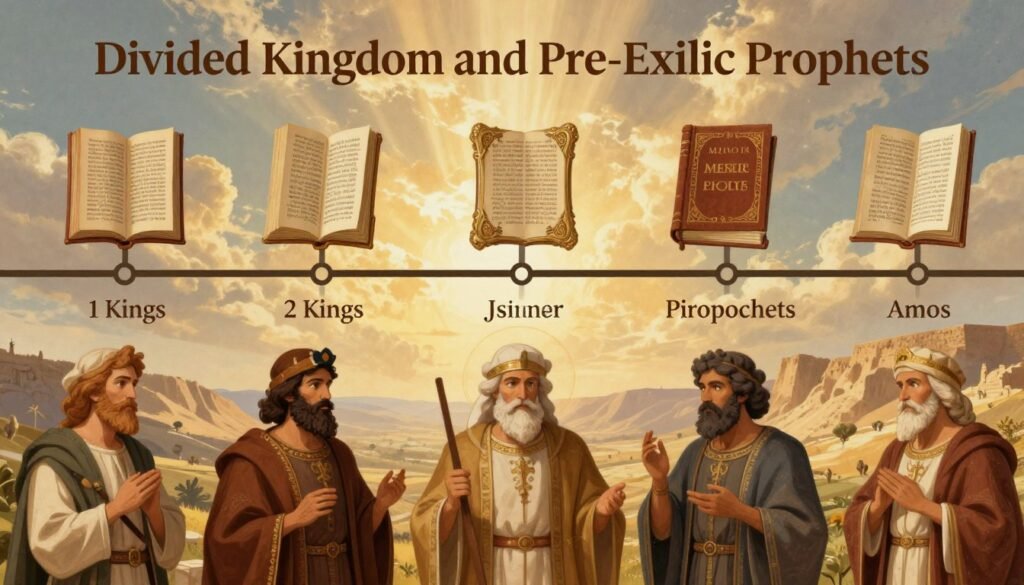
Divided Kingdom and Pre-Exilic Prophets
During the divided kingdom, prophets called people to turn back to God. This time, when Israel and Judah split, was very important. The prophets helped guide people back to faith and warned them of bad choices.
Early Prophetic Books
Hosea and Amos spoke out against Israel and Judah’s problems. They talked about being faithful to God and doing what’s right.
Think about how these messages are for you today. They urge you to stay strong in your faith, even when it’s hard.
Later Pre-Exilic Books
Later prophets like Isaiah and Micah also called for change. They talked about the need to turn back to God. They also shared hope for a better future.
Looking at these books, think about God’s plans and character. See how their messages of judgment and hope are important for you.
Historical Context in Kings and Chronicles
Kings and Chronicles tell us about the kings of Israel and Judah. They show times of good and bad choices.
Learning about this time helps you understand the prophets and people’s struggles. It also shows the themes of faith and redemption in their stories.
Studying the divided kingdom and pre-exilic prophets deepens your knowledge. It shows how God’s love and redemption were shared through different authors and times.
Exilic Period Books
The exilic period was a hard time for the Israelites. It was filled with prophetic writings and stories. You’ll learn how their experiences in exile changed their view of God and their future.
Ezekiel: Visions in Babylon
Ezekiel’s prophecies are key to this time. His visions and symbolic acts showed God’s message to the exiles. They were told to repent and hope for a better future.
Ezekiel also talked about taking personal responsibility. He described a future temple in great detail.
Daniel: Prophecy and Court Tales
Daniel’s book tells stories of faith and survival. It also has apocalyptic visions showing God’s control over time. Daniel’s interpretations of dreams and visions helped the Jewish people in exile.
They saw a future beyond their current troubles.
Obadiah: Judgment on Edom
Obadiah’s prophecy is short but strong. It talks about Edom’s role in Judah’s fall and their coming judgment. This book reminds us of God’s justice and the dangers of opposing His people.
Thinking about these books invites you to see how their messages of judgment, hope, and restoration fit into your life. Knowing the order of scripture books, including these, deepens your understanding of the Bible’s story.
Post-Exilic Period Books
As you look at the biblical timeline, you see a big change after the exile. The Israelites came back and rebuilt the Temple. This time was full of ups and downs as they tried to fix their community and faith.
Historical Books
The books from this time tell us a lot about the exiles’ journey. Ezra and Nehemiah are important. They talk about fixing the Temple and Jerusalem’s walls, and the changes in faith.
These books show us leaders like Ezra and Nehemiah. They helped the community through big changes and spiritual growth.
Post-Exilic Prophets
The prophets of this time kept guiding the Israelites. Haggai, Zechariah, and Malachi were the main ones. They spoke about staying true and hoping for the future.
These prophets told the people to stay faithful. They said to look forward to the Messiah. They reminded everyone of God’s love and plan.
New Testament Chronology
Exploring the New Testament chronology reveals the rich history and themes of early Christian communities. The books, though not in order, tell the story of Jesus and the apostles.
Early Christian Writings
The New Testament starts with the four Gospels: Matthew, Mark, Luke, and John. These books tell about Jesus’ life, teachings, death, and resurrection. The Gospels are not strictly chronological, but they offer a deep look into Jesus’ life and teachings. The Acts of the Apostles, by Luke, follows the story into the early church.
Paul’s Major Epistles
Paul’s letters to early churches are a big part of the New Testament. His major epistles, like Romans and 1 Corinthians, tackle big theological questions. They also talk about church life and how faith meets culture.
Prison and Pastoral Epistles
During his imprisonment, Paul wrote letters like Ephesians, Philippians, and Philemon. These Prison Epistles are full of deep thoughts and personal feelings. The Pastoral Epistles (1 Timothy, 2 Timothy, and Titus) guide on church leadership and keeping doctrine strong.
Later New Testament Books
The New Testament ends with the General Epistles (like Hebrews, James, and 1 Peter) and Revelation. The General Epistles cover many Christian faith and practice topics. Revelation gives a vision of the end times and God’s victory over evil.
Learning about the New Testament chronology helps you understand early Christian life and theology. As you read these writings, you’ll see the challenges faced by the early church. You’ll also see how their experiences are relevant today.
Conclusion
Reading about the 66 books of the Bible in order has deepened your understanding. You see how God’s plan unfolds from creation to the early church. This gives you a big picture view.
Now, you know how each book fits into the timeline. This includes the history of the Old and New Testaments. You can appreciate your favorite stories and verses more.
As you keep exploring the Bible, let this knowledge inspire you. It can help you grow in faith and connect more with God’s word. May it guide and comfort you through life’s ups and downs.
