
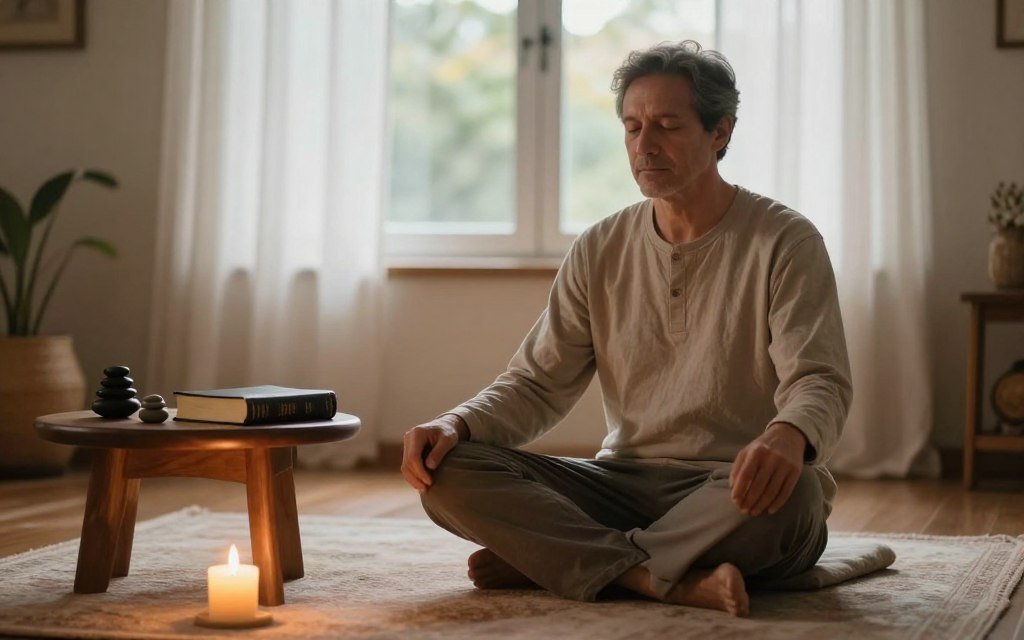
As you seek to deepen your faith, you may have wondered: can meditation be a powerful tool for spiritual growth, or is it a practice that contradicts Christian beliefs? Meditation is often linked with Eastern spiritual practices. Yet, the Bible also talks about meditation in passages like Joshua 1:8 and Psalm 1:2.
In the biblical context, meditation is about focusing on God and His Word. It’s not about emptying the mind. This is key to knowing if meditation can be good for Christians. By looking at what the Bible says about meditation, you can understand how to use it in your faith journey.
Understanding Meditation in a Christian Context
Christianity has a rich tradition of meditation. It is deeply rooted in scripture and a personal relationship with Jesus Christ. You’ll find that Christian meditation is different. It focuses on God’s Word.
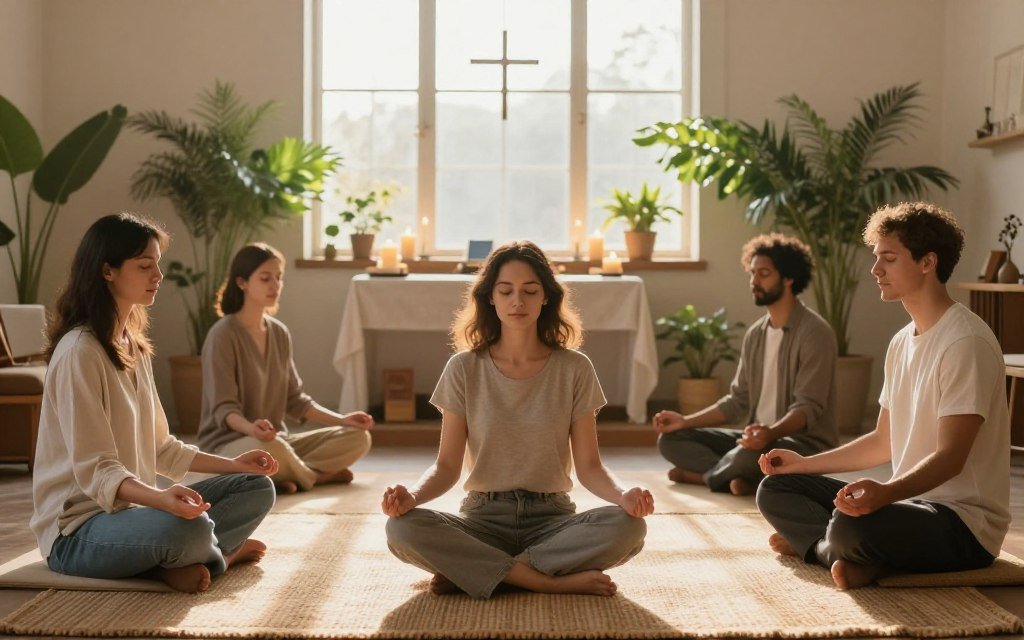
Defining Meditation Across Different Traditions
Meditation is practiced in many religious traditions. Each has its own way and goals. In Eastern religions, meditation often means emptying the mind or finding inner peace.
Christian meditation is centered on engaging with God’s Word. It’s about deepening your relationship with Him.
Other forms of meditation might use mindfulness or breath control. But Christian meditation focuses on scripture and prayer. It’s about listening to God’s voice and responding in faith.
How Christian Meditation Differs from Other Forms
The main difference is its Christ-centered approach. Christian meditation reflects on the Bible and Jesus Christ’s teachings. It’s not just for calm or peace. It’s about deepening your faith and understanding God’s will.
Prayer is also a big part of Christian meditation. Unlike some other practices, Christian meditation uses prayer. It helps communicate with God and seek His guidance.
Biblical References to Meditation
Exploring the Bible’s view on meditation shows a rich history. It spans the Old and New Testaments. Meditation is woven through Scripture, guiding believers on their faith journey.
Old Testament Passages on Meditation
The Old Testament talks a lot about meditation. It shows how important it is for God’s people. For example, Joshua 1:8 says to meditate on God’s law all day and night. It promises success and prosperity.
Psalm 1:2 talks about the blessed person. They delight in God’s law and think about it all day and night. These verses show how meditating on God’s Word deepens faith and understanding.

New Testament Perspectives on Contemplative Practices
In the New Testament, meditation becomes more about Jesus. Philippians 4:8 tells us to think about things that are true and good. This shows a mindset that pleases God.
This and other passages show early Christians saw meditation as a way to live for Christ. By focusing on Jesus’ teachings, believers can grow closer to their faith.
Thinking about these Bible verses can make meditation a key part of your spiritual growth. It can help you grow closer to God and face life’s challenges better.
Is Meditation a Sin in Christianity? Addressing the Core Question
Is meditation a sin in Christianity? This question is complex. We need to look at the Bible and different types of meditation. Not all meditation is the same, and knowing the differences is key.
Common Misconceptions About Meditation in Christian Circles
Some Christians think meditation is a sin because of its link to Eastern religions. But, biblical meditation focuses on God’s Word. It’s actually encouraged in the Bible.
The book of Joshua says to “meditate on God’s law day and night” (Joshua 1:8). This means thinking about God’s character, promises, and teachings.
You might worry that meditation goes against Christian beliefs. But, it’s important to know the difference between good and bad practices. This way, you can cultivate a deeper relationship with God through meditation that He likes.
Distinguishing Between Godly and Ungodly Meditation Practices
To meditate in a way that fits your Christian faith, use Scripture-based meditation. Think about Bible verses, God’s character, and pray. For help with prayer in meditation, check out prayers for Lent.
By choosing the right sources and practices, your meditation will be based on your faith. This helps you grow spiritually.
Historical Christian Meditation Practices
For centuries, Christians have meditated to connect with God. This started with biblical teachings. It grew with the early Church Fathers and medieval mystics.
Early Church Fathers and Contemplative Prayer
The early Church Fathers shaped Christian meditation. They focused on contemplative prayer, quieting the mind to focus on God. Desert fathers, living alone, prayed and meditated on Scripture.
St. Anthony of Egypt was a key figure. His desert experiences shaped contemplative prayer in Christianity.
Medieval Christian Mysticism and Meditation
In the medieval period, Christian mysticism grew. Mystics like St. Bernard of Clairvaux and Julian of Norwich helped understand contemplative prayer. They wrote about experiencing God’s love and presence.
Medieval mystics used Lectio Divina to deepen their faith. This method involves reading, meditating, praying, and contemplating Scripture. It helps connect deeply with God.
Today, these ancient practices influence Christian spirituality. They offer a rich heritage of contemplative prayer and meditation.
Denominational Perspectives on Meditation
Looking into how different Christian groups see meditation can help us understand it better. The Christian faith has many views on meditation. Each group has its own way of seeing it.
Catholic Views on Meditation and Contemplative Prayer
The Catholic Church loves contemplative prayer and meditation. They use Scripture, the lives of saints, and Church teachings for meditation. The Ignatian spiritual exercises are a big part of this. They help people imagine Bible scenes and think about how they apply to life.
Page
Protestant Approaches to Meditation
Protestant groups have many views on meditation. Some focus on personal meditation on the Bible. They think about Bible teachings and how to live by them. Others are careful because meditation might seem too close to other faiths. But, many Protestant churches are starting to see the good in meditation for deepening faith.
Orthodox Christian Traditions of Contemplation
The Orthodox Christian tradition loves contemplative prayer and meditation. They use the Jesus Prayer to find inner peace and God’s presence. This comes from the desert fathers’ teachings and helps with spiritual growth.
In conclusion, many Christian groups have their own meditative ways. Each one adds to our understanding of meditation in the Christian faith. By looking at these different views, we can find new ways to grow closer to God.
Biblical Meditation vs. Eastern Meditation
Exploring meditation, it’s key to know the difference between biblical and Eastern meditation. They both focus the mind but serve different purposes and have different practices.
Key Differences in Purpose and Practice
Biblical meditation uses God’s Word to deepen faith and understanding. It involves thinking about God’s character, actions, and promises. This helps believers connect with God more deeply.
Eastern meditation, on the other hand, aims for mindfulness or emptiness. It seeks to unite with a universal consciousness.
Biblical meditation includes:
- Reading and thinking about scripture
- Praying through the passages
- Writing down insights and personal applications
Eastern meditation might use:
- Focusing on breath or a mantra
- Being mindful in daily life
- Using physical postures or movements
Areas of Possible Spiritual Concern
When meditating, it’s vital to watch out for spiritual issues. For Christians, keeping a Christ-centered focus is key. This means avoiding practices that might mix faiths or weaken Christian beliefs.
Some things to think about include:
- The danger of using practices that go against the Bible
- Meditation becoming self-focused instead of God-focused
- The need to base meditation on scripture and prayer
Knowing these differences and being careful can help you meditate in a way that strengthens your faith. It can also improve your relationship with God.
Contemplative Prayer in Christian Tradition
As you explore Christian spirituality, you’ll find contemplative prayer. It’s a way to meet God’s presence. It’s not just a practice but a way to be with God, deepening your bond with Him.
For centuries, Christians have loved practices like the Jesus Prayer, Centering Prayer, and Lectio Divina. These help quiet minds, focus on God, and listen to His voice. Through these prayers, you can feel peace and connect with God deeply.
The Jesus Prayer and Centering Prayer
The Jesus Prayer, or Prayer of the Heart, is simple yet powerful. It’s about repeating “Lord Jesus Christ, have mercy on me, a sinner.” This prayer is key in Eastern Orthodox spirituality, teaching humility and trust in God’s mercy.
Centering Prayer is a newer form, starting in Catholic tradition. It involves sitting in silence, using a word to focus on God’s presence. It helps you ignore distractions and feel God’s presence more.
Lectio Divina as Biblical Meditation
Lectio Divina means “divine reading.” It’s an old Christian way to read, meditate, and pray, growing spiritually and understanding God’s Word. It has four steps: lectio (reading), meditatio (meditation), oratio (prayer), and contemplatio (contemplation). Through Lectio Divina, you can dive deeper into Scripture, letting God’s Word change your heart and life.
Adding these prayer practices to your faith can make it richer and more alive. They encourage you to slow down, listen to God, and welcome His presence. As you explore contemplative prayer, may you grow closer to God, finding peace, guidance, and strength in His presence.
Mindfulness Through a Christian Lens
Mindfulness, rooted in Christian faith, can change your life. It deepens your bond with God. You’ll find new ways to feel God’s presence and guidance every day.
Reconciling Modern Mindfulness with Christian Faith
Modern mindfulness comes from Eastern meditation. It might feel strange to some Christians. But, focusing on God can make mindfulness a powerful tool for growing spiritually.
To mix modern mindfulness with your faith, remember it’s about being with God. It’s about noticing His presence and being thankful. This way, you grow closer to your Creator.
Setting Christ-Centered Intentions in Meditation
When meditating, keep your focus on Christ. This makes your mindfulness practice truly Christian. It’s not just a secular activity.
To set your intentions, think about God’s love or Jesus’ teachings. As you sit quietly, keep your mind on these thoughts. Let God’s Word fill your heart and mind.
Practical Tips for Christ-Centered Mindfulness:
- Begin with prayer, asking God to be with you.
- Use Scripture as your meditation focus, thinking about its meaning.
- Be thankful for God’s gifts in your life.
- Be mindful in everyday tasks, like eating or walking, feeling God’s presence.
Mindfulness and your Christian faith together bring you closer to God. You’ll find peace in your daily life.
Potential Spiritual Dangers to Be Aware Of
Meditation can be great when it’s focused on Christ. But, there are risks to watch out for. Knowing these dangers helps you meditate wisely.
When Meditation Becomes Self-Focused Instead of God-Focused era-label>
Meditation can turn into focusing on yourself instead of God. This can lead to being too self-centered. To avoid this, keep your meditation focused on Christ. Use the Bible as your guide and think about God, not yourself.
Ask yourself: Is meditation helping you get closer to God, or is it just about you? Keeping your heart on Christ helps you stay on the right path.
To keep your meditation God-focused:1. Use the Bible as your meditation guide.
2. Think about God’s qualities and what He wants for you.
3. Pray and ask God to show you His will.
Syncretism and Maintaining Doctrinal Integrity
Mixing different beliefs in meditation can be a danger. It’s important to keep your meditation true to Christian teachings. Make sure your meditation stays true to the Bible.
To avoid mixing beliefs:
1. Learn about Christian meditation and prayer.
2. Be careful of meditation that goes against the Bible.
3. Get advice from Christian leaders who know the Bible well.
By knowing these dangers and taking steps to avoid them, you can meditate safely. This way, you can keep your faith strong and true to the Bible.
Scripture-Based Meditation Practices for Christians
Scripture-based meditation helps Christians connect deeply with God’s Word. It makes faith richer and spiritual journeys more meaningful.
Meditating on God’s Word
Meditating on God’s Word means thinking deeply about scripture. It helps understand God’s will and character. This practice slows you down and lets the Holy Spirit guide you.
To begin, pick a verse that speaks to you. Think about its meaning and how it fits into your life. Ask yourself, “What is God saying to me?” or “How can I use this in my life?”
Practical Steps:1. Choose a scripture.
2. Read it slowly and think about it.
3. Reflect on its meaning and how to apply it.
Prayer-Centered Meditation Approaches
Prayer-centered meditation combines prayer with meditation. It’s a way to talk to God and seek guidance. This method uses prayer to connect with God and share thoughts and feelings.
Adding prayer to your meditation strengthens your bond with God. You can use traditional prayers or speak from your heart. Be true and open in your talks with God.
Benefits:1. Deepens your connection with God.
2. Helps understand scripture better.
3. Makes prayer more intimate.
Scripture-based meditation can greatly enhance your spiritual journey. Whether through meditating on scripture or using prayer, these practices lead to a closer relationship with God.
How Meditation Can Enhance Christian Spiritual Growth
Christian meditation is a special way to grow closer to God. It helps you feel more connected to Him. This makes your spiritual journey better.
Deepening Your Relationship with God Through Contemplative Practice
Meditation helps you get to know God better. It makes your mind quiet so you can think about God’s word. This leads to a deeper connection with your Creator.
Through contemplative practice, you can:
- Enhance your understanding of God’s word
- Develop a more consistent prayer life
- Cultivate a sense of peace and calm in the midst of life’s challenges
When you meditate on Scripture, it becomes more meaningful. It guides and comforts you every day. This deepened connection makes your faith stronger.
Practical Benefits for Christian Living
Meditation has many benefits for Christians. It helps you make choices that match your faith. It also makes you more patient and loving, like Christ.
It also helps you deal with stress and anxiety. By focusing on God, you find peace. This peace protects your heart and mind.
In conclusion, Christian meditation is very powerful. It grows your faith, deepens your bond with God, and helps in everyday life. Embracing this practice brings you closer to God and makes your faith stronger and more alive.
Conclusion: Embracing Biblical Meditation in Your Faith Journey
Exploring meditation in Christianity shows it’s a great way to grow your faith. It helps you connect with God and understand the Bible better. This practice makes your faith stronger.
Some people wonder if meditation is a sin in Christianity. But, it’s not. Christian meditation has a long history and many ways to pray. It brings you closer to God and helps you grow spiritually.
Think about adding meditation to your daily routine. You can meditate on the Bible, pray, or try Lectio Divina. This will help you feel more peaceful and connected to God.
