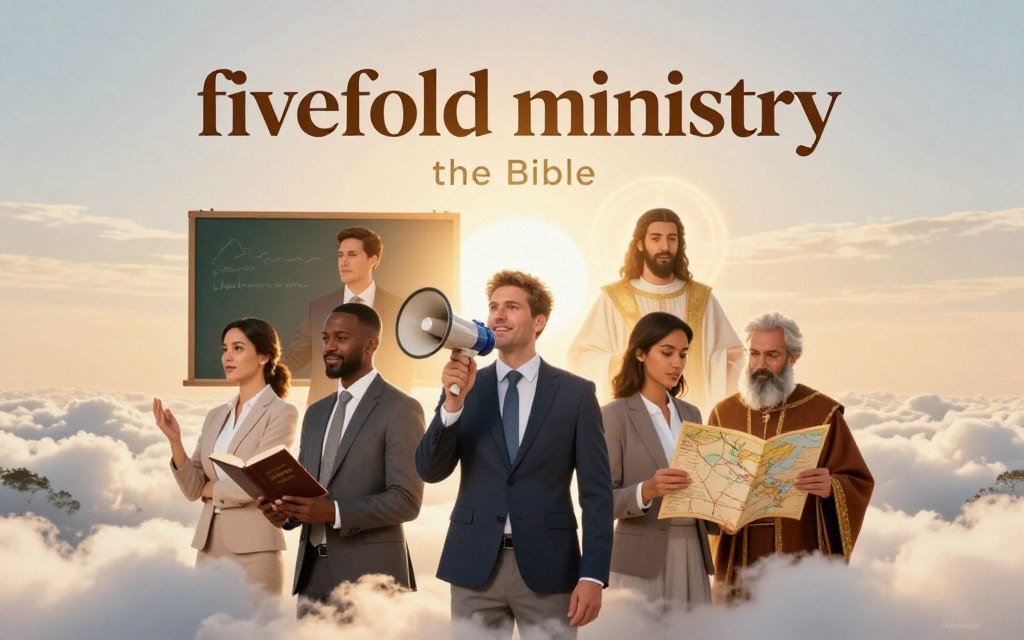
Ever thought about how church roles help believers grow together? The five-fold ministry sheds light on this.
Ephesians 4:11 talks about these roles. It says, “It was he who gave some to be apostles, some to be prophets, some to be evangelists, and some to be pastors and teachers.” Knowing about these ministries can really help your faith grow.
Learning about the five-fold ministry shows how each role is important. It helps the church stay healthy. This knowledge helps us see how God uses His people in many ways.
The Biblical Foundation of the Fivefold Ministry
Exploring the fivefold ministry shows us its roots in the Bible. It helps us understand the different gifts and callings in the church. This concept is key to knowing our roles in the body of Christ.

The Key Scripture: Ephesians 4:11-16
Ephesians 4:11-16 is where the fivefold ministry starts. It talks about five roles – apostles, prophets, evangelists, pastors, and teachers. Ephesians 4:12-13 says these roles help prepare people for service. They help the church grow until everyone knows and understands Christ fully.
This scripture shows how important these roles are. They help bring unity and maturity to the church. They also help believers serve and know Christ better.
Historical Context of Paul’s Teaching
Knowing when Apostle Paul wrote to the Ephesians is important. He wrote during a time when the church faced many problems. The fivefold ministry was meant to solve these issues.
Paul’s letter to the Ephesians is more than just a response to his time. It’s a timeless guide for the church. It shows how the five ministries are key to Christ’s mission and our lives.
What Are the 5 Ministries in the Bible?
Knowing the five ministries in the Bible helps us see how God planned the church. These ministries are gifts to help believers do their work. They are important for the church to grow and work together.
Origin and Purpose of the Fivefold Ministry
The fivefold ministry comes from Ephesians 4:11-16. Paul talks about the roles in the church. Jesus gave these gifts to help the saints do their work.
The five ministries are apostles, prophets, evangelists, pastors, and teachers. Their job is to get everyone ready for service. This helps the church grow until we all understand and believe in Jesus.
These ministries work together to help believers grow. Each one has its own job. For example, apostles start new things, and prophets speak God’s word to us.

How These Ministries Equip the Saints
The five ministries give believers the gifts and guidance they need. Evangelists share the good news, helping others believe. Pastors and teachers help us grow in faith and know God’s word.
Together, these ministries make the church strong and ready for its mission. They help us become one and grow in faith. By being part of the fivefold ministry, we help spread God’s kingdom.
The Ministry of Apostles
Apostles are key leaders who start new movements and grow the gospel’s reach. The word “apostle” means “one who is sent.” It shows they are Christ’s ambassadors.
Biblical Definition and Role of Apostles
The Bible says apostles are Jesus’ messengers to share the gospel. Apostles are foundational to the church. They help start new faith groups and guide the early church.
Apostles start new projects, solve problems, and offer spiritual advice. They lead the gospel into new places.
Examples of Apostles in Scripture
The New Testament shows us many apostles, like Apostle Paul. He traveled far and wrote a lot to spread Christianity. He helped start churches in the Mediterranean.
The original twelve disciples were also apostles. They spread the gospel after Jesus rose and went up to heaven. They helped build the Christian church.
The Apostolic Ministry in Today’s Church
Today, apostles are important in the church. They start new churches and build missional networks. They bring the gospel to places the old church can’t reach.
The apostolic ministry is key for the church to grow. Knowing about apostles helps us see their impact today.
The Ministry of Prophets
Exploring the ministry of prophets shows us how God talks to His people. Prophets are special people who share God’s words and messages. They help others by speaking God’s truth and praying for them.
Biblical Definition and Role of Prophets
Prophets are God’s messengers. They share God’s messages, like calls to change and words of hope. Their job is to guide God’s people the right way.
Key aspects of the prophetic ministry include:
- Receiving and Page 146delivering God’s messages
- Interceding for God’s people
- Guiding the church according to God’s will
Examples of Prophets in Scripture Page 146
The Bible tells us about many prophets. Moses, Elijah, and Isaiah are famous for their work. They helped God’s people by sharing His words.
Their stories teach us about the prophetic ministry.
The Prophetic Ministry in Today’s Church
In today’s church, prophets are just as important. They share God’s messages and guide the church. Their role is to keep the church on God’s path and offer spiritual advice.
Think about how prophets can help your community. The prophetic ministry is a powerful way to grow spiritually and find guidance.
The Ministry of Evangelists
Evangelists play a big role in sharing the gospel. They are messengers of the Good News. They want to share Jesus’ love and salvation with the world.
Biblical Definition and Role
An evangelist shares the gospel with those who haven’t heard. The word “evangelist” means “to bring good news.” In the New Testament, they were key in spreading Jesus’ message.
Evangelists preach, teach, and witness. They go on missionary trips to share the gospel. They reach out to many people in different places.
Examples of Evangelists in Scripture
The Bible shows us many evangelists. Philip, known as Philip the Evangelist, shared the gospel with an Ethiopian eunuch. Apostle Paul also acted as an evangelist on his journeys.
These examples show how important evangelists were in the early church. They guide us in our evangelistic work today.
The Evangelistic Ministry in Today’s Church
In today’s church, evangelists are just as important. They share the gospel in many ways, like through crusades and media. Their message is always about Jesus’ love and salvation.
We should support and partner with evangelists. We can do this by praying, giving money, and helping in their work. Together, we can spread the gospel to a world that needs it.
The Ministry of Pastors
Pastors serve with love, just like Christ. They help God’s people grow in faith. This is a key part of church life.
Biblical Definition and Role of Pastors
Pastors care for God’s people. The word “pastor” means shepherd. It shows their role in protecting and guiding believers.
They teach, preach, and lead their church. Pastors help during happy and sad times. They guide believers to understand and live God’s Word.
Examples of Pastoral Ministry in Scripture
The Apostle Peter is a great example for pastors. He teaches leaders to care for God’s flock. He says they should do it willingly, not for money.
Paul also guides church leaders in his letters. He talks about what leaders should be like. They should teach the right things and live their faith well.
The Pastoral Ministry in Today’s Church
Today, pastors are just as important. They lead their churches through tough times. They preach, teach, counsel, and help the community.
Remember, anyone can help in pastoral care. We all can support each other. This makes the church strong and spreads the gospel.
The Ministry of Teachers
Teachers in the Bible are very important today. They help people grow spiritually by teaching them about God.
Biblical Definition and Role of Teachers
The Bible clearly says what teachers do. In Ephesians 4:11-12, it talks about “It was he who gave some to be apostles, some to be prophets, some to be evangelists, and some to be pastors and teachers, to prepare God’s people for works of service.” Teachers are close to pastors, showing they are important together.
Teachers make God’s Word easy for everyone to understand. They give biblical instruction to help people in their faith and everyday life.
Examples of Teachers in Scripture
The Bible shows us many teachers who helped the early church. Apollos is one example. He was “a learned man, with a thorough knowledge of the Scriptures.” He learned from Priscilla and Aquila, showing the value of teaching and learning.
Jesus was also a teacher. His disciples called Him Rabbi or Teacher. He made hard spiritual truths easy to understand.
The Teaching Ministry in Today’s Church
In today’s church, teaching is key. Teachers help people understand and use God’s Word in their lives. They teach through Sunday school, Bible studies, and sermons.
Teaching isn’t just in classrooms. Teachers also mentor one-on-one. They help people grow spiritually and live their faith well.
Discovering Your Place in the Fivefold Ministry
Exploring the fivefold ministry helps you find your gifts and calling. This journey is about more than just finding your role. It’s about how you can help the church grow and stay healthy.
Identifying Your Spiritual Gifts and Calling
Finding your spiritual gifts is key to your place in the fivefold ministry. The Bible says we all have gifts for the good of all (1 Corinthians 12:7). To find your gifts, look at your strengths and what makes you happy when serving.
Reflect on your experiences: Think about when you felt most alive while serving. What were you doing? How did you feel? These moments can show you your spiritual gifts.
Seek feedback: Talk to people who have seen you serve. What do they think you’re good at? What gifts do they see in you?
Serving Within Your Ministry Gifting
After finding your gifts and calling, serve in those areas. Look for where your gifts are needed and step up to serve.
Be willing to serve: Serving with humility is important. It means being ready to serve and follow God’s lead.
Collaborate with others: Serving in the fivefold ministry is a team effort. Working with others ensures the church is fully equipped for all tasks.
Finding your place in the fivefold ministry is a journey. It takes patience, prayer, and a heart to serve. As you find your gifts and serve, you’ll fulfill your purpose and help the church grow.
Conclusion
The fivefold ministry is a special gift from God. It helps the church work well together. Knowing your role in this ministry is a big step in your spiritual growth.
The five roles – apostles, prophets, evangelists, pastors, and teachers – help everyone grow. They make the church strong. By using your gifts, you help the church grow and get healthier.
We urge you to find your spiritual gifts and calling. Serve in your ministry gifting. This way, you’ll get closer to the church and help spread God’s kingdom.
