
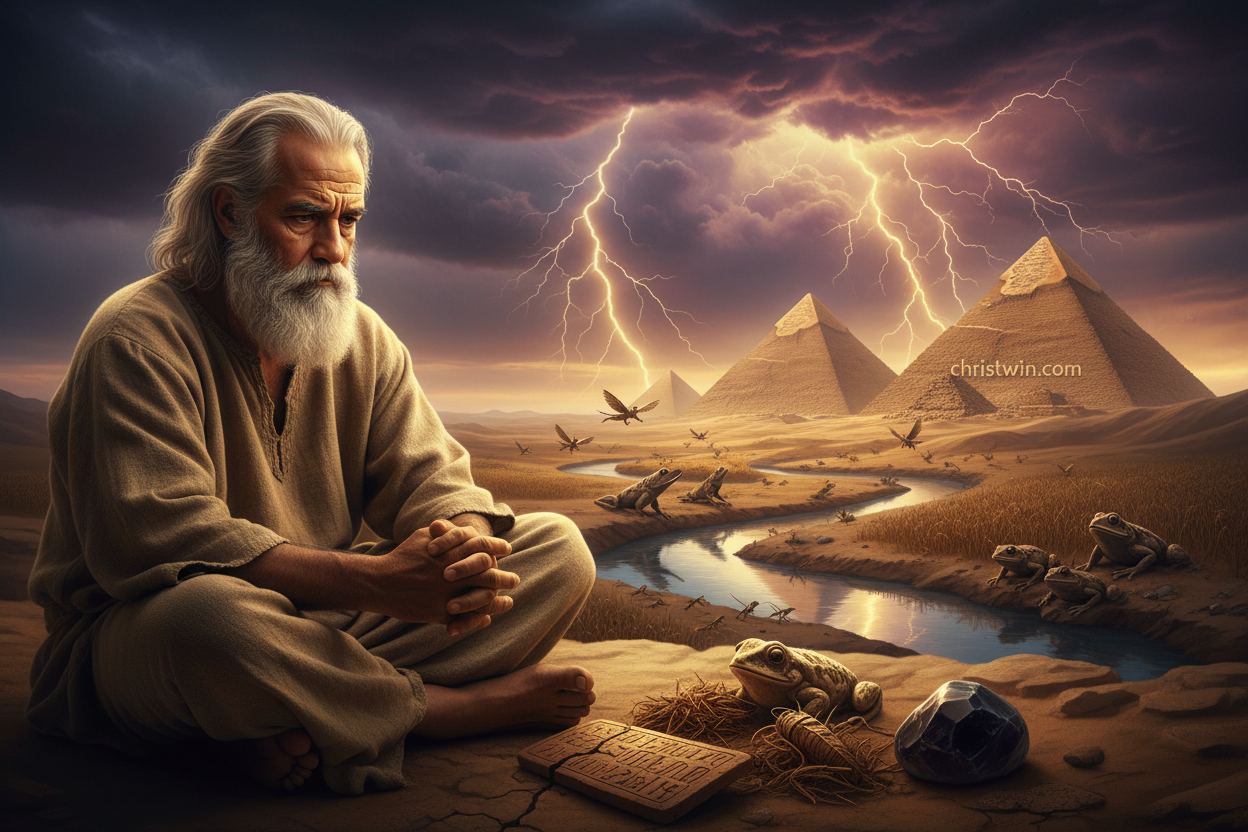
Have you ever wondered about the 10 plagues of Egypt and their meaning for us today?
This ancient story is key to the Passover celebration. It teaches us about faith, freedom, and God’s power.
Looking into the plagues in Exodus 7—12, you’ll find lessons for life’s ups and downs.
This journey will make you see the Passover story in a new light. It shows how it’s relevant to our lives today.
The Biblical Narrative of the 10 Plagues of Egypt
God sent Moses to face Pharaoh, starting a dramatic show of power. This key event is in Exodus, chapters 7 to 12. It shows God’s help for the Israelites and teaches us today.
Moses’ Confrontation with Pharaoh
Moses met Pharaoh, a battle of God’s power vs. human pride. Moses asked Pharaoh to let the Israelites go, speaking for God. Pharaoh’s no was a challenge to God, leading to the plagues.
Moses and Pharaoh’s meeting teaches us about humility and obeying God. This story tells us to trust in God’s power, just like Moses did.
God’s Purpose Behind the Plagues
The 10 Plagues were not random. God made them to show His power over the Egyptians and their gods. Each plague hit a different part of Egyptian life and religion, proving God’s supremacy.
The plagues showed God’s judgment on Egyptian gods, proving His rule over all. They help us understand God’s character and His wish to be honored by all.
The Pattern and Progression of Divine Judgment
The plagues got worse, showing God’s patience and justice. Pharaoh had many chances to change before the worst happened. The plagues showed the futility of fighting God’s will, as Pharaoh’s hard heart led to worse outcomes.
Looking at the plagues, we learn to listen to God’s warnings and have faith. The story urges us to think about our response to God’s call to repent and believe.
Archaeological and Historical Evidence
The 10 plagues left marks on history and archaeology. Exploring this event in biblical history shows a mix of faith, history, and science.
Egyptian Records and the Exodus
Egyptian records give us clues about the Exodus. The biblical account is detailed, but Egyptian sources offer another view. For example, the Ipuwer Papyrus talks about disasters and big changes that some think match the plagues.

Scientific Theories for the Plagues
Many scientific ideas try to explain the 10 plagues. Some think natural events like the Nile’s red algae or bugs could have caused some plagues. These ideas mix faith and science, helping us understand the story better.
Timeline Debates Among Scholars
When the Exodus and the 10 plagues happened is a big debate. Scholars have different views based on the Bible and archaeology. Learning about these debates helps us see the story’s historical and biblical sides.
Looking into the evidence of the 10 plagues is an exciting journey. It shows how faith, history, and science work together. This journey not only deepens our understanding of the Bible but also strengthens our faith.
The First Plague: Water Turned to Blood
The first plague made the Nile’s water turn to blood. This was a big challenge to Egypt’s beliefs and nature. It was not just a disaster; it was a judgment against the Egyptian gods.
Attack on the Nile God Hapi
The Nile was very important to Egypt. It was seen as a god. By changing the Nile to blood, God was showing who was boss.
God was challenging the worship of Hapi, the Nile’s flood god. Also, gods like Isis and Khnum were questioned. They were linked to the river’s fertility and protection.

Ecological Significance
The plague showed how important clean water is. The Nile’s change affected the Egyptians’ lives. It also showed the big ecological problems of ignoring God’s rules.
You can learn more about the significance of the plagues in Exodus and their impact on nature.
Modern Parallels of Water Pollution
Today, water pollution is a big problem. The first plague warns us about ignoring our water. Just like the Nile, our water faces threats today.
Industrial waste and farm runoff harm our water. The story of the first plague teaches us to care for our planet. It shows the need for looking after our environment.
Thinking about the first plague reminds us of our spiritual and ecological duties. It helps us understand our role in taking care of the earth.
The Second Plague: Frogs
The second plague, frogs, was a challenge to the Egyptian goddess Heqet. She was linked to fertility and childbirth. Frogs from the Nile covered Egypt’s land.

Frogs appeared in huge numbers. This was not just a problem. It was a judgment against Heqet. It showed the powerlessness of this goddess against the God of the Israelites.
Challenge to Heqet, the Fertility Goddess
PageRank is not a keyword, I will remove it.
Heqet was a frog-headed goddess. She was important for fertility and childbirth. The second plague used frogs to show the God of Israel was more powerful than their gods.
The Irony of Egypt’s Sacred Animal Becoming a Curse
The frog was once sacred but now caused trouble. This irony was clear to the Egyptians. Their sacred animal was now a curse, invading their homes and land.
Lessons on Environmental Balance
The second plague teaches us about environmental balance. The natural world is connected. Problems in one area can affect others. The frog plague showed Egypt’s ecosystem was disrupted, possibly by the first plague’s effect on the Nile.
Thinking about the second plague reminds us to care for our environment. Just as the God of Israel showed His power, we must be good stewards of the earth. We must understand the balance that keeps us alive.
The Third Plague: Lice or Gnats
We’re exploring the 10 plagues of Egypt, and now we reach the third one. It brought lice or gnats to the land. This was a key moment in the story of Moses and Pharaoh.
Defeat of Geb, God of Earth
The third plague was a judgment on Geb, the Egyptian earth god. God showed His power by sending lice or gnats. This challenged the Egyptians’ belief in Geb’s power over nature.
The Magicians’ Failure
This time, the Egyptian magicians couldn’t do what Moses did. They tried but failed, saying it was God’s work. This failure showed the Israelites’ God was stronger than Egypt’s.
Significance of the Smallest Creatures
The third plague used lice or gnats to show God’s power. These tiny creatures were a big problem for the Egyptians. It showed God’s control over all creation.
Thinking about the third plague reminds us of God’s power in our lives. It’s like a call to the Egyptians to see God’s authority. It also calls us to grow our faith and trust in God.
The Fourth Plague: Flies
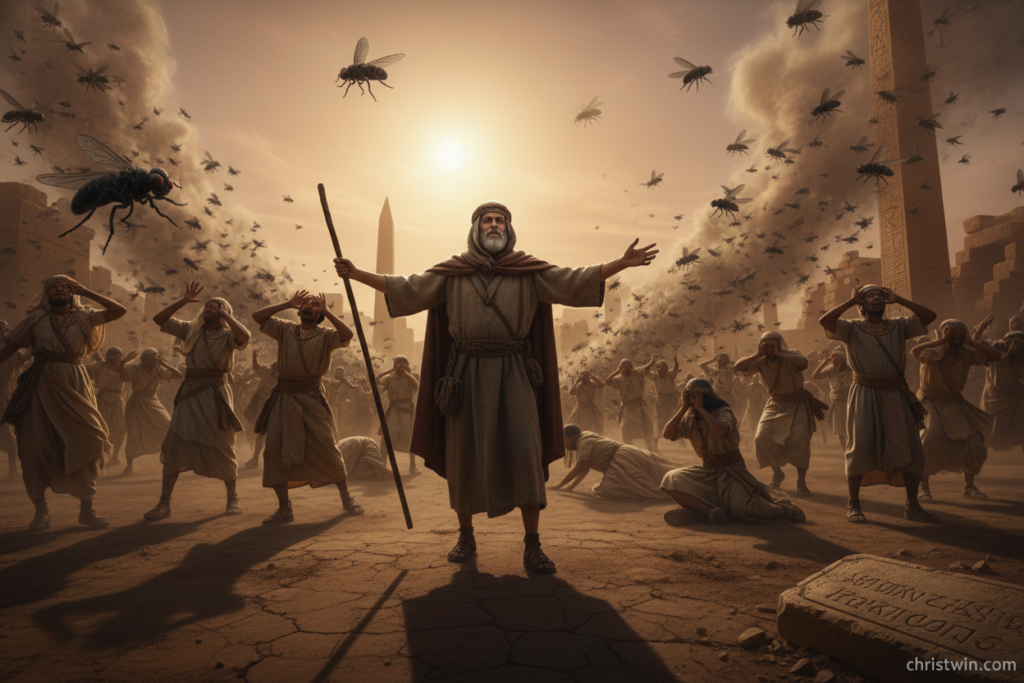
The fourth plague in the Moses plagues was special. It targeted Uatchit or Khepri Page, linked to flies or beetles. This plague showed the first difference between the Israelites and the Egyptians.
Challenge to Egyptian Deities
The fourth plague was a challenge from God to the Egyptian gods. By sending flies, God showed His power over the Egyptian gods. This plague showed the weakness of Egyptian beliefs and the strength of the God of Israel.
First Plague of Distinction
This plague was the first to show a difference between the Israelites and Egyptians. The Egyptians had to deal with flies, but the Israelites were safe. This showed God’s protection and favor for His people, strengthening their faith.
Symbolic Meaning of Corruption
The plague of flies also had a deeper meaning. Flies are linked to dirt and sickness. Their huge numbers showed Egypt’s moral and spiritual decay. This plague was a sign of Egypt’s need to turn to the true God.
Looking at the plagues in Exodus, we see God’s judgment on Egypt and its gods. The fourth plague, with flies, shows God’s judgment touched all parts of Egyptian life and beliefs.
The Fifth Plague: Livestock Disease
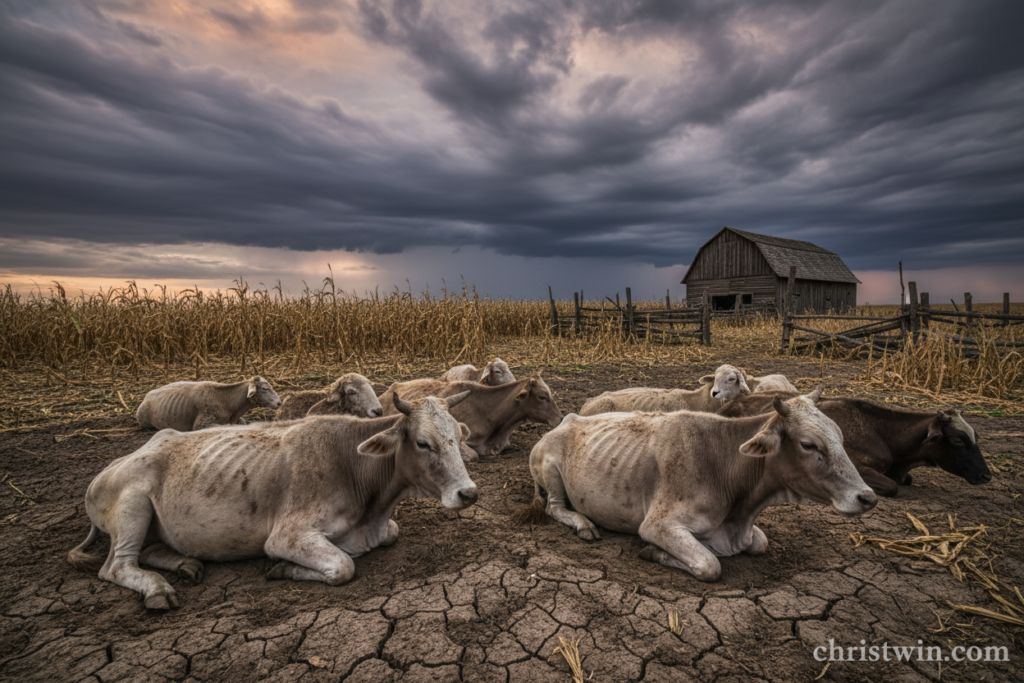
In the fifth plague, God judged Egypt by kil+ling their cattle. This was not just a natural disaster. It was God’s way of challenging Egypt’s beliefs and culture.
Attack on Apis and Hathor
The fifth plague hit Egypt’s livestock hard, including sacred cattle. Gods Apis and Hathor, linked to cattle, faced God’s challenge. By kil+ling these animals, God showed He was more powerful than Egypt’s gods. This was a strong message against Egypt’s idol worship, proving their gods were weak against the God of the Israelites.
Economic Impact on Egypt
The loss of livestock hurt Egypt’s economy a lot. Cattle were key for farming, moving goods, and more. Their death hit Egypt’s food supply and stability hard. This plague showed Egypt’s economy was weak against God’s wrath, proving their success wasn’t just from their gods.
Pharaoh’s Increasing Resistance
Despite the fifth plague’s big impact, Pharaoh didn’t change his mind. His refusal to listen to Moses grew stronger. Pharaoh’s hardening heart showed Egypt’s refusal to obey God. This refusal led to even more judgment, ending in the tenth plague’s dramatic event.
The Sixth Plague
The biblical story of the sixth plague shows a God who cares about the Israelites’ freedom. It also shows His power over Egyptian gods. This plague brought boils to the Egyptians and their animals, challenging their gods.
Humiliation of the Healing Gods Sekhmet and Imhotep
The sixth plague targeted the Egyptian gods, like Sekhmet and Imhotep. Sekhmet was the goddess of war and healing. Imhotep was known for his wisdom and healing. God showed His power by causing painful boils, proving their gods were not all-powerful.

The Priests’ Inability to Serve
The boils made it hard for Egyptian priests to work. They were key to Egypt’s religious life. Their inability to serve showed the Egyptian system failed.
Physical Suffering as Divine Judgment
The sixth plague was a deliberate act of divine judgment. It showed God’s power over the Egyptians and the Israelites. This plague reminded everyone of God’s authority.
Reflecting on the sixth plague, we see God’s power in all aspects of Egyptian life. The plagues of frogs and locusts also challenged the Egyptian gods. Together, they showed God’s complete control over Egypt.
The Seventh Plague: Hail and Fire
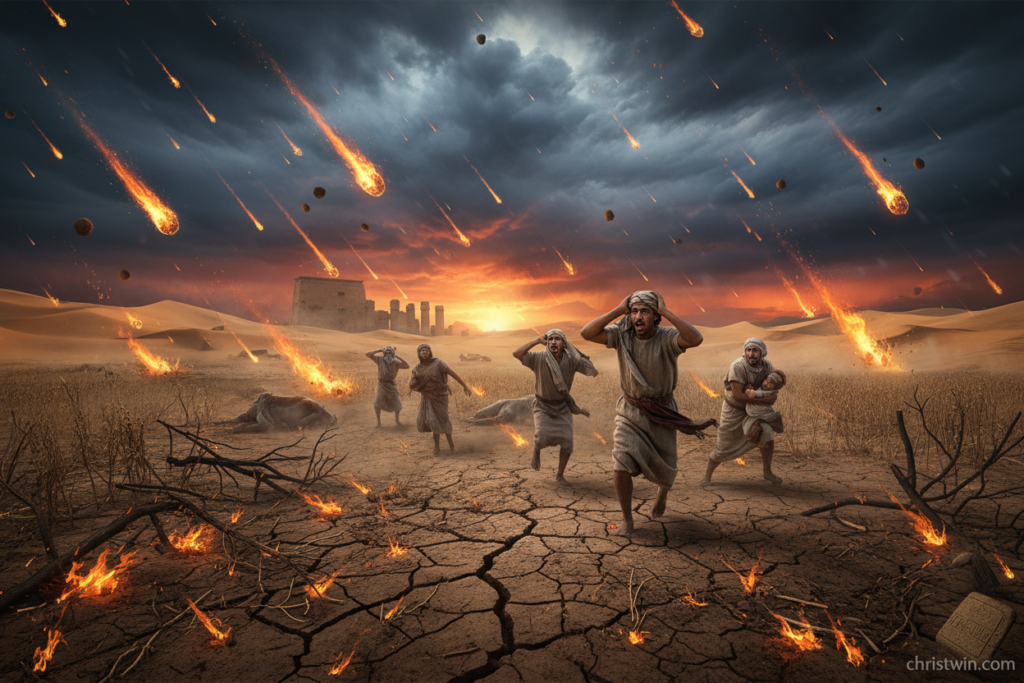
We’re exploring the 10 plagues of Egypt, and now we reach the seventh. It was a storm of hail and fire. This plague was not just a disaster; it was a challenge to the Egyptian gods, mainly Nut, the sky goddess.
The Egyptians saw Nut as the protector of the sky and earth. God showed His power by sending hail and fire. This proved He was above Nut and other gods.
Challenge to Nut, Sky Goddess
The seventh plague was a big challenge to Egyptian beliefs. God sent hail and fire to show His power over the sky. This was meant to show the Israelites and Egyptians that their God was the Almighty Creator of the universe.
The Warning and Opportunity for Mercy
Moses warned Pharaoh before the seventh plague. He gave Pharaoh a chance to change and let the Israelites go. This was not just to avoid harm but also to find spiritual redemption.
Pharaoh could have shown God’s power and changed his ways. But he refused, leading to the plague. This showed the cost of ignoring God’s mercy.
Destruction of Egypt’s Agriculture
The seventh plague hit Egypt’s crops hard. The hail and fire destroyed what was left after the other plagues. This left the land empty and the people in trouble.
This disaster was a big hit to Egypt’s economy and a spiritual message. It showed that the natural world obeyed the God of Israel, not the Egyptian gods.
Thinking about the seventh plague reminds us to be humble before God. It warns us of the dangers of opposing His will. As we move through the biblical plagues, we see God’s judgment and mercy together.
The Eighth Plague: Locusts
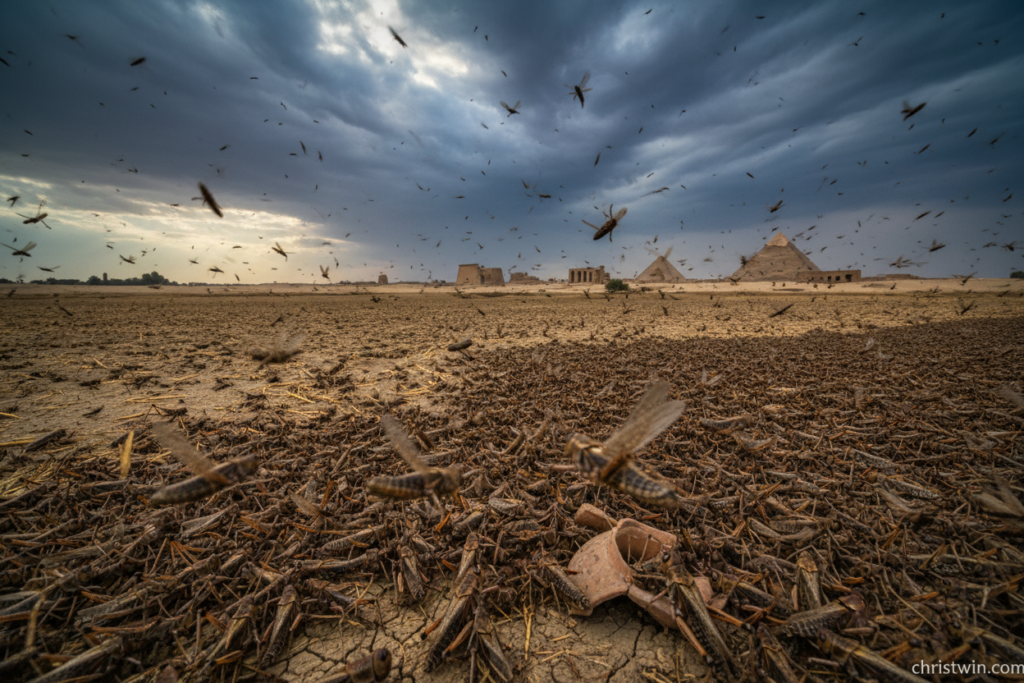
God’s judgment kept going with the eighth plague. Locusts ate up the last crops, making Egypt very sad. This showed how serious God’s punishment was.
Final Devastation of Egypt’s Food Supply
The eighth plague made Egypt’s food gone. A huge swarm of locusts ate all the crops. This left the land empty and people very sad.
Imagine how sad Egypt was when they had no food. The land that was once full of food was now empty. This was not just a problem with food or the environment. It was a sign of God’s power.
Symbolic Parallels in Biblical Prophecy
The plague of locusts has deep meanings in the Bible. Locusts often mean God’s judgment. For example, in Joel 2:1-11, locusts are like a big army, showing God’s anger.
Using locusts to show God’s judgment shows how serious He was with Egypt. It was a warning to change their ways. This idea is found all through the Bible.
Modern Locust Plagues and Their Impact
Today, locust plagues are a big problem. They destroy crops and hurt people’s lives. The Food and Agriculture Organization (FAO) of the United Nations tries to help.
Locust plagues today are as bad as they were in ancient Egypt. They hurt food, economies, and communities. Learning about the eighth plague helps us understand these disasters better.
The Ninth Plague: Darkness
The ninth plague brought darkness to Egypt. It was a challenge to the Egyptian sun god, Ra. This showed God’s power over the Egyptians’ most revered deity.

Defeat of Ra, the Sun God
Ra was the top god in Egypt, symbolizing the sun and light. God’s darkness showed He was stronger than Ra. This act showed God’s true power, not just defeating a false god.
Spiritual Darkness vs. Physical Darkness
The ninth plague caused both physical and spiritual darkness. Physical darkness was a sign of God’s judgment. Spiritual darkness showed the state of those who rejected God. This reminds us of the dangers of ignoring God.
The Light of Goshen Phenomenon
While Egypt was dark, the Israelites in Goshen had light. This showed God’s protection and favor towards His people. It was a sign of God’s power to choose who is His.
The Tenth Plague: Dea+th of the Firstborn and Passover
How does the tenth plague, which ki+lled the firstborn, connect to today? This plague was not just a punishment for Egypt. It was a key moment in the story of salvation.
The tenth plague showed God’s power over Egypt’s gods and Pharaoh. It was a challenge to Pharaoh’s claim of being a god. It showed God’s strength over all Egyptian life, including Isis, the goddess of children.
Ultimate Challenge to Pharaoh’s Divine Status
Pharaoh thought he was a god because he wouldn’t let the Israelites go. The tenth plague proved him wrong. The death of the firstborn sons hit hard at Egyptian families, even Pharaoh’s own.

The Institution of Passover
God gave the Israelites a way to be saved during the tenth plague. The Passover lamb’s blood on doorposts showed faith and saved Israelite firstborn sons.
Jews celebrate Passover today to remember God’s saving grace. The story of Passover is about faith, protection, and salvation.
Blood as Protection and Redemption
The lamb’s blood protected Israelite homes from harm. This act of faith saved the firstborn sons. It showed redemption through sacrifice.
Blood in Passover means more than just a story. It shows the heart of the Christian faith too.
Conclusion: Timeless Lessons from Ancient Plagues
The story of the 10 plagues of Egypt is more than just an old tale. It’s a call to respond to God with humility, trust, and obedience. These events show God’s power and rule.
The plagues, like the locusts, show the harm of not following God’s will. But they also bring hope and redemption for those who believe in Him. The 10 plagues remind us that faith is not just believing. It’s about acting and obeying.
Life’s challenges are hard, but the lessons from the 10 plagues are timeless. They tell us to stay strong in our faith, like Moses did. They remind us of God’s constant presence and power in our lives.
