
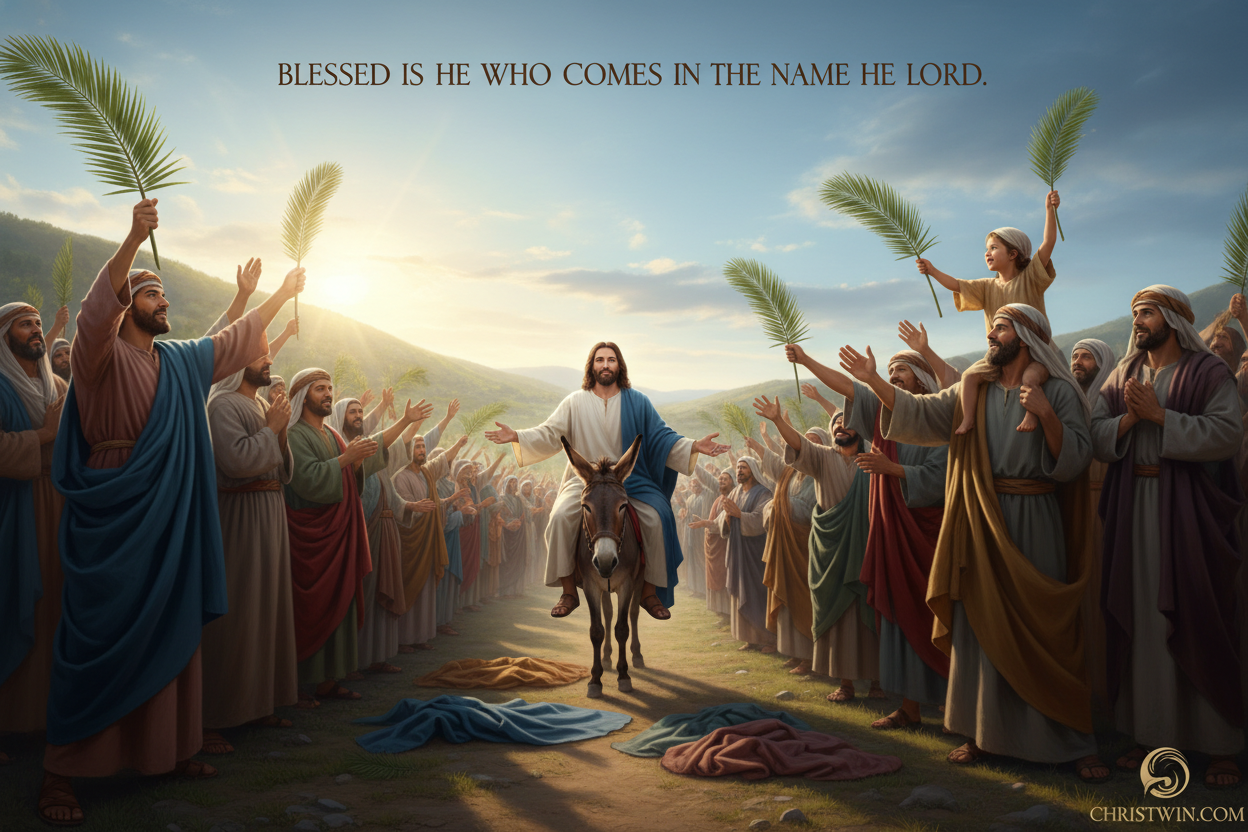
Have you thought about your faith journey? You might remember the crowd’s shout as Jesus entered Jerusalem: “Blessed is he who comes in the name of the Lord” (Matthew 21:9). This moment is key in the Bible, showing Jesus is the Messiah.
What does this phrase really mean? It’s not just a hello. It’s a deep statement of faith and Jesus’s special mission.
Looking into Matthew 21:9 will help you understand its importance in Christianity. It can also inspire and guide you on your spiritual path.
Key Takeaways
- Understanding the biblical context of Matthew 21:9
- The significance of the declaration “Blessed is he who comes in the name of the Lord”
- Exploring the connection between Matthew 21:9 and Jesus’s identity as the Messiah
- Applying the insights from Matthew 21:9 to your spiritual journey
- Discovering the relevance of this verse to the Christian faith
The Historical Context of Matthew 21:9
To really get Matthew 21:9, we need to look at its history. The story in Matthew 21 happened during the Passover in Jerusalem. This was a big deal for both religion and politics.
The Gospel of Matthew: Authorship and Audience
The Gospel of Matthew was written for Jewish people. The writer, thought to be Matthew, one of Jesus’s twelve apostles, wrote for those who knew the Old Testament well.
This Gospel shows Jesus as the Messiah, fulfilling Old Testament prophecies. Knowing who wrote it and for whom helps us see why Jesus’s entry into Jerusalem was so important.
First Century Jerusalem During Passover
Jerusalem was very busy in the first century, even more so during Passover. This festival remembered the Israelites leaving Egypt. People came from all over the Roman Empire to celebrate.
The city was full of people, making it lively but also a bit dangerous. The Romans kept a close eye on things, knowing there could be trouble.
Political and Religious Climate of the Time
Jerusalem in the first century was a mix of politics and religion. The Romans were in charge, but Jewish leaders had a lot of sway over the people.
| Group | Influence | Relation to Jesus |
|---|---|---|
| Roman Authorities | Political and military control | Skeptical, potentially hostile |
| Jewish Religious Leaders | Religious and social influence | Often critical, sometimes hostile |
| General Populace | Fickle, influenced by events | Initially supportive, later divided |
Knowing about the politics and religion of the time helps us understand Jesus’s actions. It also helps us see why the crowd reacted the way they did. Looking at the history of Matthew 21:9 makes its message clearer.
Jesus’s Triumphal Entry into Jerusalem
Jesus came to Jerusalem and everyone was happy. This was the start of a week that would change history. It’s known as the Triumphal Entry and is celebrated as Palm Sunday.
The Significance of Palm Sunday
Palm Sunday remembers Jesus’s entry into Jerusalem. People welcomed Him as a king, waving palm branches. This event is key because it starts the Passion Week, leading to His death and resurrection.
This day is more than just remembering history. It’s a time for Christians to think about Jesus’s mission and God’s love for us.
The Symbolism of Riding a Donkey
Jesus chose to ride a donkey into Jerusalem. This was a sign of peace and humility, not war. It was different from what many expected.
By riding a donkey, Jesus showed His kind of kingship. It was not about power but about love and peace.
The Crowd’s Response to Jesus
The crowd loved Jesus’s arrival. They threw down their cloaks and palm branches, cheering, “Hosanna to the Son of David! Blessed is He who comes in the name of the Lord!” (Matthew 21:9).
| Aspect of the Crowd’s Response | Significance |
|---|---|
| Laying down cloaks and palm branches | A sign of respect and acknowledgment of Jesus as a king. |
| Shouting “Hosanna” | An expression of praise and salvation, indicating their recognition of Jesus as their Messiah. |
| Referencing “the Son of David” | A clear indication of their understanding of Jesus as the long-awaited Messiah, descendant of King David. |
This shows how the crowd saw Jesus right away. It also shows what people expected of the Messiah at that time.
The Meaning of Matthew 21:9: “Blessed is He Who Comes in the Name of the Lord”
Matthew 21:9 says “Blessed is He Who Comes in the Name of the Lord.” This verse is key in the New Testament. It talks about Jesus entering Jerusalem.
Original Greek Text Analysis
The Greek text of Matthew 21:9 is very important. The phrase “Blessed is He Who Comes” comes from εὐλογημένος ὁ ἐρχόμενος. εὐλογημένος means “blessed” or “praised.” ὁ ἐρχόμενος means “the one who comes.”
This phrase is special because it talks about the Messiah. In the Greek Septuagint, ὁ ἐρχόμενος means the Messiah. So, Jesus’s entry into Jerusalem was seen as a big moment.
Hebrew Origins and Translation
The phrase “in the name of the Lord” comes from the Hebrew Bible. It’s in Psalm 118:26. The Hebrew text is “בָּרוּךְ הַבָּא בְּשֵׁם יְהוָה” (baruch haba beshem Adonai).
This Hebrew text means “blessed is he who comes in the name of the Lord.” It shows Jesus came with God’s authority. The crowd saw Jesus as representing God.
Translation Variations Across Bible Versions
Different Bible translations show Matthew 21:9 in different ways. Here’s a look:
| Bible Version | Matthew 21:9 Rendering |
|---|---|
| KJV | Hosanna to the Son of David: Blessed is he that cometh in the name of the Lord; Hosanna in the highest. |
| NIV | “Hosanna to the Son of David!” “Blessed is he who comes in the name of the Lord!” “Hosanna in the highest heaven!” |
| ESV | Hosanna to the Son of David! Blessed is he who comes in the name of the Lord! Hosanna in the highest! |
These differences show how translations can vary. But the main message stays the same.
In conclusion, Matthew 21:9 is full of meaning. It comes from Greek and Hebrew roots. It shows a key moment in Jesus’s life and shares a deep message that people find meaningful today.
Old Testament Origins: Psalm 118 Connection
To understand Matthew 21:9, we must look at its roots in the Old Testament. This includes Psalm 118:26, a key verse in Jewish tradition. The phrase “Blessed is He Who Comes in the Name of the Lord” is not new. It comes from Psalm 118:26, a verse filled with messianic hopes.
Understanding Psalm 118:26 in Jewish Tradition
In Jewish tradition, Psalm 118 was part of the Hallel Psalms. These were recited during big festivals like Passover. The verse “Blessed is He Who Comes in the Name of the Lord” was seen as a sign of the Messiah’s coming.
This verse was very important in Jewish tradition. It was a way to bless someone who came in the Lord’s name. This showed God’s approval and authority. When Jesus entered Jerusalem, the crowd saw him as the Messiah, coming in God’s name.
How Jesus Fulfilled This Messianic Prophecy
Jesus’ entry into Jerusalem was a big moment. He rode a donkey, just like Zechariah 9:9 said. The crowd cheered, saying Psalm 118:26. They saw Jesus as the one sent by God.
This moment was key. It showed Jesus was more than a teacher or miracle worker. He was the Messiah, bringing salvation. His actions matched Old Testament prophecies, strengthening his followers’ faith. It also challenged the religious leaders to see him as the Messiah.
The Theological Significance of “Coming in the Name of the Lord”
“Blessed is He Who Comes in the name of the Lord” in Matthew 21:9 is more than a triumphal entry. It’s a deep theological statement. It shows Jesus’ identity and mission in a new light.
Divine Authority and Representation
The phrase “coming in the name of the Lord” means divine authority and representation. Jesus is seen as acting on God’s behalf. This shows His divine commission and teachings.
Think about Jesus’ role if He comes in the name of the Lord. How does this change His relationship with the Father? And how does it affect your faith?
| Aspect | Implication |
|---|---|
| Divine Authority | Jesus acts with God’s authority |
| Representation | Jesus represents God to humanity |
| Commission | Jesus’ actions are divinely commissioned |
Messianic Implications in First Century Judaism
In first-century Judaism, “coming in the name of the Lord” meant something big. The crowd saw Jesus as the Messiah. This was based on Jewish tradition and Psalm 118:26.
Think about how this changes your view of Jesus. Recognizing Him as the Messiah shapes your faith and actions.
The Concept of Divine Visitation
“Coming in the name of the Lord” also means divine visitation. In the Bible, God’s visit can bring salvation or judgment. Jesus’ coming is a visit from God.
This idea changes how you see God’s interaction with humans. How does knowing God visits in Jesus change your view of divine presence?
The Crowd’s Understanding vs. Modern Interpretation
Matthew 21:9 shows how our views of the Bible change over time. We’ll look at what the crowd meant by “Blessed is He Who Comes in the Name of the Lord.” Then, we’ll see how we understand it today.

What the Phrase Meant to Those Present
The crowd shouted “Hosanna! Blessed is He Who comes in the Name of the Lord!” They were using a phrase from Psalm 118:26. It was more than a welcome; it was a sign of hope for the Messiah.
They saw Jesus as a hero who could free them from Roman rule. But Jesus’s real mission was spiritual, not political. This might have been hard for the crowd to understand.
“The crowd’s understanding of Jesus’s identity and mission was complex, influenced by their cultural and religious expectations.”
How Our Understanding Has Evolved
Our view of Matthew 21:9 has changed a lot over time. The crowd saw it in their own time, but we see it through centuries of study. Now, we see Jesus’s entry as a divine event, not just a political one.
We now see Jesus’s coming as a sign of his divine power. This makes us believe in Jesus as the Son of God. This change helps us understand the verse better, linking it to faith, worship, and following Jesus.
“As we reflect on Matthew 21:9, we are reminded that our understanding of Scripture is deepened by both historical context and contemporary insight.”
In conclusion, looking at Matthew 21:9 shows how our views have grown. By knowing both the past and the present, we can grow our faith and understand God’s word better.
Parallel Gospel Accounts of This Declaration
The triumphal entry of Jesus is seen in Matthew 21:9 and other Gospels. Mark, Luke, and John give us different views of this event. This shows how important Jesus’ entry into Jerusalem was.
Comparing Matthew 21:9 with Mark 11:9-10
Mark’s story of Jesus’ entry is similar to Matthew’s. In Mark 11:9-10, the crowd says, “Hosanna! Blessed is he who comes in the name of the Lord!” Mark also mentions, “Blessed is the coming kingdom of our father David!” This adds to the messianic hopes for Jesus.
Comparing Matthew 21:9 with Luke 19:38
Luke’s Gospel has a different version. In Luke 19:38, the crowd says, “Blessed is the King who comes in the name of the Lord!” Luke focuses on Jesus’ kingship, showing his authority.
Comparing Matthew 21:9 with John 12:13
John 12:13 says the crowd says, “Hosanna! Blessed is he who comes in the name of the Lord, even the King of Israel!” John’s version links Jesus to Jewish messianic hopes. This shows Jesus’ entry into Jerusalem’s deep meaning.
To understand the similarities and differences, let’s look at a table:
| Gospel | Account | Key Emphasis |
|---|---|---|
| Matthew | “Hosanna to the Son of David! Blessed is he who comes in the name of the Lord!” | Son of David, Messianic fulfillment |
| Mark | “Hosanna! Blessed is he who comes in the name of the Lord!” | Messianic expectation, Kingdom of David |
| Luke | “Blessed is the King who comes in the name of the Lord!” | Jesus’ kingship |
| John | “Hosanna! Blessed is he who comes in the name of the Lord, even the King of Israel!” | King of Israel, Christological significance |
For more on Jesus Christ, check out examples of prophecies in the Bible. This comparison shows the unity and diversity of the Gospels. It helps us understand Jesus’ triumphal entry and its importance in Christian theology.
The Irony of the Crowd’s Proclamation
The crowd cheered “Hosanna” in Matthew 21:9. But later, they wanted Jesus dead. This shows a big irony. It makes us think about how people react to Jesus and what faith really means.
The crowd first loved Jesus, then turned against him. This change is not just a weird event. It teaches us a lot about faith and how people can change their minds.
From “Hosanna” to “Crucify Him”
The crowd’s feelings changed fast. They cheered for Jesus as a king on Palm Sunday. But soon, they wanted him dead. This big change makes us wonder about their true feelings.
Why did the crowd’s feelings change? Was it a real change, or just a quick mood swing? The Bible says the crowd wanted a hero to save them from the Romans.
The Fickle Nature of Human Acclaim
The crowd’s actions in Matthew 21:9 show how easily people can change their minds. Their praise was short-lived. It was based on what was happening at the moment, not true faith.
This story teaches us a lesson. It shows us the importance of having a strong faith in Jesus. We should not just follow him for a moment. We need to really understand who he is and what he teaches.
Liturgical Uses of “Blessed is He Who Comes”
Matthew 21:9 is very important in Christian worship. The phrase “Blessed is he who comes in the name of the Lord” is used in many ways. It is used by many different churches.
The Sanctus in Catholic Mass
In Catholic Mass, the phrase is part of the Sanctus. This is a hymn of praise. It is sung or recited before the bread and wine are changed.
This shows the connection between heaven and earth in worship.
For more on call-to-worship scriptures, see our article: Call to Worship Scriptures Verses.
Protestant Worship Incorporations
Protestant churches also use the phrase. It is often heard on Palm Sunday. This is when Jesus entered Jerusalem.
Eastern Orthodox Liturgical Traditions
In Eastern Orthodox worship, the phrase is used in many ways. It is used in the Divine Liturgy and on Palm Sunday. They see a strong link between old prophecies and Jesus.

| Denomination | Liturgical Context | Frequency of Use |
|---|---|---|
| Catholic | Part of the Sanctus in the Mass | Regularly during Mass |
| Protestant | Palm Sunday services and other worship events | Occasional, mainly on Palm Sunday |
| Eastern Orthodox | Divine Liturgy and Palm Sunday services | Regularly in liturgical contexts |
The phrase “Blessed is he who comes in the name of the Lord” is very important. It shows the deep connection to the Bible. When you go to church, you might hear this phrase. It links all Christians together.
Denominational Perspectives on Matthew 21:9
Exploring Matthew 21:9 shows us how different Christian groups see it. This verse is key in Christian teachings. It talks about Jesus being welcomed as the Lord’s messenger.
Catholic Interpretation
In the Catholic view, Matthew 21:9 is a sign of Jesus being the Messiah. The Catholic Church sees it as proof of Jesus’s power. The word “Hosanna” is used in church, linking heaven and earth.
Protestant Understanding
Protestants see Matthew 21:9 as Jesus’s claim to kingship. They stress the importance of personal faith. This verse is about believing in Jesus as Lord.
Orthodox Christian Views
In Orthodox tradition, Matthew 21:9 is part of Palm Sunday. It’s a big part of the Divine Liturgy. Orthodox see Jesus’s entry as a key moment in salvation history.
Modern Scholarly Consensus
Today, scholars agree Matthew 21:9 is a key moment in Jesus’s story. They see it as showing Jesus’s mission. Scholars look at the past to understand its meaning today.
Looking at how different groups see Matthew 21:9 shows the depth of Christian beliefs. Each group adds its own view, helping us understand Jesus better.
The Second Coming Connection
Jesus said in Matthew 23:39 something like what the crowd said in Matthew 21:9. This shows a deep link between Jesus’s first and second comings. It’s a key part of Christian beliefs.
Matthew 23:39 and Jesus’s Future Return
In Matthew 23:39, Jesus talks about seeing Him again. He says it will happen when people say, “Blessed is he who comes in the name of the Lord.” This is tied to the crowd’s words in Matthew 21:9 when Jesus entered Jerusalem.
This shows Jesus’s Second Coming is connected to His current reign. It’s about the Christian hope.
Eschatological Implications
The meaning of Matthew 23:39 is big. It says Jesus’s return is tied to people recognizing Him as the Messiah. This has sparked a lot of debate among scholars.
| Eschatological Theme | Biblical Reference | Implication |
|---|---|---|
| Second Coming | Matthew 23:39 | Future fulfillment of Jesus’s return |
| Messianic Recognition | Matthew 21:9 | Initial recognition during Jesus’s ministry |
| Eschatological Hope | 1 Thessalonians 4:13-18 | Comfort and encouragement for believers |
Contemporary Christian Hope
For today’s Christians, the link between Matthew 21:9 and Jesus’s Second Coming is hopeful. It shows your faith is about more than past events. It’s also about a future tied to Jesus’s return.
Thinking about these connections encourages you to hold onto hope. Live each day looking forward to Jesus’s coming.
Conclusion: The Enduring Power of Matthew 21:9
You’ve learned about Matthew 21:9, a key verse in Christian faith. It says “Blessed is He Who comes in the name of the Lord.” This verse links Jesus’s entry into Jerusalem with old prophecies.
This verse makes us feel worship and respect. It reminds us of Jesus’s power and role. Thinking about this verse can make your faith stronger and connect you with Christian traditions.
Matthew 21:9 is a strong message of faith for you. It helps you use Bible wisdom every day. Let this verse’s message help you on your spiritual path.
