
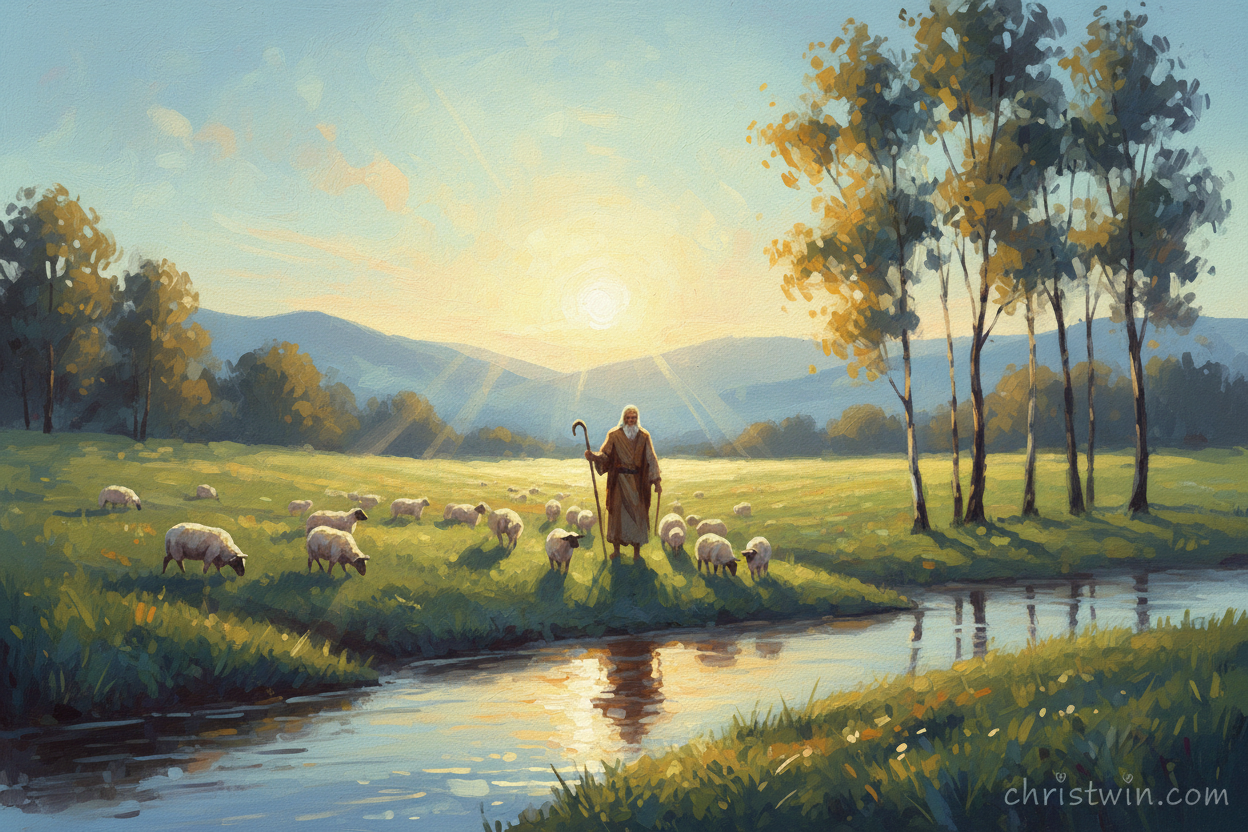
Have you ever wondered why Psalm 23 is so loved and known? It’s a comfort, guide, and inspiration for many believers worldwide.
Psalm 23 touches hearts deeply. It’s a favorite among Christians. People from all over have memorized it, crossing cultures and ages. Its beauty shows God’s love, care, and saving grace.
Exploring psalm 23 meaning can change your life. It’s a journey to discover its value. Let’s dive into this special biblical passage together.
The Significance of Psalm 23 in Scripture
Psalm 23 has been a source of hope for many. It talks about God’s care for us. Henry Ward Beecher said it brings more comfort than all the world’s philosophy.
The Popularity of the Shepherd’s Psalm
Psalm 23 is known as the Shepherd’s Psalm. It shows God as a shepherd caring for us. This image makes it a favorite, giving comfort and guidance.
Its themes are timeless, touching on comfort and guidance. It reminds us of God’s love and care. This psalm has helped many through joy and sorrow.
Overview of Psalm 23’s Message
Psalm 23 says God is our shepherd. He guides, protects, and provides for us. It shows God’s deep care for His people.
The psalm brings hope and reassurance. It tells us to trust God, even when things are tough. It shows God’s presence in our lives.
Reviewing Psalm 23, we see its deep meaning. It offers comfort and reminds us of God’s care. It’s a key part of faith for many.
Historical Context and Authorship of Psalm 23
To really get Psalm 23, we need to know its history and who wrote it. King David is often seen as the author. His life as a shepherd adds depth to the psalm’s message for us today.
David’s Background as a Shepherd
David’s time as a shepherd shaped Psalm 23. He learned about God’s care and provision early on. These lessons helped him see God’s relationship with His people.
Charles Spurgeon said David wrote this psalm with memories of his shepherd days. This shows how his early life influenced his faith later on.
Dating and Placement in the Psalter
When Psalm 23 was written is tied to who wrote it. If David wrote it, it was during his kingship, around 1010–970 BCE. Its place in the Psalter shows its importance. It’s a favorite in both Jewish and Christian traditions.
Important points about the psalm’s date and place include:
- Its language and style match David’s psalms.
- Its themes fit with other psalms by David.
- It reflects David’s life and writings.
Looking into Psalm 23’s history and authorship helps us understand its powerful message. David’s shepherd life and the psalm’s likely writing time make it even more meaningful.
Understanding the Shepherd Metaphor in Ancient Israel
In ancient Israel, shepherds were more than just people who took care of sheep. They were symbols of guidance, protection, and care. To get the most out of Psalm 23, we need to understand this metaphor.
Shepherding in Biblical Times
Shepherding was a big job in ancient Israel. Many families made their living from it. Shepherds led their sheep to good places, kept them safe from harm, and made sure they were okay.
This job was hard but very important. It taught leaders to care for and protect their people. Leaders were seen as shepherds, showing they had to guide and keep their people safe.
God as Shepherd Throughout Scripture
The Bible often talks about God as a shepherd. This shows God’s close care and guidance for His people. From the Old Testament to the prophets, God’s role as a shepherd is clear.
In Psalm 23, God’s care is a big theme. It shows how much God provides and looks after us. The psalm helps us see how much we can trust God, just like a sheep trusts its shepherd.
Thinking about the shepherd metaphor can help us understand God better. It reminds us to trust in God’s guidance and care, just like a sheep trusts its shepherd.
Psalm 23 – Meaning of Verse by Verse Analysis Approach
Psalm 23 is full of spiritual insights. We can find these by looking at it verse by verse. This way, we see its deep meaning and how it touches our hearts.
We will look at how the psalm is put together. We’ll see the special words and images that make it powerful.
Structure of the Psalm
Psalm 23 uses the idea of God as a shepherd. This shows God’s care and provision for us. The psalm is divided into parts, each showing a different side of God’s love.
The metaphor of God as a shepherd is very vivid. It paints a picture of God’s love and care for us.
Literary Devices and Poetic Elements
The psalmist uses many tools to share Psalm 23’s message. Metaphor is a big one, comparing God to a shepherd. This metaphor means God guides, protects, and feeds us.
Other tools like repetition and imagery add to the psalm’s power. They make the psalm a beautiful piece of literature. It shows us about God’s nature and how He relates to us.
By looking at Psalm 23 verse by verse, we’ll see its deep meaning. We’ll learn how its structure and words make it important today.
Verse 1: “The LORD is my shepherd; I shall not want”
The psalmist says God is their shepherd in verse 1. This shows trust in God’s guidance and care. It’s the main idea of Psalm 23.
The Divine Name: Yahweh as Shepherd
“Yahweh” (the LORD) as shepherd shows God’s special bond with His people. In ancient times, Yahweh was a sacred name. It meant God’s faithfulness and character.
The Israelites knew God as a shepherd. Shepherding meant care, protection, and guidance. So, when the psalmist says God is their shepherd, it’s a deep message of God’s care.
The Personal Relationship: “My” Shepherd
The word “my” in “my shepherd” shows a close bond between God and the believer. It’s not just God is a shepherd to many. He’s a shepherd to each person. This close bond is the psalm’s core message.
This close bond is shown by the psalmist’s trust in God. The use of “my” shepherd shows deep trust in God’s care and guidance.
The Promise of Provision: “I Shall Not Want”
The second part of Psalm 23:1, “I shall not want,” comes from God being the psalmist’s shepherd. This promise is not just about food or money. It’s about all parts of life. It means God will meet all the believer’s needs.
This promise is based on God knowing what His sheep need. It’s a statement of trust in God’s goodness. It says with God as their shepherd, believers have everything they need.
Verse 2: “He makes me lie down in green pastures. He leads me beside still waters”
Psalm 23’s second verse shows us green pastures and calm waters. These images mean God’s care and peace. They show how God guides us to rest and refreshment.
The Significance of Green Pastures
Green pastures are important because they mean nourishment and plenty. In old times, shepherds took their sheep to these places. There, the sheep grew strong and healthy.
God does the same for us. He leads us to spiritual food. This means His blessings and care are rich and life-giving.
The Symbolism of Stil Waters
Stil waters are a symbol of peace and rest. In a world where water was rare and often rough, calm water was very valuable. It meant a safe and quiet place to drink and rest.
God wants us to find peace and refreshment. He guides us to stil waters. This brings calm to our souls and refreshes our spirits.
God’s Guidance to Places of Rest
The images of green pastures and stil waters show God’s path to rest and refreshment. This path is not just for our bodies but also for our spirits. It reminds us that God leads us to places of peace, away from the world’s noise.
By following God, we find peace and nourishment for our souls. This is what Psalm 23:2 teaches us. It tells us to trust in God’s care and guidance.
Verse 3: “He restores my soul. He leads me in paths of righteousness for his name’s sake”
Psalm 23:3 talks about God’s care for our souls. It says, “He restoreth my soul: He leadeth me in the paths of righteousness for His name’s sake.” (Psalm 23:3)
Soul Restoration: Meaning and Application
The idea of soul restoration is key in the Christian faith. It means God can make our inner selves new again. David says God can heal our emotional and spiritual hurts.
This healing is not just once but keeps happening. It’s about feeling God’s comfort and peace when things get tough.
For us, soul restoration means feeling renewed when we’re with God. It’s about moving from darkness to God’s love. This journey means giving our worries to God and letting Him work in our lives.
Thinking about Psalm 23:3 reminds us God’s healing is for us. It shows us a path to healing and being whole.
Righteous Paths and Divine Guidance
Psalm 23:3 also talks about being guided on “paths of righteousness.” This means God helps us know what’s right. It shows we don’t have to face life alone; God guides us.
Following these paths isn’t always easy. But with God’s help, we can trust we’re on the right path. This path honors God.
Being guided by God means we’re getting to know Him better. It’s about praying, reading scripture, and following His lead. Walking in righteousness brings us blessings and a life that fits God’s plans.
“For His Name’s Sake”: God’s Reputation
The last part of Psalm 23:3 says God’s actions are for His glory. This is comforting and challenging. It shows God’s actions are meaningful and shows His character. It also makes us think about how we reflect God.
We’re called to live in a way that honors God’s name. This means being true to our faith and showing kindness. When we face hard times, knowing God guides us for His glory gives us strength. We’re not alone; God is working with us for His glory.
Verse 4: “Even though I walk through the valley of the shadow of death, I will fear no evil, for you are with me; your rod and your staff comfort me”
Verse 4 of Psalm 23 is a powerful message. It tells us God is with us in dark times. It’s a comfort when we’re sad, scared, or unsure.
The Valley of the Shadow of Death: Interpretations
The phrase “valley of the shadow of death” is full of meaning. It can mean a real valley or a symbol of deep sadness or danger.
The original Hebrew text says “tsalmaveth.” This means “shadow of death” or “deep darkness.” It shows a big challenge that could be very scary.
The Shift from “He” to “You”: Intimacy in Crisis
Look at the change from “He” to “You” in this verse. This shows a closer, more personal talk with God. It shows the psalmist’s deep bond with God.
In hard times, the psalmist talks directly to God. This shows faith is very personal.
The Rod and Staff: Tools of Protection
The “rod and staff” are tools for a shepherd. The rod protects from predators, and the staff guides the sheep.
These tools mean God’s care and protection, even when things are tough. The psalmist finds comfort in knowing God is watching over him.
Thinking about Psalm 23:4 reminds us. Our faith is not about avoiding problems. It’s about trusting God’s presence and care in every challenge.
Verse 5: “You prepare a table before me in the presence of my enemies; you anoint my head with oil; my cup overflows”
In Psalm 23:5, we see God’s care and provision. God is like a host, setting a table for a feast. This image shows God’s abundance and kindness, even when things are tough.
The Banquet Metaphor: From Shepherd to Host
The image changes from a shepherd to a host. God is now giving more than just protection. The banquet metaphor means a feast of spiritual food and joy. It shows God’s big heart and love.
The phrase “in the presence of my enemies” adds depth. It means God’s gifts don’t stop, even when things are hard. God invites us to join in this special feast, no matter what’s happening.
Anointing with Oil: Significance and Meaning
The act of anointing with oil is very important. In ancient times, it meant being set apart, healed, and welcomed. When a host did this, it was a sign of respect and refreshment.
God’s anointing is a sign of His favor and blessing. It shows His love and care in our lives. This act is spiritual, showing God’s grace and love.
The Overflowing Cup: Abundance Amid Adversity
The image of the overflowing cup shows God’s abundance. In old times, a full cup meant kindness and generosity. An overflowing cup means even more than enough.
This image tells us God’s gifts are more than enough. They overflow with abundance. It reminds us God’s care is always there, even when things seem hard.
Verse 6: “Surely goodness and mercy shall follow me all the days of my life, and I shall dwell in the house of the LORD forever”
As we end our journey through Psalm 23, we reach Verse 6. It’s a deep promise of God’s presence in our lives. This verse wraps up the psalm’s themes with a powerful promise for believers.

Goodness and Mercy: Divine Attributes
Goodness and mercy are key to understanding God in Psalm 23:6. Goodness means God is always faithful and kind to us. Mercy shows His compassion and forgiveness. These traits show God’s strong commitment to us.
- Goodness is linked to God’s promise to us.
- Mercy shows God’s love and kindness.
- Together, they show God’s full character.
Dwelling in God’s House: Eternal Perspective
Dwelling in God’s house forever gives us a big view of our relationship with Him. It’s not just about being in a place, but about being close to God. The promise of living in God’s house forever is about our hope for eternal life and being with God.
- “House of the LORD” means a place of worship and God’s presence.
- Dwelling there “forever” means a lifelong bond with God.
- This view changes how we see life’s purpose and meaning.
The Promise of Forever: Theological Implications
The promise of forever in Psalm 23:6 is very important. It shows an eternal bond between God and us. Theological implications of this promise mean our bond with God goes beyond this life, into eternity.
- The promise of forever shows God’s eternal faithfulness.
- It gives us hope for eternal life and being with God.
- This promise helps us understand God’s power and grace.
Major Themes and Theological Insights in Psalm 23
Psalm 23 shows us God’s deep bond with us. It’s a key part of faith, giving us comfort and direction. It talks about God’s care and the promise He makes to us.
Divine Providence and Care
Psalm 23 talks a lot about God’s care. It says God is like a shepherd, guiding and taking care of us. This shows us we can trust and feel safe with God.
It also shows God’s care in hard times. Even when we face shadows and death, God is there to comfort us.
Journey Motif: From Pasture to Palace
The journey in Psalm 23 is very special. It takes us from green pastures to God’s palace. This journey is not just about places. It’s about growing closer to God.
The psalm uses shepherd imagery to show this journey. It shows how God guides us through different parts of our lives.
Covenant Relationship Between God and Believer
Psalm 23 is really about God’s promise to us. The psalmist talks about this promise in a personal way. It shows that this promise is for each of us, not just a group.
The promise of God’s care and guidance is all through the psalm. It shows how close and committed God is to us.
Psalm 23 in Christian Tradition and Worship
For Christians, Psalm 23 is more than words. It shows God’s love and care in worship and liturgy. It has comforted, guided, and inspired believers for centuries.
Use in Liturgy and Hymnody
Psalm 23 is key in Christian liturgy. It’s used in many worship services and rituals. Its verses have been turned into hymns and chants, sung in churches today.
Psalm 23 brings comfort and reassurance in liturgy. It offers solace in hard times and joy in good times. Its themes of God’s care and guidance inspire worshippers.
Christological Interpretations
The idea of Jesus as the Good Shepherd comes from Psalm 23. Early Christians saw it as a sign of Christ’s role. This idea is central in Christian theology, showing Jesus’ care for believers.
Christians see Psalm 23 as a glimpse of Christ’s ministry. Its themes of care and guidance are seen in Jesus’ teachings. This connects the Old and New Testaments.
This view of Psalm 23 deepens Christian devotion. It shows believers their relationship with God through Jesus. It has inspired many writings and sermons about God’s love in Christ.
Practical Applications of Psalm 23 for Modern Life
Psalm 23 gives us practical advice for facing life’s tough times. It has comforted believers for ages. Its wisdom is just as relevant today.

Finding Comfort in Times of Loss and Grief
Psalm 23 is great for finding comfort when we lose someone or face sadness. It shows God is with us, even in dark times. This reminds us we’re not alone.
When we’re sad or grieving, thinking about Psalm 23 can bring peace. Try writing or meditating on the verse about God’s comfort. It can really help.
Trusting God’s Guidance in Decision-Making
Psalm 23 also helps us trust God in making choices. It says God leads us in the right path for His sake. This shows God’s guidance is about His honor, not just us.
When deciding, ask if the path is right for God. Or, how can you trust God in this choice? Thinking about these questions can guide you with faith.
Experiencing God’s Provision in Daily Challenges
The psalm also talks about God’s care in our daily struggles. It says God prepares a feast for us, even when we’re facing enemies. This shows God’s power to provide for us.
To see God’s care in your life, think about times He helped you. Keep a journal of these moments. It helps build trust in God’s ongoing care.
Conclusion
As we finish our journey through Psalm 23, we see its deep summary. It shows God’s care and promise to His people. The psalm says God is like a shepherd, guiding and comforting us.
The psalm talks about trust, getting back on track, and God being with us. It goes from green pastures to dark valleys. But it always reminds us God is there, always supporting us.
Psalm 23 is more than just words. It helps us in hard times, guides us in choices, and shows us God provides. Let it remind you to trust in God’s kindness and care. His presence helps us face life’s tough moments.
Let Psalm 23’s message keep inspiring and lifting you up. It shows God’s love and care never ends.
